切换至版画销售渠道
 展开全文
展开全文







































 对于任何边长超过 105 厘米(约 41 英寸)的艺术品或复制品,画框将以拆解后的组件形式发货。此方法可确保安全送达并防止运输过程中的损坏。


A Renaissance Vision of Harmony
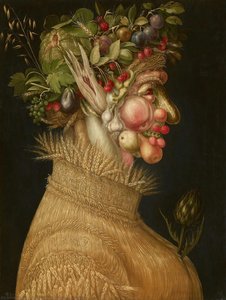
In the delicate dance of light and shadow captured within Nature studies (9), we encounter the profound genius of Giuseppe Arcimboldo, an artist who dared to reimagine the very fabric of reality. Created in 1575, this exquisite watercolor serves as a window into a period where the boundaries between the natural world and human perception were being vibrantly renegotiated. At first glance, the viewer is drawn to the striking realism of a bird perched with quiet grace upon what appears to be a human hand. The meticulous rendering of each feather—cascading in subtle gradations of black, deep brown, and ivory—speaks to a mastery of the medium that transcends mere observation, inviting us into a moment of stillness and intense focus.
The technique employed here is nothing short of masterful. Arcimboldo utilizes the luminous, translucent qualities of watercolor to achieve a depth that belies the medium's delicate nature. Through the careful application of thin, layered washes, he breathes life into the subject, creating a tactile sensation where one can almost feel the softness of the plumage and the warmth of the skin. This approach allows for a subtle tonal variation that captures the fleeting essence of light, a hallmark of the late Renaissance style that seeks to find the divine within the minute details of the earthly realm.
Symbolism and the Intellectual Landscape
Beyond its surface beauty, this work is steeped in the intellectual fervor of the High Renaissance. During this era, the study of nature was not merely a scientific endeavor but a philosophical one, deeply intertwined with Neo-Platonic ideals. The interaction between the avian subject and the human element symbolizes the profound connection between humanity and the natural order. In Arcimbulated's world, every organic form carries a weight of meaning; here, the bird represents the fleeting nature of life and the beauty of the wild, while the human presence acts as the observant, contemplating soul.
For the discerning collector or interior designer, this piece offers more than just visual splendor; it provides a narrative depth that can anchor a room with intellectual prestige. The composition’s ability to balance realism with a sense of wonder makes it an ideal centerpiece for spaces designed for reflection and conversation. It is a work that rewards repeated viewing, revealing new textures and subtle complexities each time the eye wanders across its surface.
An Enduring Legacy for Modern Spaces
To possess a reproduction of such a significant historical artifact is to bring a piece of the Habsburg Court's splendor into the contemporary home. Nature studies (9) embodies an era of discovery and the harmonious integration of disparate elements—a theme that remains strikingly relevant in our modern, interconnected world. The artwork’s neutral background and focused subject matter allow it to integrate seamlessly into various high-end decor styles, from classical European aesthetics to more minimalist, modern galleries.
Whether placed in a sunlit study or a sophisticated living area, this painting serves as an emotional anchor, evoking a sense of peace, curiosity, and timelessness. It is an invitation to slow down, to observe the intricate beauty of the world around us, and to appreciate the enduring legacy of an artist who saw the extraordinary within the ordinary.
常见问题与解答
朱塞佩·阿尔钦博尔多 (Zhū Sèipèi Ā'Ěrqīnbó'Ěrduō) 的《Nature studies (9)》 属于哪种艺术流派,又处于哪个时代?
"Nature studies (9)" 属于 Baroque 流派,其创作者活跃于 文艺复兴 时期。
在哪里可以找到关于“Nature studies (9)”的指南?
朱塞佩·阿尔钦博尔多 (Zhū Sèipèi Ā'Ěrqīnbó'Ěrduō) 的《Nature studies (9)》 的 指南 页面提供了一份可打印的两页式学生资料单:包含作品及其基本信息表、将其置于艺术家生平中的年代轴、艺术家的其他作品、经测量的色板,以及四种格式的即用型引用文献。
哪里可以找到与 朱塞佩·阿尔钦博尔多 (Zhū Sèipèi Ā'Ěrqīnbó'Ěrduō) 的《Nature studies (9)》 风格相似的艺术品?
朱塞佩·阿尔钦博尔多 (Zhū Sèipèi Ā'Ěrqīnbó'Ěrduō) 的《Nature studies (9)》 的 相似作品 页面展示了相关艺术作品。
 实景预览
实景预览
 分享
分享 分享
分享
 详情
详情 指南
指南

 下载作品
下载作品
 相似作品
相似作品 X射线
X射线 幻灯片播放
幻灯片播放 Q&A
Q&A 统计数据
统计数据