A Celestial Vision: Unveiling Giotto’s *Bóveda*
Giotto di Bondone, a name synonymous with the dawn of Renaissance painting, invites us into a realm of ethereal beauty with his *Bóveda*. This exquisite work, originally conceived as part of a larger decorative scheme, transcends mere ornamentation to become a profound statement of faith and artistic innovation. The artwork is not simply a painted surface; it’s a window into the medieval worldview, meticulously crafted for contemplation and spiritual elevation.
Subject & Composition: A Heavenly Sphere
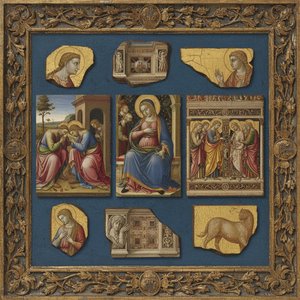
The *Bóveda* – meaning “vault” in Spanish – presents a mesmerizing composition dominated by a deep teal blue background, evocative of the night sky. This cosmic backdrop is densely populated with countless shimmering gold stars, creating an impression of infinite space and divine light. At the heart of this celestial sphere lies a circular medallion, likely depicting the Virgin Mary tenderly holding the infant Jesus—a classic devotional image central to medieval piety. Surrounding this focal point are smaller medallions, each containing decorative motifs and further constellations of golden stars, forming a harmonious and balanced arrangement. The overall effect is one of ordered beauty, mirroring the perceived harmony of the cosmos itself.
Style & Technique: Bridging Gothic Elegance with Proto-Renaissance Innovation
The *Bóveda* exemplifies the elegance of the International Gothic style while simultaneously foreshadowing the revolutionary changes Giotto would bring to painting. While maintaining the characteristic decorative richness and refined linear quality of Gothic art, Giotto subtly introduces elements that anticipate Renaissance concerns. The use of gold leaf isn’t merely for aesthetic effect; it symbolizes divine light and emphasizes the sacred nature of the subject matter.
Giotto's masterful application of tempera on a prepared surface (likely wood panel) allows for precise detail and luminous color, creating a visually captivating experience. The meticulous hand-painting and gilding demonstrate an extraordinary level of craftsmanship.
Historical Context: Florence & the Rise of a New Artistic Era
Created during a period of significant artistic transition in Italy (early 14th century), the *Bóveda* reflects the evolving tastes and spiritual sensibilities of the time.
Giotto di Bondone was working at a pivotal moment, moving away from the stylized conventions of Byzantine art towards a more naturalistic representation of form and emotion. Commissioned for the Museum San Giorgio alla Costa in Florence, Italy – originally a convent – this piece would have served as an integral part of a devotional space, intended to inspire reverence and contemplation among those who beheld it.
Symbolism & Emotional Impact: Faith, Divinity, and Protection
The symbolism embedded within the *Bóveda* is rich and layered. The Virgin Mary and Child represent divine motherhood, compassion, and salvation. The stars symbolize hope, guidance, and the eternal nature of faith. The circular medallions themselves can be interpreted as representing heavenly spheres or halos of sanctity. Beyond its religious significance, the artwork evokes a sense of peace, tranquility, and awe. Its delicate beauty and harmonious composition invite viewers to lose themselves in contemplation, fostering a connection with the divine.
For Collectors & Designers: A Timeless Masterpiece
The *Bóveda* is more than just a historical artifact; it’s a testament to human creativity and spiritual aspiration. Its enduring appeal makes it an ideal subject for high-quality reproductions, bringing a touch of Renaissance elegance into contemporary homes and spaces. Whether displayed as a focal point in a living room or a serene accent in a study, the *Bóveda* will undoubtedly inspire conversation and admiration.
- Ideal for: Collectors of religious art, enthusiasts of medieval illumination, and those seeking to add a touch of historical sophistication to their interiors.
- Color Palette: Deep teal blue, shimmering gold, warm golden hues – creating a harmonious and calming atmosphere.
- Style Compatibility: Complements both traditional and contemporary décor styles, adding a unique focal point.
常见问题与解答
在“Bóveda”中,媒介与笔触是如何交融的?
“Bóveda”采用 木板蛋彩画 创作,呈现出 Proto-Renaissance 风格。
乔托 的《Bóveda》 属于哪种艺术流派?
乔托 的《Bóveda》 所属的艺术流派为 Proto-Renaissance。这一分类将该作品置于相关艺术家及艺术作品的语境之中。
我能否更详细地查看“Bóveda”?
乔托 的《Bóveda》 的 X 光视图可在作品的 X射线透视 页面查看:通过十一层光学图层对图像进行交互式深度解析。

 切换至版画销售渠道
 展开全文
展开全文







































 对于任何边长超过 105 厘米(约 41 英寸)的艺术品或复制品,画框将以拆解后的组件形式发货。此方法可确保安全送达并防止运输过程中的损坏。


 实景预览
实景预览
 分享
分享 分享
分享
 详情
详情 指南
指南

 下载作品
下载作品
 相似作品
相似作品 X射线
X射线 幻灯片播放
幻灯片播放 问答
问答 统计数据
统计数据








![斯克罗韦尼 - [05] - 约阿希姆之梦](/media/artworks/images-thumb/8f/67/8f67bb5da87296bd452b3f0b237b528d.jpg)


