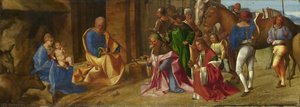
实景预览
实景预览
 分享
分享 分享
分享
 详情
详情 指南
指南

 下载作品
下载作品
 相似作品
相似作品 X射线
X射线 幻灯片播放
幻灯片播放 Q&A
Q&A 统计数据
统计数据Boy with flute


 展开全文
展开全文
艺术微喷/版画
博物馆级艺术微喷或帆布版画,制作高效,并提供多种饰面选择。 ( 订购纯手工绘制画作 切换至数字图像销售渠道)




P118B ¥10

P118H ¥10

P118W ¥10

P438Z ¥10

P508JH ¥12

P508YH ¥12

P805H ¥10

P805Z ¥10

P919BZ ¥10

P919G ¥10

P919XJ ¥10

P959ZH ¥10

P968JZ ¥12

W106C ¥8

W218G ¥10

W218JH ¥8

W218Y ¥10

W307PJ ¥10

W316G ¥10

W316PJ ¥8

W316Y ¥10

W398PJ ¥8

W4111J ¥10

W500HY ¥15

W500JH ¥15

W692G ¥12

W849H ¥8

W940BG ¥15

W953PJ ¥8




您可以从与原作比例一致的预设尺寸中进行选择。

请输入您所需的宽度和高度,以适配您的画框或墙面。由于印刷品只能进行裁剪,无法超出原图尺寸,因此若比例不一致,画面的一部分将会被裁切。在正式印刷之前,我们会为您发送一份数字效果图供您确认。本页面显示的图片并非最终裁剪后的效果——只有效果图才能展示真实的裁剪情况。


 玻璃选项仅适用于110厘米以下的尺寸。

Boy with flute
艺术微喷/版画
复刻品尺寸
-


最终结算价
¥ 537
A Venetian Reverie: Unveiling Giorgione’s ‘Boy with Flute’
Giorgione's “Boy with Flute,” painted around 1508, isn’t merely a portrait; it’s an invitation into a fleeting moment of serene beauty – a quintessential example of the Venetian Renaissance at its most evocative. The painting immediately captivates with its luminous palette and the palpable sense of stillness that permeates the scene. The young man, bathed in diffused light, appears lost in his own world as he plays a simple flute, an instrument often associated with pastoral tranquility and youthful innocence. This wasn’t simply a commission for a wealthy patron; it feels like a distillation of Venetian ideals – a celebration of beauty, harmony, and the subtle pleasures of life.
The Painter's Hand: Technique and Style
Giorgione’s style is notoriously difficult to pin down, contributing significantly to his enduring mystique. He operated outside the rigid confines of academic painting, favoring a more intuitive approach that prioritized atmosphere and color over precise detail. “Boy with Flute” exemplifies this perfectly. Notice how Giorgione employs *sfumato*, a technique perfected by Leonardo da Vinci, to soften edges and create an almost hazy effect. The light seems to emanate from within the figure itself, blurring the boundaries between subject and background. The brushstrokes are incredibly subtle, layered upon each other to build up depth and luminosity. He masterfully uses color – predominantly muted greens, blues, and ochres – to evoke a sense of twilight or early morning, lending the scene an ethereal quality. The composition is remarkably simple yet profoundly effective; the figure dominates the frame without feeling cramped, drawing the viewer into his contemplative state.
- Color Palette: Dominated by muted greens, blues, and ochres – creating a sense of twilight or early morning.
- Sfumato Technique: Employed to soften edges and create an atmospheric haze.
- Brushwork: Subtle and layered, contributing to the painting’s luminous quality.
A Fragment of Venice: Historical Context and Symbolism
Painted in the early 16th century, “Boy with Flute” reflects the flourishing artistic climate of Venice at the time – a city renowned for its wealth, trade, and patronage of the arts. Giorgione’s work aligns closely with the Venetian *Trecento* style, characterized by its emphasis on color, light, and classical themes. The flute itself carries symbolic weight; it represents youth, innocence, and connection to nature. The dark background, devoid of specific details, could be interpreted as a representation of the unknown or the realm of dreams – further enhancing the painting’s enigmatic quality. Some scholars suggest that the setting might allude to the Venetian countryside, a popular subject for Renaissance artists seeking inspiration beyond the city walls.
Emotional Resonance: A Portrait of Contemplation
Beyond its technical brilliance and historical context, “Boy with Flute” possesses a remarkable emotional resonance. The young man’s expression is one of quiet contemplation – he's not actively performing but lost in the act of playing. This invites us to consider our own relationship with music, nature, and the simple joys of life. The painting doesn’t demand an explanation; it simply *is*—a beautiful, self-contained moment captured on canvas. It speaks to a universal human desire for peace and connection, making it a timeless work that continues to captivate viewers centuries after its creation. A reproduction of this piece offers a window into the soul of Renaissance Venice, bringing a touch of serene beauty to any space.
常见问题与解答
哪里可以买到乔尔乔内 的《Boy with flute》的手绘复制品?
您可以通过亚麻画布手工油画复制品来订购《Boy with flute》的手绘复制品。您可以前往其手工油画复刻页面进行下单,并根据需求选择不同的尺寸。
乔尔乔内 的《Boy with flute》 这件作品的色调是明亮的还是深沉的?
乔尔乔内 的《Boy with flute》 的视觉亮度为 deep_shadow,能够与目标空间的灯光完美融合。
乔尔乔内 的《Boy with flute》 的主导色调是什么?
乔尔乔内 的《Boy with flute》 的主导色调为 Ochre to Sepia,这一色调构成了整个色板的基调。
艺术家简介
乔尔吉奥内:威尼斯文艺复兴的诗意灵魂
乔尔吉奥·巴尔巴雷利·达·卡斯泰弗兰科,艺术界尊称乔尔吉奥内,是文艺复兴时期威尼斯画派最具魅力、最神秘的人物之一。他生于1477年或1478年左右的卡斯泰弗兰科镇,一个靠近威尼斯的宁静小镇,却以其短暂而辉煌的一生(英年早逝于1510年)深刻地影响了西方艺术史。与许多同时代的艺术家不同,乔尔吉奥内的人生轨迹笼罩在迷雾之中,我们所知的大部分信息都来自乔治·瓦萨里的记载以及后世的推测和解读。然而,正是这种神秘感,为他的作品增添了一层难以言喻的诗意与魅力。他似乎天生就属于威尼斯这座城市,一个孕育着艺术创新、崇尚美感的文化中心。他很可能在约翰·贝利尼这位威尼斯绘画大师的指导下学习,汲取了传统技法,却又大胆地开辟了自己的道路。早期的作品,如为当地官员创作的肖像画,展现了他捕捉人物神韵和地位的卓越天赋。然而,真正使乔尔吉奥内脱颖而出的是他对于题材的突破以及绘画风格上的革新。色彩与氛围:乔尔吉奥内的艺术语言
乔尔吉奥内的艺术风格是对当时盛行的佛罗伦萨画派强调线性透视和精确素描传统的有力挑战。他推崇色彩、氛围,以及一种引人入胜的忧郁情绪,这些都成为了威尼斯画派的标志性特征。他的绘画技巧在于柔化轮廓线,运用微妙的色调渐变——晕染法(*sfumato*)——来营造出迷人的大气效果,并且更注重整体的和声统一而非一丝不苟的细节描绘。这种手法并非单纯的技术选择,而是反映了一种截然不同的艺术理念。乔尔吉奥内追求的不是对现实的精确复制,而是捕捉其本质、瞬间的情感以及诗意的共鸣。他的作品往往呈现出神秘莫测的主题和模糊不清的故事线索,邀请观者进入一个充满沉思的世界,而非提供明确的叙事。《暴风雨》,或许是他最负盛名的作品,完美地体现了这一点。画面中,一位士兵和一位哺乳期的母亲置身于狂风暴雨的景象之中,其含义几个世纪以来一直困扰着艺术史学家,始终难以捉摸。同样,《田园音乐会》(Fête champêtre)则呈现出一幅宁静祥和的田园场景,画中乐手们演奏着悠扬的旋律,其价值不在于具体的故事情节,而在于和谐的构图和抒情的意境。这些作品并非旨在为观者提供谜题,而是为了唤起情感、营造氛围,并激发一种惊叹之情。杰作与持久的影响
尽管他的创作生涯因英年早逝而短暂,乔尔吉奥内却留下了少量但极具影响力的艺术作品。《沉睡的维纳斯》,很可能在乔尔吉奥内去世后由提香协助完成,是女神形象的经典描绘,充分展现了他对色彩和造型的精湛掌握。维纳斯的慵懒姿态和柔滑肌肤色调,体现了威尼斯人对感性和美的推崇。其他值得关注的作品包括《犹狄斯》,这是他风格发展的早期作品,以及肖像画,这些作品展现了他捕捉人物神韵和内在气质的敏锐能力。乔尔吉奥内的影响远不止于他的绘画作品。他是提香的导师,这位后来成为文艺复兴时期最受赞誉的艺术家之一,继承并发展了乔尔吉奥内色彩与氛围方面的创新。他对色彩和氛围的强调深刻地影响了威尼斯画派的发展,使其区别于佛罗伦萨传统,并将威尼斯确立为艺术创新的重要中心。历史意义:一位诗意的先驱
尽管职业生涯短暂,乔尔吉奥内在艺术史上占据着举足轻重的地位。他连接了早期的威尼斯绘画传统与提香及其他后代大师的创新,从根本上改变了意大利绘画的发展轨迹。他对诗意氛围、大气效果和模糊叙事的强调为新的艺术探索铺平了道路,并激励了一代又一代的艺术家。围绕他人生和作品的神秘感,也为其增添了持久的魅力。他象征着艺术自由、创新以及暗示的力量——一位敢于将情感置于形式之上、氛围置于精确性之上、诗意置于叙事的画师。乔尔吉奥内主要作品
- 《暴风雨》 (约1506-1508)
- 《田园音乐会》 (Fête champêtre) (约1509)
- 《沉睡的维纳斯》 (约1510)
- 《犹狄斯》 (1504)
- 《一位威尼斯绅士的肖像》

乔尔乔内
1477 - 1510 , 意大利
艺术家简介
- Artistic Movement Or Style: 文艺复兴时期,威尼斯画派
- Artists Or Movements Influenced By This Artist:
- 提香
- 威尼斯画派
- Artists Who Influenced This Artist: ['乔瓦尼·贝利尼']
- Date Of Birth: 约1477/78年
- Date Of Death: 1510年
- Full Name: 乔尔吉奥内 (Giorgione)
- Nationality: 意大利人
- Notable Artworks:
- 《暴风雨》
- 《田园音乐会》
- 《沉睡的维纳斯》
- 《犹狄丝》
- Place Of Birth: 卡斯泰弗兰科·韦通(Castelfranco Veneto),意大利
相关文章
Venetian Renaissance: The Golden Age of Color, Light, and Luminous Artistry
Embark on a journey through the Venetian Renaissance. Discover how masters like Giorgione and Titian revolutionized art through luminous color and light. Explore the profound legacy of the Venetian School and its enduring influence on the world of fine art.

Giorgione: Enigma and Innovation in Early Venetian Renaissance Painting
Explore the enigmatic world of Giorgione, a pivotal figure in the Venetian Renaissance. Discover his innovative techniques, iconic paintings like 'The Tempest', and lasting influence on art history. Learn more at OriginalUniqueArt.

Pietro Longhi's Venetian Scenes: A Study of Rococo Society & Domestic Life
Explore the captivating world of Pietro Longhi's Venetian scenes! Discover insightful analysis of his Rococo masterpieces & social commentary on 18th-century life. Learn about this 'Venetian Hogarth' and his lasting artistic legacy.

丁托列托25幅杰作:威尼斯光影大师的艺术传奇 | OriginalUniqueArt
探索丁托列托25幅杰作:深入了解这位威尼斯光影大师的艺术传奇!从宗教绘画到神话故事,感受文艺复兴与巴洛克风格的完美融合。OriginalUniqueArt.com提供高清艺术复制品和家居装饰灵感,点亮您的生活空间。立即探索完整系列!

光影之都:威尼斯文艺复兴艺术运动的创新之路 (1430–1580)
深入探索1430–1580年威尼斯文艺复兴艺术运动的创新之路。了解乔尔乔内、提香等大师的绘画技法与作品魅力,为您的艺术收藏提供专业指导和投资建议。