

 效果预览
效果预览
 购买印刷品
购买印刷品 分享
分享 分享
分享
 详情
详情

 下载
下载
 相似作品
相似作品 X射线
X射线 幻灯片播放
幻灯片播放Flowers


 展开详情
展开详情




P118B $10

P118H $10

P118W $10

P438Z $10

P508JH $12

P508YH $12

P805H $10

P805Z $10

P919BZ $10

P919G $10

P919XJ $10

P959ZH $10

P968JZ $12

W106C $8

W218G $10

W218JH $8

W218Y $10

W307PJ $10

W316G $10

W316PJ $8

W316Y $10

W398PJ $8

W4111J $10

W500HY $15

W500JH $15

W692G $12

W849H $8

W940BG $15

W953PJ $8




从与原作比例一致的预设尺寸中进行选择。

您可以输入自定义尺寸,以适配特定的画框或空间。如果所选尺寸与原图比例不符,我们将通过裁剪作品或添加手绘元素来扩展画面。数字样稿将在制作开始前发送给您确认。
请注意,屏幕预览无法准确反映实际的裁剪或扩展效果,只有样稿才能真实呈现最终的构图。
虽然我们提供定制尺寸服务,但为了保留原作比例,建议您从预设列表中选择尺寸。
下单后,OriginalUniqueArt.com 团队将通过电子邮件联系客户获取具体要求,并提供效果预览图。


 玻璃选项仅适用于110厘米以下的尺寸。

Flowers
复制材质
复制品尺寸
-


最终总价
$ 300
艺术家简介
A Life Submerged in Stillness
Giorgio Morandi, a name synonymous with quiet contemplation and subtle beauty, was an Italian painter and printmaker who dedicated his life to exploring the profound within the seemingly mundane. Born in Bologna in 1890, he remained deeply rooted in his native city throughout his existence, rarely venturing beyond its familiar landscapes. This geographical steadfastness mirrored a thematic consistency in his art—an unwavering focus on still life that would define his legacy. Morandi’s early life was marked by loss; the death of his father when he was young placed a significant responsibility upon him to support his mother and sisters, a circumstance that perhaps fostered an introspective nature reflected in his work. He entered the Accademia di Belle Arti di Bologna in 1907, initially excelling within its traditional framework, but soon began to diverge, seeking a more personal artistic language. His self-taught mastery of etching techniques, inspired by artists like Rembrandt, would become another crucial facet of his creative output alongside painting.From Futurism to Metaphysics and Beyond
Morandi’s artistic journey wasn't one of abrupt revolutions but rather a gradual distillation of form and feeling. A pivotal trip to Florence in 1910 exposed him to the Renaissance masters—Giotto, Masaccio, Piero della Francesca, and Paolo Uccello—whose influence can be discerned in his early compositions’ careful attention to volume and spatial relationships. He briefly flirted with Futurism in 1914, drawn to its energy and dynamism, but quickly moved beyond its tenets, finding it ultimately incompatible with his own burgeoning aesthetic sensibilities. A more significant period of experimentation occurred between 1918 and 1922 when he engaged with the Metaphysical painting movement alongside Giorgio de Chirico and Carlo Carrà. This association encouraged a deeper exploration of form, space, and the enigmatic qualities of everyday objects, laying the groundwork for his signature style. However, Morandi ultimately transcended these influences, forging a path uniquely his own—one characterized by an almost monastic dedication to simplicity and nuance.The Poetry of Ordinary Objects
Morandi’s art is defined by its singular focus: still life. He painted vases, bottles, jars, boxes, and occasionally landscapes with relentless consistency, yet never with repetition. Each arrangement was a new exploration of form, light, and color. His mastery lay not in depicting objects as they *are*, but rather in revealing their inherent presence—their weight, texture, and the subtle interplay of shadows that define their volume. He stripped away extraneous detail, reducing forms to their essential geometry, yet imbuing them with a profound sense of atmosphere. Subtle tonal variations were his hallmark; he employed muted palettes – grays, browns, ochres, and creams – to create an almost ethereal quality, evoking a feeling of quietude and introspection. A defining characteristic of his later work was the creation of an atmospheric haze that enveloped his subjects, softening edges and unifying the composition. This wasn’t merely about depicting objects; it was about capturing the *feeling* of being in their presence—the stillness of light, the weight of silence. He sought to find the universal within the particular, elevating humble objects to a level of poetic significance.Legacy and Enduring Influence
Throughout his prolific career – encompassing over 1350 oil paintings, 133 etchings, and countless drawings and watercolors – Morandi received significant recognition, participating in prestigious exhibitions like the Venice Biennale and the Quadriennale in Rome. He was awarded first prize at the São Paulo Bienal in 1957, a testament to his growing international acclaim. However, perhaps his most lasting impact lies not in accolades but in his influence on subsequent generations of artists. His quiet, contemplative style anticipated the minimalist movement of the late 20th century, inspiring artists who sought to reduce painting to its essential elements. Morandi’s work offered a powerful counterpoint to the anxieties and upheavals of the modern world, providing viewers with a refuge—a space for contemplation and inner peace. He demonstrated that profound beauty could be found not in grand narratives or dramatic gestures, but in the subtle nuances of everyday life. His legacy continues to resonate today, reminding us of the power of stillness, simplicity, and the enduring allure of the ordinary.
Giorgio Morandi
1890 - 1964 , Italy
艺术家简介
- Artistic Movement Or Style: Modernism, Metaphysical Painting
- Artists Or Movements Influenced By This Artist: ['Minimalism']
- Artists Who Influenced This Artist:
- Giotto
- Masaccio
- Piero della Francesca
- Rembrandt
- Cézanne
- Date Of Birth: July 20, 1890
- Date Of Death: June 18, 1964
- Full Name: Giorgio Morandi
- Nationality: Italian
- Notable Artworks:
- Still Life (1943)
- Still life (1948)
- Untitled (517)
- Place Of Birth: Bologna, Italy
相关文章

Silent Narratives: Exploring the Enduring Appeal of Still Life Painting Across Centuries
Explore the rich history of still life painting with OriginalUniqueArt. Discover Dutch Masters, decode vanitas symbolism & learn about collecting timeless art. Expert insights and museum-quality reproductions.
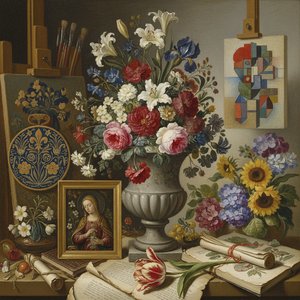
Blossoming Symbolism: A Historical Journey Through Flowers in Western Painting
Explore the rich history of flower symbolism in Western painting! Discover how artists from the Renaissance to Modernism used blossoms to convey meaning, emotion & beauty. Learn about iconic artworks and movements.

Blossoms of Time: A Historical Journey Through Flower Painting
Explore the captivating history of flower painting! Discover Dutch masters, symbolic meanings, & botanical art. Expert insights & high-quality reproductions at OriginalUniqueArt.
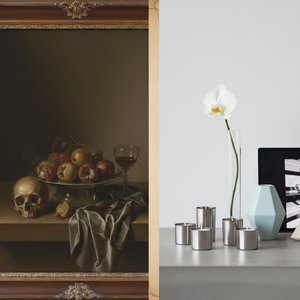
The Enduring Appeal of Still Life: A Historical & Contemporary Exploration
Explore the rich history & symbolism of still life painting with OriginalUniqueArt. Discover masterpieces from the Dutch Golden Age, learn about vanitas art, and find expert guidance for collecting timeless artworks.

Blossoms of Time: A Historical & Aesthetic Exploration of Floral Painting Across Cultures
Explore the rich history of floral painting! Discover symbolism, techniques & masterpieces from Van Huysum to O'Keeffe. Expert insights for art lovers & collectors at OriginalUniqueArt.

