

 实景预览
实景预览
 发送
发送 分享
分享
 详情
详情 指南
指南

 下载图片
下载图片
 相似作品
相似作品 X射线
X射线 幻灯片播放
幻灯片播放 统计数据
统计数据Speeding Automobile
 Futurist Painting
 1912
1912 56.0 x 69.0 cm
 纽约现代艺术博物馆
 阅读全文
阅读全文
艺术微喷/版画
博物馆级艺术微喷或帆布版画,制作高效,并提供多种饰面选择。 ( 订购此收藏品的纯手工复刻画作 切换至数字图像销售渠道)




P118B ¥10

P118H ¥10

P118W ¥10

P438Z ¥10

P508JH ¥12

P508YH ¥12

P805H ¥10

P805Z ¥10

P919BZ ¥10

P919G ¥10

P919XJ ¥10

P959ZH ¥10

P968JZ ¥12

W106C ¥8

W218G ¥10

W218JH ¥8

W218Y ¥10

W307PJ ¥10

W316G ¥10

W316PJ ¥8

W316Y ¥10

W398PJ ¥8

W4111J ¥10

W500HY ¥15

W500JH ¥15

W692G ¥12

W849H ¥8

W940BG ¥15

W953PJ ¥8




您可以从与原作比例一致的预设尺寸中进行选择。

请输入您所需的宽度和高度,以适配您的画框或墙面。由于印刷品只能进行裁剪,无法超出原图尺寸,因此若比例不一致,画面的一部分将会被裁切。在正式印刷之前,我们会为您发送一份数字效果图供您确认。本页面显示的图片并非最终裁剪后的效果——只有效果图才能展示真实的裁剪情况。


 玻璃选项仅适用于110厘米以下的尺寸。

Speeding Automobile
艺术微喷/版画
复刻品尺寸说明
-


总计金额
¥ 537
Speeding Automobile: A Futurist Vision of Modernity
Giacomo Balla’s “Speeding Automobile,” completed in 1912, stands as a cornerstone of Futurism—a movement that vehemently rejected the past and embraced speed, dynamism, and technological advancement. Painted on wood, this striking artwork exemplifies the Futurist aesthetic's obsession with capturing fleeting moments of motion and disrupting traditional artistic conventions.
- Subject Matter: The painting depicts a car in rapid movement, illuminated by its headlights, traversing an urban landscape populated by buildings. This deliberate choice reflects Futurists’ fascination with the transformative influence of automobiles on society and daily life.
- Style & Technique: Balla employed Divisionism—a technique pioneered by Monet and others—to achieve a luminous effect through juxtaposed patches of pure color. However, he pushed beyond mere optical representation, prioritizing expressive gesture and conveying the sensation of speed rather than precise visual detail. The artist’s meticulous attention to capturing the car's wheels at varying positions underscores this commitment to portraying movement effectively.
The inclusion of two figures—one positioned on the left side of the canvas and another closer to the center—adds a human element to the scene, emphasizing the relationship between individuals and the burgeoning pace of industrialization. These figures aren’t merely incidental; they serve as conduits for conveying the emotional impact of this accelerated world.
Historical Context: The Birth of Futurism
Born in Turin in 1871, Giacomo Balla's artistic journey began with an initial inclination towards music before shifting his focus to visual art following his father’s untimely death. His formative years were spent honing his skills in lithograph printmaking and studying at academies and the University of Turin. Moving to Rome in 1895 broadened his horizons creatively, fostering collaborations with illustrators and portrait painters.
The painting emerged during a period defined by fervent optimism about technological progress and fueled by the revolutionary manifesto penned by Filippo Tommaso Marinetti in 1910. Futurism championed concepts like violence, speed, and the glorification of machines—ideas that profoundly challenged artistic sensibilities of the time.
Symbolism & Emotional Resonance
"Speeding Automobile" transcends mere depiction; it embodies Futurist ideals. The vibrant colors and fractured forms symbolize the disruption of established order and celebrate the exhilarating energy of modernity. The headlights, strategically placed, represent illumination—both literal and metaphorical—guiding viewers toward a new understanding of time and space.
Resources for Further Exploration
- MoMA: Giacomo Balla. Speeding Automobile. 1912
- Obelisk Art History: Speeding Automobile by Giacomo Balla
问答详情
在 1912 年创作“Speeding Automobile”时,雅各布·巴拉 (Yǎkèbù·Bālā) 的年龄是多少?
当"Speeding Automobile"于1912创作时,出生于1871的雅各布·巴拉 (Yǎkèbù·Bālā)正值41岁。
是否有关于 雅各布·巴拉 (Yǎkèbù·Bālā) 的《Speeding Automobile》 的幻灯片展示?
您可以在作品的 幻灯片播放 页面上以幻灯片形式浏览 雅各布·巴拉 (Yǎkèbù·Bālā) 的《Speeding Automobile》。
如何描述 雅各布·巴拉 (Yǎkèbù·Bālā) 的《Speeding Automobile》 的色调?
雅各布·巴拉 (Yǎkèbù·Bālā) 的《Speeding Automobile》 的色调被描述为 Earthy。这是对作品色彩的精炼概括。
艺术家简介
早年生活与艺术启蒙
- 出生: 意大利都灵(1871年7月18日)
- 逝世: 1958年
- 贾科莫·巴拉出生于一个具有艺术渊源的家庭,他的父亲是一位摄影师。
- 最初学习音乐,直到九岁。
- 在父亲去世后,他在一家石印厂工作,培养了对视觉艺术的兴趣。
- 后来在当地学院和都灵大学学习。
- 1895年移居罗马,开始从事插画家、漫画家和肖像画家的职业。
艺术发展与关键时期
- 分裂主义: 巴拉早期的作品受到分裂主义的影响,这是一种采用小笔触的纯色来创造光感的技巧。这一时期表现了他对捕捉光效的兴趣。
- 未来主义: 遇到菲利波·托马索·马里内蒂后,拥抱未来主义是一个关键时刻。他于1910年成为未来主义宣言的签署者。
- 未来主义原则: 巴拉的未来主义作品专注于描绘光、运动和速度,经常融入抽象元素。他将未来主义原则扩展到家具设计和服装领域。
- 后期作品: 在晚年,他逐渐远离未来主义激进的一面,回归更传统的具象风格。
主要作品与艺术风格
- 抽象速度+声音 (Velocità Astratta + Rumore): 一项重要的作品,探索了以汽车为象征的速度。
- 街灯: 体现了他对光、氛围和运动的探索。
- 牵着狗奔跑的动态: 一件关键作品,展示了他通过绘画表达运动的努力。
- 博乔尼的拳头: 展示了他在未来主义运动中的雕塑作品。
- 风格: 巴拉的风格从分裂主义技术发展到对运动、光和现代生活的动态和抽象表现。他利用碎片化的形式、重叠的平面和鲜艳的色彩来传达一种能量和速度感。
影响与历史意义
- 埃蒂安-儒勒·马雷: 受马雷的计时摄影实验的影响,该实验记录了运动的连续阶段。
- 菲利波·托马索·马里内蒂: 未来主义宣言和马里内蒂的思想对巴拉的艺术方向至关重要。
- 历史意义: 作为未来主义运动的创始成员之一,巴拉在发展其美学原则和推广其在各种艺术形式中的影响力方面发挥了关键作用。他的作品帮助定义了20世纪早期的现代主义,并继续因其创新地表现运动和技术而受到赞誉。
遗产与认可
- 会员资格: 1935年成为罗马圣卢卡学院的成员。
- 展览: 参加了卡塞尔文献展1 (1955),并在文献展8 (1987) 上展出作品。
- 博物馆藏品: 他的艺术作品被阿尔布赖特-诺克斯美术馆、罗马圣卢卡国家学院和埃斯托里克收藏等机构收藏。
- 巴拉的遗产在于他对艺术中运动和动力的开创性探索,为未来主义的发展和现代艺术表现做出了重要贡献。

雅各布·巴拉 (Yǎkèbù·Bālā)
1871 - 1958 , 意大利
快速概览
- Artistic Movement Or Style: 未来主义
- Artists Or Movements Influenced By This Artist:
- 翁贝托·波乔尼
- 吉诺·塞维里尼
- Artists Who Influenced This Artist: ['埃蒂安-儒勒·马雷']
- Date Of Birth: 1871年7月18日
- Date Of Death: 1958年
- Full Name: 贾科莫·巴拉
- Nationality: 意大利国籍
- Notable Artworks (List Of Titles):
- 抽象速度+声音
- 街灯
- 狗的动态
- 博乔尼拳头
- Place Of Birth (City And Country): 意大利都灵市
相关文章

Carlo Carrà: Futurist Visions & Metaphysical Transformations in Early 20th-Century Italian Painting
Explore the artistic journey of Carlo Carrà, a pivotal figure in Italian Futurism & Metaphysical painting. Discover his dynamic compositions, collaborations with de Chirico, and lasting influence on modern art history.

Speed, Power, and Motion: A Journey Through the Energetic Soul of Futurism
Explore the exhilarating energy of Futurism. From Italian dynamism to Russian Cubo-Futurism, journey through a masterclass in speed, power, and motion in art history with our expert cultural reflections.
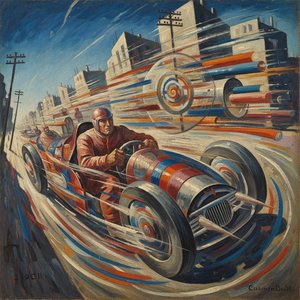
Giacomo Balla: Dynamism, Futurism & the Aesthetic of Speed – A Comprehensive Exploration
Explore the revolutionary art of Giacomo Balla, a key figure in Futurism. Discover his dynamic paintings capturing speed, light & movement. Learn about his techniques, masterpieces & legacy with our comprehensive guide.
Dynamism & Disruption: The Enduring Legacy of Futurism
Explore the revolutionary world of Futurism! Discover its key artists like Boccioni & Balla, defining principles, and lasting impact on modern art. A deep dive into this influential movement.

Speed, Power, and Motion: A Collector's Guide to the Dynamic World of Futurism
Explore the exhilarating world of Futurism with our expert guide. Discover how masters like Balla and Boccioni captured speed, power, and modern motion through dynamic avant-garde techniques—essential knowledge for any discerning art collector.
