

 购买手绘画作
 分享
分享 分享
分享
 详情
详情

 下载
下载
 相似作品
相似作品 幻灯片播放
幻灯片播放Medeic Callisthenic Moves V


 展开详情
展开详情




































从与原作比例一致的预设尺寸中进行选择。

您可以输入自定义尺寸,以适配特定的画框或空间。如果您选择的尺寸与原图比例不符,我们将对作品进行裁剪,或通过镜像填充/纯色填充边缘的方式来扩展图像。在开始制作之前,我们会向您发送一份数字效果图供您确认。
请注意,屏幕上的预览并不能反映实际的裁剪或扩展效果。只有效果图才能准确展示最终的构图。
虽然我们提供定制尺寸,但为了保持原图比例,我们建议您从预设列表中选择尺寸。


 玻璃选项仅适用于110厘米以下的尺寸。

Medeic Callisthenic Moves V
艺术微喷/版画
复制品尺寸
-


最终总价
$ 80
藏品详情
A Tapestry of Memory: Medeic Callisthenic Moves V by Geta Brătescu
Geta Brătescu’s “Medeic Callisthenic Moves V,” created in 1981, isn't merely a textile artwork; it’s an intimate echo of a bygone era, a whispered conversation between the artist and the materials themselves. This piece transcends simple representation, instead offering a deeply felt meditation on fragility, movement, and the quiet dignity of handmade artistry. It invites us to slow down, to observe the subtle shifts in texture and color, and to contemplate the story woven into its very fibers.
The Language of Stitch: Technique and Material
At first glance, “Medeic Callisthenic Moves V” appears deceptively simple – a muted field of beige linen punctuated by delicate grey-blue and mauve lines. However, this understated palette belies the meticulous craftsmanship involved. The work is entirely constructed through hand stitching, each stitch a deliberate act of creation. Brătescu’s technique isn't about precise geometric forms; rather, it embraces an improvisational quality, allowing for organic shapes to emerge from the interplay of thread and fabric. Notice how some areas are densely stitched, creating a tactile richness, while others retain a looser, more airy feel – a testament to the artist’s intuitive control.
Echoes of Antiquity: Symbolism and Context
The title itself—"Medeic Callisthenic Moves"—immediately evokes the myth of Medea, the sorceress who famously killed her children. This reference isn’t literal; instead, it speaks to a broader theme of contained power, of movement both graceful and potentially destructive. The piece can be interpreted as an exploration of feminine strength—not through overt aggression, but through resilience, adaptation, and the quiet endurance of life itself. Furthermore, the work resonates with Brătescu’s own experiences navigating censorship and artistic constraints within a politically charged environment in Romania during the 1970s and 80s – a period where expressing oneself freely was often perilous.
A Study in Texture and Light: Composition and Emotional Resonance
The composition of “Medeic Callisthenic Moves V” is characterized by a subtle grid, suggesting order while simultaneously allowing for an abundance of visual interest. The central oval shape commands attention, surrounded by smaller, more irregular forms that seem to dance around it. The lighting, soft and diffused, contributes to the overall sense of intimacy and quiet contemplation. It’s a piece designed not to shout, but to whisper—to invite viewers into a space of reflection and emotional resonance. The aged appearance of the fabric adds another layer of depth, hinting at history and suggesting that this artwork has witnessed countless moments of observation.
Beyond Reproduction: Investing in a Legacy
Geta Brătescu’s “Medeic Callisthenic Moves V” is more than just a beautiful textile; it's a significant work of art that speaks to the power of handmade artistry and the enduring legacy of a visionary artist. A high-quality reproduction captures much of the original’s essence, offering a tangible connection to this remarkable piece. Consider commissioning a hand-painted replica – an opportunity not only to own a stunning artwork but also to support the continuation of Brătescu's unique artistic vision.
艺术家简介
A Life Woven in Lines: The Art of Geta Brătescu
Geta Brătescu, a pivotal figure in Romanian contemporary art, lived a life deeply intertwined with the political and artistic currents of 20th-century Europe. Born Georgina Comanescu on May 4, 1926, in Ploiești, Romania, her journey as an artist was marked by resilience, innovation, and a profound exploration of identity, feminism, and the very essence of creative expression. Brătescu’s early intellectual pursuits led her to the University of Bucharest's Faculty of Letters between 1945 and 1949, where she studied under luminaries like George Călinescu and Tudor Vianu—a foundation that instilled in her a lifelong appreciation for literature and its power to inform artistic vision. Simultaneously, she enrolled at the Academy of Fine Arts, studying under Camil Ressu, but her studies were abruptly halted by the rising tide of communism. Deemed ‘of bad origins’ due to her family's property ownership, she faced expulsion, an early encounter with the censorship and political constraints that would shadow much of her career. This initial setback didn’t extinguish her artistic flame; instead, it fueled a period of self-directed learning and experimentation before returning to formal studies at the Institute of Fine Arts 'Nicolae Grigorescu' from 1969 to 1971.The Line as Language: A Multidisciplinary Approach
Brătescu’s artistic practice defied easy categorization, embracing a remarkable range of media—drawing, collage, photography, performance, illustration, and film all served as vehicles for her ideas. However, at the heart of this diverse output lay an unwavering fascination with the line. For Brătescu, the line wasn't merely a formal element; it was a fundamental tool for definition, measurement, and conveying movement—a way to map both physical space and inner states. This preoccupation is vividly apparent in her series of detailed hand studies, where the intricate network of lines captures not just anatomical form but also the expressive potential of the human touch. Her exploration extended beyond static representation into performative realms, using the line to delineate space and trace the boundaries of selfhood. This dedication to the line as a core element permeated all her work, becoming a signature that distinguished her unique artistic voice. She wasn’t interested in grand narratives or monumental statements; rather, she focused on the subtle power of gesture, the intimacy of materials, and the quiet revolutions possible within the confines of the studio.Identity, Feminism, and Resistance
Brătescu's art consistently grappled with complex questions of identity, often through self-portraits and performances that challenged conventional notions of representation. Her work frequently engaged with feminist themes, most notably in her series inspired by the mythological figure of Medea—a character whose story resonated deeply with Brătescu’s own experiences as a woman navigating a patriarchal society. The *Medeic Callisthenic Moves* series, created from scraps of cloth provided by her mother, is particularly poignant, reflecting a complex relationship to femininity and the weight of inherited narratives. Living under a restrictive political regime, Brătescu's art subtly addressed issues of censorship and freedom of expression. Her work often operated within the private sphere as a form of resistance—a quiet rebellion against imposed limitations. *Censored Self Portrait* (1978), a powerful photographic work depicting her mouth and eyes obscured by paper strips, stands as a stark symbol of these constraints, embodying the artist’s struggle to articulate herself in a silenced world. Her studio became a sanctuary, a space for experimentation and self-discovery where she could circumvent official channels and explore forbidden territories.Major Works and Lasting Legacy
Throughout her career, Brătescu produced a body of work that continues to inspire and challenge audiences. *The Studio* (1978), a seminal film created in collaboration with Ion Grigorescu, is a particularly significant piece, exploring the studio space as a site for self-definition and artistic creation—a microcosm of the artist’s inner world. The *Hands* series (1974–76) showcases her mastery of draughtsmanship and symbolic representation, elevating a seemingly mundane subject to profound metaphorical significance. The *Jeu des Formes (Game of Forms)* collages demonstrate her innovative approach to form and composition, continuing her exploration of lines and shapes in unexpected ways. Brătescu’s achievements were recognized late in life but with increasing acclaim. She served as artistic director of the influential Romanian literature and art magazine *Secolul 21*, and a major retrospective of her work was held at the National Museum of Art of Romania in 1999. In 2015, she had her first UK solo exhibition at Tate Liverpool, bringing her work to an international audience, culminating in representing Romania at the 57th Venice Biennale in 2017—a landmark moment in her career. Geta Brătescu passed away in Bucharest in 2018, leaving behind a legacy as a pioneering figure whose multidisciplinary approach and unwavering commitment to artistic freedom continue to resonate with generations of artists. She remains an essential voice for those seeking to challenge conventions and explore the complexities of human experience through art.
Geta Brătescu
1926 - 2018 , Romania
艺术家简介
- Artistic Movement Or Style: Conceptual art, Performance art
- Artists Or Movements Influenced By This Artist: Romanian contemporary art
- Artists Who Influenced This Artist:
- George Călinescu
- Tudor Vianu
- Aesop
- Faust
- Medea
- Date Of Birth: May 4, 1926
- Date Of Death: 2018
- Full Name: Geta Brătescu
- Nationality: Romanian
- Notable Artworks:
- The Studio
- Hands
- Medeic Callisthenic Moves
- Jeu des Formes
- Censored Self Portrait
- Place Of Birth: Ploiești, Romania
相关文章

抽象表现主义:十幅定义艺术史的杰作
探索抽象表现主义的十幅经典杰作!波洛克、罗斯科等大师作品,揭秘艺术史上的重要瞬间。OriginalUniqueArt.com为您呈现高品质艺术品复制和精选家居装饰方案,感受现代艺术的力量与魅力。立即浏览全系列!

几何抽象艺术十大杰作:定义现代家居装饰的经典之作
探索几何抽象艺术的十大杰作!康定斯基、蒙德里安等大师作品,色彩构成与非具象之美。OriginalUniqueArt.com提供博物馆级艺术复制品,为您的家居带来现代艺术灵感。立即在线探索完整系列!
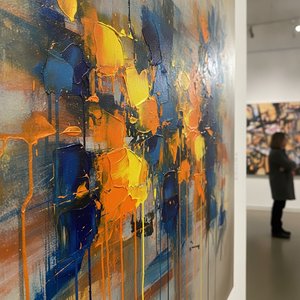
Beyond the Lines: Mastering the High-Impact World of Contemporary Abstraction
Master the high-impact world of contemporary abstraction. Discover how bold colors, textures, and modern movements like Abstract Expressionism can transform your space with premium, high-energy art curated for the design-conscious professional.

The Soul of Color: A Journey into the Emotional Resonance of Lyrical Abstraction
Embark on a cultural journey through Lyrical Abstraction. Explore how masters like Kandinsky used color and motion to translate emotion into visual poetry. Discover the profound beauty of abstract expressionism and learn to curate emotional resonance in your own art collection.

Lyrical Abstraction: The High-Energy Soul of Modern Art’s Most Vibrant Movement
Dive into the high-energy world of Lyrical Abstraction. Explore how bold colors, fluid motion, and emotional depth define this modern masterpiece movement. Discover iconic artists and learn to bring this vibrant, soulful energy into your contemporary space.

