切换至版画销售渠道
 展开全文
展开全文







































 对于任何边长超过 105 厘米(约 41 英寸)的艺术品或复制品,画框将以拆解后的组件形式发货。此方法可确保安全送达并防止运输过程中的损坏。


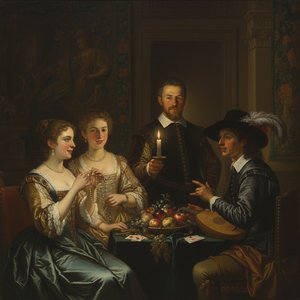
A Dance in Shadow: Gerard van Honthorst’s “Merry Company”
Gerard van Honthorst's "Merry Company," painted in 1623, isn’t merely a depiction of a tavern scene; it’s a carefully orchestrated tableau of light, social interaction, and the subtle drama inherent in human connection. This remarkable work, now residing within the Alte Pinakothek in Munich, offers a captivating glimpse into the vibrant heart of the Dutch Golden Age – a period defined by burgeoning wealth, artistic innovation, and a fascination with capturing the nuances of everyday life.
The painting immediately draws the eye with its masterful use of chiaroscuro, a technique borrowed directly from Caravaggio and central to Honthorst’s signature style. Deep shadows engulf much of the composition, creating an atmosphere of intimacy and drawing attention to the illuminated figures clustered around a table laden with goblets, wine glasses, and platters of food. This dramatic interplay of light and dark isn't simply aesthetic; it serves to heighten the sense of drama and immediacy, as if we are witnessing a fleeting moment frozen in time.
The Setting: A Tavern’s Embrace
The scene unfolds within what appears to be a richly appointed tavern – though the specific location remains somewhat elusive. The details suggest a comfortable, well-established establishment, likely frequented by merchants and members of the local elite. Notice the carefully rendered furniture, the warm glow emanating from unseen candles, and the abundance of drinkware. The composition is deliberately crowded, reflecting the lively atmosphere of a social gathering. Several figures are seated, engaged in conversation or perhaps enjoying music – though the instruments themselves aren’t explicitly visible, their presence is strongly implied.
A key element to note is the inclusion of several women amongst the men. This was relatively uncommon in Dutch genre paintings of this era, and suggests a deliberate attempt by Honthorst to portray a more balanced and inclusive representation of social life. The women are not merely decorative; they actively participate in the conversation and revelry, contributing to the overall sense of merriment.
A Caravaggistic Influence: Light and Emotion
Honthorst’s debt to Caravaggio is undeniable. Like his Italian predecessor, he understood the power of light to shape perception and evoke emotion. The strong directional lighting casts dramatic shadows that sculpt the figures' faces and bodies, emphasizing their expressions and gestures. The use of a single, unseen light source creates a sense of immediacy and realism, as if we are present at this lively gathering ourselves.
Furthermore, Honthorst’s attention to detail is remarkable. From the folds of the clothing to the textures of the furniture, every element contributes to the overall sense of authenticity. The figures themselves are rendered with a subtle psychological depth – their expressions ranging from jovial amusement to quiet contemplation. This level of realism was highly valued by Dutch artists during this period and reflects Honthorst’s skill as a portraitist.
Symbolism and Social Commentary
Beyond its immediate visual appeal, “Merry Company” offers subtle insights into the social dynamics of 17th-century Holland. The painting can be interpreted as a celebration of prosperity and leisure – hallmarks of the Dutch Golden Age. However, it also subtly hints at the potential pitfalls of excess and indulgence. The abundance of drink and merriment serves as a reminder of the importance of moderation and self-control.
The inclusion of figures like the older woman holding a candle is particularly intriguing. Her presence suggests a contemplation on time, beauty, and mortality – themes that were frequently explored in Dutch art during this period. The flickering candlelight symbolizes both love and vanity, highlighting the transient nature of earthly pleasures. “Merry Company” isn’t simply a depiction of a social gathering; it's a carefully constructed meditation on life, death, and the human condition.
A Timeless Masterpiece
Gerard van Honthorst’s “Merry Company” remains a captivating masterpiece – a testament to his artistic skill and his profound understanding of light, emotion, and the complexities of human interaction. Its dramatic chiaroscuro, rich detail, and subtle symbolism continue to resonate with viewers today, offering a glimpse into the vibrant world of 17th-century Holland.
常见问题与解答
哪些色调与主导色彩定义了“Merry Company”?
赫伦多特 (Hèlénduōtè) 的《Merry Company》 的色彩特征:Earthy 色调,以 Black (#1a080c) 为主导。
“Merry Company”的创作者是谁?创作于哪一年?
"Merry Company" 是由 赫伦多特 (Hèlénduōtè) 于 1623 年创作的。
"Merry Company" 的艺术风格与其创作时代有何关联?
赫伦多特 (Hèlénduōtè) 的《Merry Company》 属于 Baroque Painting 流派,创作于其作者的 近代早期 时期。
 实景预览
实景预览
 分享
分享 分享
分享
 详情
详情 指南
指南

 下载作品
下载作品
 相似作品
相似作品 X射线
X射线 幻灯片播放
幻灯片播放 问答
问答 统计数据
统计数据