

 实景预览
实景预览
 发送
发送 分享
分享
 详情
详情 指南
指南

 下载图片
下载图片
 相似作品
相似作品 X射线
X射线 幻灯片播放
幻灯片播放 统计数据
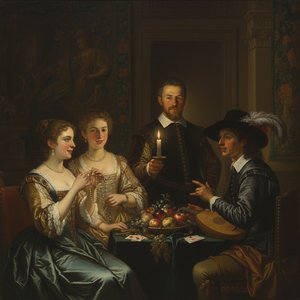
统计数据The Visit
 Oil On Canvas
- WallArt
- Dutch Golden Age Genre
 78.0 x 74.0 cm
 Staatliches Museum
 阅读全文
阅读全文
艺术微喷/版画
博物馆级艺术微喷或帆布版画,制作高效,并提供多种饰面选择。 ( 订购此收藏品的纯手工复刻画作 切换至数字图像销售渠道)




P118B ¥10

P118H ¥10

P118W ¥10

P438Z ¥10

P508JH ¥12

P508YH ¥12

P805H ¥10

P805Z ¥10

P919BZ ¥10

P919G ¥10

P919XJ ¥10

P959ZH ¥10

P968JZ ¥12

W106C ¥8

W218G ¥10

W218JH ¥8

W218Y ¥10

W307PJ ¥10

W316G ¥10

W316PJ ¥8

W316Y ¥10

W398PJ ¥8

W4111J ¥10

W500HY ¥15

W500JH ¥15

W692G ¥12

W849H ¥8

W940BG ¥15

W953PJ ¥8




您可以从与原作比例一致的预设尺寸中进行选择。

请输入您所需的宽度和高度,以适配您的画框或墙面。由于印刷品只能进行裁剪,无法超出原图尺寸,因此若比例不一致,画面的一部分将会被裁切。在正式印刷之前,我们会为您发送一份数字效果图供您确认。本页面显示的图片并非最终裁剪后的效果——只有效果图才能展示真实的裁剪情况。


 玻璃选项仅适用于110厘米以下的尺寸。

The Visit
艺术微喷/版画
复刻品尺寸说明
-


总计金额
¥ 538
A Window Into Seventeenth-Century Domestic Life: Exploring Gerard Ter Borch’s “The Visit”
Gerard ter Borch, a pivotal figure in Dutch Golden Age art history, stands as a beacon of psychological realism and meticulous observation within the genre of domestic painting. Born in Zwolle in 1617, he embarked on an artistic journey that traversed Europe, absorbing influences from diverse artistic traditions – notably the Baroque – shaping his distinctive style and cementing his legacy as one of the era’s foremost masters. His sister, Gesina ter Borch, also pursued a career in painting, fostering a familial commitment to artistic excellence that would resonate throughout their lives. Ter Borch's oeuvre is characterized by an unparalleled sensitivity to capturing subtle emotions and nuanced interactions within seemingly commonplace settings—a hallmark that distinguishes him from many of his contemporaries.Composition and Technique: Mastering Light and Texture
“The Visit,” painted circa 1655, exemplifies ter Borch’s masterful command of technique. Executed in oil on canvas – a medium favored for its ability to achieve remarkable luminosity and textural detail – the artwork presents four figures engaged in conversation within a richly furnished bedroom. The artist skillfully employs chiaroscuro—the dramatic interplay between light and shadow—to sculpt the forms of the women seated on a bench and the men standing nearby, creating an illusionistic depth that draws the viewer into the scene. Ter Borch’s meticulous brushwork captures the delicate weave of fabric, the sheen of polished surfaces, and the subtle nuances of skin tones with astonishing accuracy. This painstaking attention to detail underscores ter Borch's dedication to portraying reality as faithfully as possible—a cornerstone of his artistic philosophy.Symbolism Within Everyday Reality: Decoding Gestures and Expressions
Beyond its technical brilliance, “The Visit” is laden with symbolic significance. The bed draped in a scarlet blanket serves as a visual anchor, representing comfort, intimacy, and perhaps even unspoken desires. The postures and gestures of the figures convey a complex tapestry of emotions—ranging from polite cordiality to veiled apprehension—reflecting the psychological depth that ter Borch sought to achieve. Scholars have interpreted subtle facial expressions and glances as indicators of hidden agendas and unspoken feelings, prompting ongoing debate about the artwork’s intended message. Ter Borch's ability to transform ordinary domestic life into a vehicle for profound emotional exploration distinguishes him from many other artists of his time.Historical Context: Reflecting Dutch Society’s Values
“The Visit” emerged during a period of considerable social and intellectual ferment in Holland—the Dutch Golden Age (approximately 1648-1702). This era witnessed unprecedented economic prosperity, fueled by maritime trade and colonial expansion, fostering a vibrant cultural landscape characterized by artistic innovation and humanist ideals. Genre painting flourished as a response to the prevailing fascination with portraying the realities of everyday life—a deliberate departure from grand mythological narratives favored by earlier Baroque artists. Ter Borch’s work reflects the Dutch obsession with moral virtue and social decorum—values that underpinned the nation's reputation for stability and sophistication.Emotional Resonance: Capturing Transient Moments
Ultimately, “The Visit” transcends its formal qualities to evoke a powerful emotional response in the viewer. The artwork captures a fleeting moment of human connection—a conversation between friends or family members—rendered with breathtaking tenderness and sensitivity. Ter Borch’s masterful depiction of psychological realism invites contemplation about the complexities of human relationships and the enduring power of unspoken emotions. Like many of his contemporaries, ter Borch aimed to elevate genre painting beyond mere visual representation, transforming it into a medium for conveying profound truths about the human condition—a testament to his artistic genius and lasting influence on art history.Location: Staatliches Museum Schwerin
The Staatliches Museum Schwerin houses an impressive collection of artworks from various periods and styles. You can find more information about the museum on Wikipedia: https://en.wikipedia.org/wiki/Staatliches_Mus问答详情
格拉德·特·博尔赫 的《The Visit》 的亮度如何?
"The Visit" 的色彩呈现出 Dark 的亮度。
"The Visit" 与 格拉德·特·博尔赫 的其他作品有何共通之处?
"The Visit" 属于 格拉德·特·博尔赫 的 Dutch Golden Age Genre 时期作品,其记录的主题包括 domestic intimacy, psychological realism, genre painting style, dutch artistic heritage, symbolic interior space。
我能查看格拉德·特·博尔赫 的《The Visit》的X光影像吗?
格拉德·特·博尔赫 的《The Visit》 的 X射线检测 页面是一个交互式查看器,您可以通过它逐层滑动浏览作品图像的十一层光学图层,其中还包含 X 光风格的视图。
艺术家简介
荷兰风俗画的先驱
格拉德·特·博尔赫 (Gerard ter Borch) 作为荷兰黄金时代的一位杰出人物,凭借其精湛的风俗画创作,在艺术史上留下了不可磨灭的印记。他生于1617年12月,并于1681年12月8日逝世,其一生便是对其卓越艺术造诣的最好见证。早年生活与艺术影响
特·博尔赫的早年生活虽缺乏详尽的文献记载,但众所周知,他曾广泛游历欧洲,足迹遍布伦敦、德国、法国、西班牙和意大利。这段丰富的旅程极大地拓宽了他的艺术视野,并深刻影响了他那独树一enc的艺术风格。此外,他的姐姐 格西娜·特·博尔赫 (Gesina ter Borch) 也投身于绘画事业,这进一步加深了其家族深厚的艺术底蕴。传世杰作与卓越成就
特·博尔赫的作品充满了叙事魅力与技术深度。他的名作 《信》 (The Letter) 堪称大师之作,完美展示了他捕捉织物纹理与光影流转的非凡技艺;而由约翰·乔治·维勒雕刻的 《优雅的对话》 (The Gallant Conversation),则体现了艺术家传达细腻情感的能力。在其早期作品中,《骑马者》 (Man on horseback, 1634) 便已初露锋芒,展现了其崭露头角的才华;而 《阿德里安·鲍在明斯特的抵达》 (Adrian Pauw's arrival in Münster, 1646) 则是一件具有重要意义的作品,突显了他在叙事性绘画方面的深厚功底。收藏特·博尔赫作品的博物馆与馆藏
如今,世界各地的顶级艺术机构均珍藏着他的杰作:艾尔米塔什博物馆 (The Hermitage) 拥有六件其作品,是规模最大的收藏之一;柏林博物馆 (Berlin Museum) 展示了六件作品,彰显了特·博尔赫在国际上的艺术影响力;而盖蒂中心 (Getty Center) 也将其三幅绘画作品纳入了这一备受推崇的馆藏之中。传承与深远影响
特·博尔赫对荷兰后辈画家如加布里埃尔·梅祖、格里特·杜、埃格隆·范·德·内尔以及约翰内斯·维米尔的影响是有据可查的。他在风俗画领域所采取的创新方法,使他成为了艺术史上一个至关重要的转折点人物。- 欲了解更多关于特·博尔赫的生平与作品,请访问 https://OriginalUniqueArt.com/@/gerard-ter-borch
- 探索荷兰鹿特丹的 博伊曼斯·范·伯宁恩博物馆,那里展示了许多特·博尔赫同时代的艺术家作品:https://OriginalUniqueArt.com/@@/a@d3arrk-museum-boijmans-van-beuningen-rotterdam-netherlands
- 在 维基百科 深入了解荷兰黄金时代及其杰出艺术家:https://en.wikipedia.org/wiki/dutch_golden_age

格拉德·特·博尔赫
1617 - 1681 , 荷兰
快速概览
- Artistic Movement Or Style: 风俗画
- Artists Or Movements Influenced By This Artist: ['迭戈·委拉斯奎兹']
- Artists Who Influenced This Artist:
- 加布里埃尔·梅特苏
- 格里特·杜
- 埃格隆·范·德·内尔
- 约翰内斯·维米尔
- Date Of Birth: 1617年12月
- Date Of Death: 1681年12月8日
- Full Name: 杰拉德·特·博尔赫
- Nationality: 荷兰
- Notable Artworks:
- 《信》
- 《风流对话》
- 《骑马的人》
- 《阿德里安·鲍在明斯特的抵达》
- Place Of Birth: 荷兰,兹沃勒
相关文章

Gerard ter Borch: Intimacy & Light in the Dutch Golden Age
Explore the captivating world of Gerard ter Borch, a master of Dutch Golden Age genre painting. Discover his intimate scenes, masterful light, and lasting influence on art history. Learn more at OriginalUniqueArt.

荷兰黄金时代绘画:文化创新中的现实主义反思
深入探索荷兰黄金时代绘画的文化创新与现实主义反思。本文解读伦勃朗、维米尔等大师的作品,并结合玛莉特·韦斯特曼的图像学研究,揭示艺术史背后的社会语境与现代性意识觉醒。
Gerard van Honthorst: Illuminating the Dutch Golden Age with Caravaggism & Courtly Grace
Explore the captivating world of Gerard van Honthorst, a Dutch Golden Age master renowned for his dramatic chiaroscuro & courtly portraits. Discover his life, art, and lasting influence on Baroque painting.

Chiaroscuro and Character: A Definitive Guide to Light and Shadow in the Dutch Baroque Era
Explore the dramatic mastery of the Dutch Baroque era. Discover how masters like Rembrandt used chiaroscuro to transform everyday life into timeless art. An expert guide for collectors and enthusiasts seeking to understand the profound interplay of light and shadow.

Dutch Baroque Masters: 10 Paintings That Shaped an Era | OriginalUniqueArt
Journey through the Golden Age with our guide to the Top 10 Dutch Baroque masterpieces! Explore iconic paintings by Rembrandt, Vermeer & Frans Hals. Find museum-quality art reproductions and elevate your home decor at OriginalUniqueArt.com.
