切换至版画销售渠道
 展开全文
展开全文







































 对于任何边长超过 105 厘米(约 41 英寸)的艺术品或复制品,画框将以拆解后的组件形式发货。此方法可确保安全送达并防止运输过程中的损坏。


The Raw Pulse of the Ring
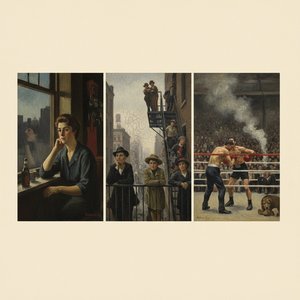
In the heart of the early twentieth century, amidst the grit and burgeoning energy of New York City, George Wesley Bellows captured a moment of pure, unadulterated tension in his 1924 masterpiece, Ringside Seats. This dramatic oil painting serves as more than just a depiction of a boxing match; it is a visceral window into the soul of the Ashcan School. The composition pulls the viewer directly into the fray, placing us at the very edge of the canvas where the sweat and struggle are almost palpable. Through a masterful use of chiaroscroll lighting, Bellows illuminates the central combatants with a singular, piercing spotlight, leaving the surrounding crowd to emerge from a heavy, atmospheric shadow. This technique creates an intense sense of immediacy, as if the viewer is holding their breath alongside the spectators, waiting for the next decisive blow to land.
The artistry of Bellows lies in his ability to blend the athletic precision of his own background with a profound painterly texture. Having been a skilled athlete himself, he understood the mechanics of movement and the physical toll of competition. In Ringside Seats, this knowledge translates into a technique where thick, layered brushwork lends a rugged, organic quality to the human forms. The palette is a somber yet warm arrangement of deep browns, burnished golds, and striking reds, evoking the smoky, heated atmosphere of a historical boxing arena. Every stroke contributes to a sense of weight and substance, making the canvas feel less like a flat image and more like a living, breathing stage of human endurance.
A Symphony of Light and Shadow
Beyond the physical action, the painting explores deep-seated themes of masculinity, social observation, and the spectacle of violence. The ring acts as a geometric sanctuary of conflict, surrounded by a sea of faces that represent the diverse social strata of the era. There is a fascinating duality in the work: while the subject matter focuses on the primal struggle within the ropes, the composition invites a more detached, sociological gaze. We are observers of a ritualized combat, witnessing the intersection of sport and entertainment. The way the light falls upon the fighters' bodies highlights the musculature and the strain of effort, turning the boxers into sculptural figures that embody the very essence of grit and determination.
For the discerning collector or interior designer, Ringside Seats offers a profound emotional resonance that transcends its historical period. It is a piece that commands attention through its dramatic contrast and narrative depth. Whether placed in a sophisticated study, a modern gallery space, or a curated living area, this reproduction brings a sense of historical gravity and cinematic drama to any environment. It serves as a conversation piece that celebrates the beauty found in struggle and the enduring power of the human spirit under pressure. To possess such a work is to hold a fragment of American realism, capturing a time when the world was moving with a new, restless, and unstoppable momentum.
常见问题与解答
“Ringside Seats”是如何体现 乔治·韦斯利·贝娄 (Qiáo Zhì Wēsīlì Bèi Lóu) 的创作主题与艺术风格的?
"Ringside Seats" 是 乔治·韦斯利·贝娄 (Qiáo Zhì Wēsīlì Bèi Lóu) Contemporary Realism 时期的代表作,其创作主题涵盖了 key boxing series work, nyc urban scenes focus, dramatic lighting signature, ashcan school realism, american urban art, social documentary style, spectacle of violence, urban masculinity。
"Ringside Seats" 创作于哪一年?
"Ringside Seats"创作于1924年。这一时期将该作品置于乔治·韦斯利·贝娄 (Qiáo Zhì Wēsīlì Bèi Lóu)的艺术生涯及其所处时代之中。
乔治·韦斯利·贝娄 (Qiáo Zhì Wēsīlì Bèi Lóu) 的《Ringside Seats》 传达了怎样的心境与情感?
在“Ringside Seats”中,Dramatic 的氛围伴随着 Dramatic 的情感。
 实景预览
实景预览
 分享
分享 分享
分享
 详情
详情 指南
指南

 下载作品
下载作品
 相似作品
相似作品 X射线
X射线 幻灯片播放
幻灯片播放 Q&A
Q&A 统计数据
统计数据