切换至版画销售渠道
 展开全文
展开全文







































 对于任何边长超过 105 厘米(约 41 英寸)的艺术品或复制品,画框将以拆解后的组件形式发货。此方法可确保安全送达并防止运输过程中的损坏。


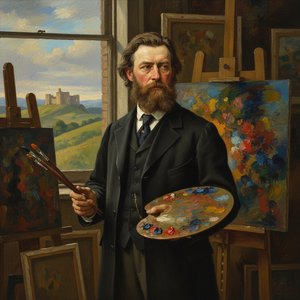
John MacRobin, MD: A Portrait of Dignified Reflection
George Reid’s “John MacRobin, MD” stands as a testament to the Victorian era's fascination with formal portraiture and its ability to convey profound emotion. Painted in 1877, this artwork captures John MacRobin, a Scottish physician practicing in Aberdeen, Scotland, with remarkable sensitivity and detail.
Reid’s artistic style leans heavily into Dutch Impressionism—a movement that prioritized capturing fleeting moments of light and color rather than striving for photographic realism. This influence is evident in the subdued palette of reds and browns dominating the canvas, creating a rich textural surface reminiscent of Rembrandt’s masterful use of chiaroscuro.
- Subject Matter: The portrait depicts MacRobin seated in a chair against a crimson wall, gazing intently outwards. His posture exudes composure and thoughtfulness, suggesting introspection and contemplation.
- Technique: Reid employed oil paint on canvas using layering techniques—a hallmark of Impressionism—to build up tonal variations and achieve luminous effects. Careful brushstrokes contribute to the painting’s palpable atmosphere.
- Historical Context: Aberdeen in 1877 was a thriving university town, fostering intellectual curiosity and artistic experimentation. Reid's work reflects this cultural milieu, aligning with broader trends toward psychological portraiture during the Victorian period.
The symbolism embedded within “John MacRobin, MD” extends beyond mere representation. The crimson wall serves as a visual anchor, grounding the figure in his surroundings while simultaneously symbolizing passion and vitality—contrasting subtly with MacRobin’s serene gaze.
More than just an image of a man, Reid's painting evokes a feeling of quiet dignity and contemplative awareness. It invites viewers to consider themes of intellectuality, responsibility, and the inner life – qualities valued during Victorian society. The artwork remains a captivating example of Impressionist artistry and a poignant glimpse into the character of a prominent Aberdeen physician.
George Reid: Influenced by Dutch Masters
Reid’s artistic vision was profoundly shaped by his exposure to the art world of Philadelphia, where he studied under Thomas Eakins—a celebrated realist painter who championed anatomical accuracy and meticulous observation. This formative experience instilled in Reid a respect for established techniques while simultaneously nurturing his desire to explore innovative approaches.
Eakins’s influence is palpable in Reid's commitment to capturing the human form with precision, mirroring Eakins’s dedication to portraying subjects with unflinching realism. However, Reid skillfully blended these influences with Impressionistic principles—particularly the pursuit of atmospheric effects—resulting in a distinctive artistic style.
- Philadelphia Academy: Reid's time at Philadelphia solidified his understanding of academic art traditions and provided invaluable experience in mastering observational skills.
- Eakins’s Impact: Eakins encouraged Reid to prioritize anatomical correctness alongside expressive brushwork—a balance that characterizes many of Reid’s landscapes and genre scenes.
Reid's artistic journey exemplifies the dynamic interplay between tradition and innovation, demonstrating how artists can draw inspiration from established masters while forging their own unique creative voice.
Aberdeen Landscapes: A Reflection of Victorian Sentiment
Beyond portraits, Reid’s oeuvre encompasses a series of evocative landscapes that capture the beauty of Scotland—particularly Aberdeen—during the Victorian era. These paintings are characterized by a lyrical quality and an emotional resonance that speaks to the period's preoccupation with nature and spirituality.
Reid skillfully employed color palettes reminiscent of Dutch Impressionists, prioritizing tonal harmonies and subtle gradations to convey mood and atmosphere. His brushstrokes are loose and expressive, capturing the fleeting effects of light on rolling hills and tranquil waterways—a hallmark of Victorian landscape painting.
- Scottish Inspiration: Reid’s landscapes celebrate Aberdeen's scenic grandeur—drawing inspiration from the region’s dramatic coastline and verdant countryside.
- Atmospheric Rendering: The artist meticulously rendered light and shadow, creating a sense of depth and realism that aligns with Impressionistic ideals.
These paintings are not merely depictions of places; they embody Victorian sensibilities—a yearning for beauty, contemplation, and connection to the natural world.
Symbolism in Reid’s Artistic Vision
Reid's artistic approach extended beyond mere visual representation. He deliberately incorporated symbolic elements into his compositions—reflecting Victorian intellectual currents and conveying deeper meanings beneath the surface of imagery.
Consider, for example, the recurring use of crimson hues throughout Reid’s paintings. Crimson symbolizes passion, vitality, and nobility—qualities that Reid wished to imbue his subjects with—particularly in portraits like “John MacRobin, MD.”
- Color Symbolism: Reid skillfully utilized color palettes to communicate emotional states and convey thematic ideas—a technique rooted in Victorian artistic conventions.
- Emotional Resonance: The artist’s deliberate choices of imagery and tonal harmonies contribute to the paintings' profound impact on viewers—eliciting feelings of serenity, contemplation, and appreciation for natural beauty.
Through his masterful artistry, George Reid succeeded in capturing not only the visual splendor of Victorian Scotland but also its underlying spiritual ethos.
常见问题与解答
针对 乔治·罗曼尼 的《John MacRobin, MD》 的版画,推荐的尺寸和方向是什么?
对于“John MacRobin, MD”,建议的打印设置尺寸为 Large,方向为 Portrait。
"John MacRobin, MD" 的主导色调是什么?
乔治·罗曼尼 的《John MacRobin, MD》 的主导色调为 Warm Sunset Tones,这一色调构成了整个色板的基调。
乔治·罗曼尼 的《John MacRobin, MD》展现了怎样的色彩和谐感?
乔治·罗曼尼 的《John MacRobin, MD》 的色彩呈现出一种 Softly Mixed Palette 的和谐感。这种和谐感描述了色彩之间的相互关系。
 实景预览
实景预览
 分享
分享 分享
分享
 详情
详情 指南
指南

 下载作品
下载作品
 相似作品
相似作品 X射线
X射线 幻灯片播放
幻灯片播放 问答
问答 统计数据
统计数据