

 效果预览
效果预览
 购买手绘画作
 分享
分享 分享
分享
 详情
详情

 下载
下载
 相似作品
相似作品 X射线
X射线 幻灯片播放
幻灯片播放Self Portrait
 Other
Other 80.0 x 59.0 cm
 展开详情
展开详情




P118B $10

P118H $10

P118W $10

P438Z $10

P508JH $12

P508YH $12

P805H $10

P805Z $10

P919BZ $10

P919G $10

P919XJ $10

P959ZH $10

P968JZ $12

W106C $8

W218G $10

W218JH $8

W218Y $10

W307PJ $10

W316G $10

W316PJ $8

W316Y $10

W398PJ $8

W4111J $10

W500HY $15

W500JH $15

W692G $12

W849H $8

W940BG $15

W953PJ $8




从与原作比例一致的预设尺寸中进行选择。

您可以输入自定义尺寸,以适配特定的画框或空间。如果您选择的尺寸与原图比例不符,我们将对作品进行裁剪,或通过镜像填充/纯色填充边缘的方式来扩展图像。在开始制作之前,我们会向您发送一份数字效果图供您确认。
请注意,屏幕上的预览并不能反映实际的裁剪或扩展效果。只有效果图才能准确展示最终的构图。
虽然我们提供定制尺寸,但为了保持原图比例,我们建议您从预设列表中选择尺寸。


 玻璃选项仅适用于110厘米以下的尺寸。

Self Portrait
艺术微喷/版画
复制品尺寸
-


最终总价
$ 80
艺术家简介
A Visionary of Light and Loss: The Life of Georg Mayer-Marton
The life of Georg Mayer-Marton (1897–1960) serves as a profound testament to the resilience of the human spirit amidst the turbulent currents of twentieth-century history. Born in Győr, Hungary, during the twilight of the Austro-Hungarian Empire, his early years were steeped in the cultural richness of Central Europe. Like many of his generation, the shadows of conflict soon descended upon him; his service in the Austro-Hungarian army during World War I left an indelible mark on his psyche, a weight that would later manifest in the expressive, often somber depths of his artistic vision. This early exposure to the fragility of existence became a foundational element of his creative identity, informing a style that sought to find beauty within the fractured landscapes of memory and displacement.
Mayer-Marton’s formal artistic journey began in earnest following the Great War, as he pursued rigorous training at the prestigious Academy of Fine Arts in Vienna and later in Munich. It was in the vibrant, avant-garde atmosphere of interwar Vienna that he truly found his voice. His ascent within the art world was remarkably swift; he became a central figure in the Hagenbund, a progressive society of artists where he served as both secretary and vice-precedent. During this period, his work began to bridge the gap between classical tradition and modern expressionism, characterized by a masterful command of oil, watercolor, and graphic media. His ability to weave complex narratives through color and form earned him recognition across Europe, with his works finding homes in the esteemed galleries of Budapest, Vienna, Prague, and Rome.
Exile, Resilience, and the Byzantine Spirit
The trajectory of Mayer-Marton’s life was irrevocably altered by the rise of Nazism. The Anschluss of 1938 and the implementation of the Nuremberg Laws forced him into a harrowing exile. Alongside his wife, he fled to England, leaving behind not only his homeland but also much of his established career. This period of displacement was marked by profound personal tragedy, most notably the loss of his parents during the Holocaust. Yet, even in the face of such overwhelming grief, Mayer-Marton’s creative impulse remained unextinguished. Though the London Blitz brought further devastation—destroying his studio and a lifetime of irreplaceable artwork—he continued to find solace in the act of creation.
In England, Mayer-Marton underwent a fascinating stylistic evolution. He became a pioneer of the Byzantine mosaic technique within the United Kingdom, drawing inspiration from his earlier studies in Ravenna, Italy. This fascination with the spiritual and the eternal allowed him to channel his experiences of loss into something monumental and enduring. His later years, spent settling in Liverpool, saw him serving as a senior lecturer at the College of Art, where he passed his knowledge to a new generation. His work from this era often reflects a synthesis of his diverse influences:
- Expressive Brushwork: A technique that utilized thick impasto and fluid motion to evoke raw emotion.
- Spiritual Symbolism: The integration of mosaic-like patterns and Byzantine aesthetics to explore themes of transcendence.
- Emotional Depth: A palette that could shift from the cool, melancholic blues of an abstract waterfall to the poignant, humanistic focus of his portraits.
Ultimately, the legacy of Georg Mayer-Marton is one of profound historical significance. He stands as a bridge between the lost world of the Austro-Hungarian intelligentsia and the modern European landscape. His art does not merely document a life lived through war and exile; it captures the very essence of survival, transforming the scars of history into a luminous tapestry of light, color, and enduring human dignity.

georg mayer marton
1897 - 1960
艺术家简介
- Artistic Movement Or Style: Expressionism
- Artists Or Movements Influenced By This Artist: ['Byzantine mosaic']
- Artists Who Influenced This Artist: ['Franz Marc']
- Date Of Birth: June 3, 1897
- Date Of Death: August 8, 1960
- Full Name: Georg Mayer Marton
- Nationality: Hungarian
- Notable Artworks:
- Self Portrait
- Llanthony Valley
- Waterfall
- Place Of Birth: Győr, Hungary
相关文章

乔治·布拉克:25幅大师杰作,重塑现代艺术与家居美学 | OriginalUniqueArt
探索乔治·布拉克25幅大师杰作,领略立体主义的魅力与现代艺术的精髓。从早期作品到经典油画,OriginalUniqueArt为您呈现法式优雅与家居装饰灵感。高清艺术复制品,点亮您的空间!立即在OriginalUniqueArt.com发现更多。

乔治·修拉25幅杰作:点彩主义大师的艺术之旅 | OriginalUniqueArt
探索乔治·修拉25幅传世杰作!深入了解点彩画法、后印象派的艺术魅力,感受光与色彩的奇妙。OriginalUniqueArt.com提供高品质修拉作品复制品,为您的家居空间增添经典艺术气息。立即在线探索完整系列!

The Enduring Legacy of Oil on Canvas: Technique, History & Aesthetic Impact
Explore the rich history & techniques of oil painting – from Renaissance masters to Impressionism. Discover pigments, layering methods, and why this timeless medium endures. Expert insights for artists & art enthusiasts.

Oil on Canvas: A Historical & Technical Exploration of a Timeless Artistic Medium
Explore the rich history & enduring techniques of oil painting on canvas. Discover the science behind its longevity, conservation practices, and contemporary relevance. Expert insights for art enthusiasts.
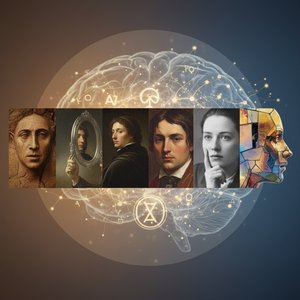
Reflecting the Self: A History of Portraiture & Psychological Insight
Explore the fascinating history of self-portraiture from Renaissance masters like Dürer & Rembrandt to modern interpretations. Discover the psychological insights and artistic techniques behind these iconic works. Expert analysis for art enthusiasts.

