

 实景预览
实景预览
 发送
发送 分享
分享
 详情
详情 指南
指南

 下载图片
下载图片
 相似作品
相似作品 X射线
X射线 幻灯片播放
幻灯片播放 统计数据
统计数据Untitled
 Abstract Expressionism
 1989
1989 200.0 x 300.0 cm
 Arts Council Collection
 阅读全文
阅读全文
艺术微喷/版画
博物馆级艺术微喷或帆布版画,制作高效,并提供多种饰面选择。 ( 订购此收藏品的纯手工复刻画作 切换至数字图像销售渠道)




































您可以从与原作比例一致的预设尺寸中进行选择。

您可以输入自定义尺寸,以适配特定的画框或空间。如果您选择的尺寸与原图比例不符,我们将对作品进行裁剪,或通过镜像填充/纯色填充边缘的方式来扩展图像。在开始制作之前,我们会向您发送一份数字效果图供您确认。
请注意,屏幕上的预览并不能反映实际的裁剪或扩展效果。只有效果图才能准确展示最终的构图。
虽然我们提供定制尺寸,但为了保持原图比例,我们建议您从预设列表中选择尺寸。


 玻璃选项仅适用于110厘米以下的尺寸。

Untitled
艺术微喷/版画
复刻品尺寸说明
-


总计金额
$ 80
The Composition and Symbolism
At first glance, Untitled presents two faces, one on the left side and another on the right, set against a striking blue background. The incorporation of stars throughout the scene adds an intriguing visual element, inviting the viewer to ponder the deeper meaning behind this celestial motif. The overall composition is a testament to Jantjes' ability to craft unique and thought-provoking atmospheres. Key Elements of the painting include:- The use of paper as a medium, which adds a layer of fragility and ephemeralness to the work.
- The juxtaposition of the two faces, which may symbolize duality or the harmony of opposites.
- The stars, which could represent guidance, hope, or the infinite possibilities of the universe.
Artist and Collection Context
Gavin Jantjes is part of a lineage of artists whose works are featured in the Arts Council Collection, alongside other notable figures such as Ben Nicholson Om, known for his geometric compositions like May 1956 (hendrifter), and Sarah Wilhelmina Wenzler, recognized for her breathtaking landscapes such as Grindelwald Glacier. The collection, managed by the Arts Council England, is a significant repository of modern and contemporary British art, with over 8,000 works by more than 2,000 artists. For more information on these artists and their works, visit The Arts Council Collection page on OriginalUniqueArt.The Untitled piece by Gavin Jantjes is a captivating example of contemporary art's ability to evoke emotion and spark introspection. As part of the Arts Council Collection, it stands as a testament to the diversity and richness of British modern and contemporary art, offering viewers a profound and lasting experience. For those interested in exploring more artworks like Untitled, OriginalUniqueArt's collection of handmade oil painting reproductions provides an opportunity to bring these masterpieces into one's own space, fostering a deeper connection with the world of art.
艺术家简介
Gavin Jantjes: A Life Painted in Resistance
Born in Cape Town’s vibrant, yet deeply fractured, District Six in 1948, Gavin Jantjes' life and art are inextricably linked to the tumultuous history of apartheid South Africa. His early experiences—a childhood shaped by both artistic exploration at the Children’s Art Centre and the stark realities of racial segregation—laid the foundation for a career dedicated to confronting injustice through visual expression. This wasn’t merely an aesthetic choice; it was a deeply personal commitment, fueled by witnessing firsthand the devastating impact of systemic oppression.
Jantjes' formal artistic training began at the Michaelis School of Fine Art at the University of Cape Town, where he honed his skills and developed a critical perspective on South African society. However, recognizing the limitations imposed by the apartheid regime, he sought opportunities beyond its borders. A DAAD scholarship propelled him to Hamburg in 1970, offering a crucial period of artistic growth amidst a different cultural landscape. It was during this time that he began experimenting with printmaking, a medium that would become central to his distinctive visual language.
His departure from South Africa in 1970 marked the beginning of a deliberate exile, a strategic move aimed at amplifying his artistic voice and engaging with international dialogues about social justice. He found refuge in Germany, where he continued to develop his craft, exploring themes of displacement, identity, and resistance. This period was pivotal, allowing him to refine his techniques and cultivate a deeper understanding of the complexities of colonialism and its enduring legacies.
The Rise of an Activist Artist
Jantjes’ artistic trajectory took a significant turn in 1974 with the creation of *A South African Colouring Book*, a series of collaged serigraphs that offered a subversive commentary on the realities of apartheid. Presented as a children's coloring book, the work juxtaposed idyllic images with stark depictions of racial segregation and inequality, exposing the hypocrisy inherent in the regime’s propaganda. This project garnered considerable attention and solidified Jantjes’ reputation as an artist committed to challenging the status quo.
Following this impactful series, he continued to produce works that engaged directly with the political landscape of South Africa. The 1982 Culture and Resistance Symposium in Botswana proved a watershed moment, bringing together exiled artists, writers, and activists to discuss strategies for cultural resistance. Jantjes’ contribution—his assertion that “artists should function as verbs in the grammar of culture”— underscored his belief in art's capacity to actively participate in social change. He saw art not merely as representation but as a catalyst for action, a tool for disrupting power structures and fostering solidarity.
His work during this period—including *Before Maputo* (1982) and *It is our peoples* (1974)—explored the intersections of African history, colonialism, and resistance. These pieces often depicted symbolic encounters between indigenous communities and colonizing forces, prompting viewers to confront uncomfortable truths about the past and consider the ongoing implications of historical injustices.
A Shift Towards Abstract Expressionism
The 1980s witnessed a shift in Jantjes’ artistic focus, marked by an exploration of abstract expressionism. Moving away from overt political imagery, he began to create works characterized by layered textures, vibrant colors, and dynamic compositions. These paintings—often referred to as the “Korabra” series—were inspired by his travels and experiences abroad, reflecting a broader engagement with global cultures and artistic traditions.
The "Korabra" series, named after a term used in South Africa to describe a collection of diverse stories and narratives, sought to capture fleeting moments of beauty and emotion. These works are not easily deciphered; they invite viewers to engage in a personal dialogue with the artist’s vision, interpreting the layers of color and form through their own experiences and perspectives.
Legacy and Recognition
Jantjes' career has been marked by both critical acclaim and political activism. His work has been exhibited extensively throughout Europe and North America, earning recognition from prestigious institutions such as the Tate Britain and the Smithsonian Institution’s National Museum of African Art. He has also served as a consultant and advisor to various arts organizations, advocating for diversity and inclusivity within the art world.
His retrospective at the Whitechapel Gallery in 2024, “To Be Free!”, offered a comprehensive overview of his artistic journey—from his early political prints to his later abstract explorations. The exhibition underscored Jantjes’ enduring commitment to using art as a vehicle for social change and his profound impact on contemporary visual culture. His work continues to resonate today, reminding us of the power of art to challenge injustice, foster dialogue, and inspire hope.

gavin jantjes
1948 -
快速概览
- Artistic Movement Or Style: Abstract Expressionism
- Artists Or Movements Influenced By This Artist: ['Medu Art Ensemble']
- Artists Who Influenced This Artist:
- Frantz Fanon
- Amílcar Cabral
- Date Of Birth: 1948
- Full Name: Gavin Jantjes
- Nationality: South African
- Notable Artworks:
- Untitled
- Vaal
- Before Maputo
- Place Of Birth: District Six, Cape Town
相关文章

Kandinsky's Masterpieces: 25 Paintings That Define Abstract Art | OriginalUniqueArt
Journey through Wassily Kandinsky's 25 most iconic abstract paintings. Explore his revolutionary use of color, form & spiritual expressionism. Find museum-quality Kandinsky reproductions and elevate your home decor with OriginalUniqueArt.com. Discover all masterpieces on OriginalUniqueArt.com!
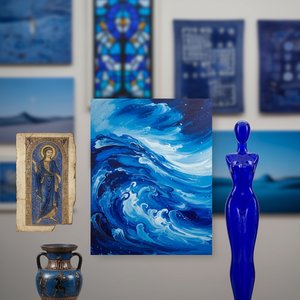
The Allure of Azure: Exploring the Symbolic & Aesthetic Depths of Blue in Art History
Explore the rich history of blue in art! Discover its symbolism, from ancient pigments to modern masterpieces by Kandinsky & Seurat. Uncover the psychological impact and cultural meanings behind this captivating hue.

几何抽象艺术十大杰作:定义现代家居装饰的经典之作
探索几何抽象艺术的十大杰作!康定斯基、蒙德里安等大师作品,色彩构成与非具象之美。OriginalUniqueArt.com提供博物馆级艺术复制品,为您的家居带来现代艺术灵感。立即在线探索完整系列!

抽象表现主义:十幅定义艺术史的杰作
探索抽象表现主义的十幅经典杰作!波洛克、罗斯科等大师作品,揭秘艺术史上的重要瞬间。OriginalUniqueArt.com为您呈现高品质艺术品复制和精选家居装饰方案,感受现代艺术的力量与魅力。立即浏览全系列!

Slate Blue Masterpieces: 10 Iconic Paintings & Timeless Home Decor Ideas
Immerse yourself in the captivating world of slate blue! Explore 10 iconic paintings by Monet, Van Gogh & Renoir. Discover their stories, techniques & find museum-quality art reproductions for your home at .