
 效果预览
效果预览
 购买印刷品
购买印刷品 分享
分享 分享
分享
 详情
详情

 下载
下载
 相似作品
相似作品 X射线
X射线 幻灯片播放
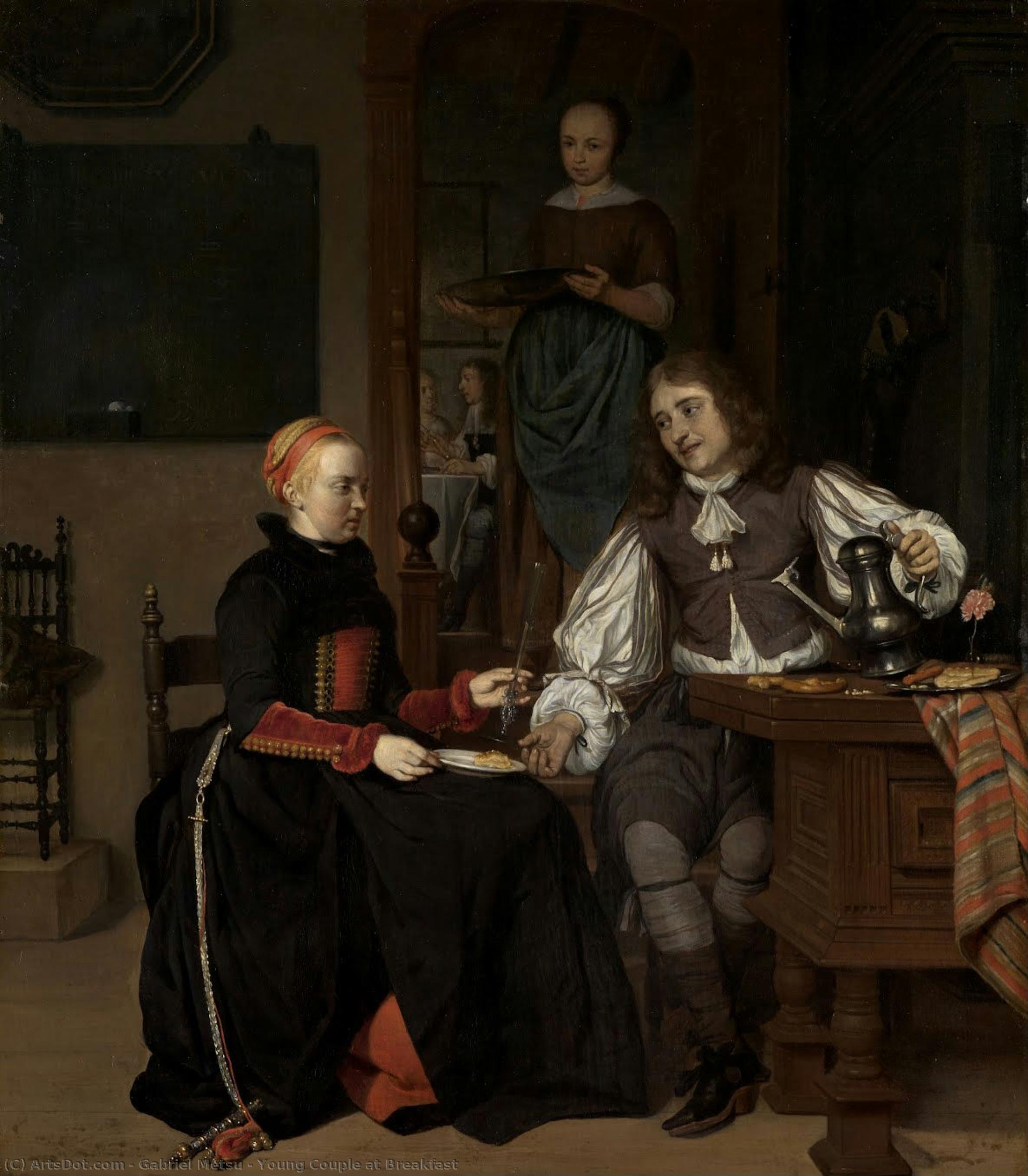
幻灯片播放Young Couple at Breakfast


 展开详情
展开详情




P118B $10

P118H $10

P118W $10

P438Z $10

P508JH $12

P508YH $12

P805H $10

P805Z $10

P919BZ $10

P919G $10

P919XJ $10

P959ZH $10

P968JZ $12

W106C $8

W218G $10

W218JH $8

W218Y $10

W307PJ $10

W316G $10

W316PJ $8

W316Y $10

W398PJ $8

W4111J $10

W500HY $15

W500JH $15

W692G $12

W849H $8

W940BG $15

W953PJ $8




从与原作比例一致的预设尺寸中进行选择。

您可以输入自定义尺寸,以适配特定的画框或空间。如果所选尺寸与原图比例不符,我们将通过裁剪作品或添加手绘元素来扩展画面。数字样稿将在制作开始前发送给您确认。
请注意,屏幕预览无法准确反映实际的裁剪或扩展效果,只有样稿才能真实呈现最终的构图。
虽然我们提供定制尺寸服务,但为了保留原作比例,建议您从预设列表中选择尺寸。
下单后,OriginalUniqueArt.com 团队将通过电子邮件联系客户获取具体要求,并提供效果预览图。


 玻璃选项仅适用于110厘米以下的尺寸。

Young Couple at Breakfast
复制材质
复制品尺寸
-


最终总价
$ 325
作品详情
Young Couple at Breakfast – A Window Into Domestic Tranquility
Gabriel Metsu’s “Young Couple at Breakfast” (1667) stands as an emblem of Dutch Golden Age realism, capturing a fleeting moment of intimacy within the confines of a modestly sized room. More than just a portrait, it's a carefully constructed tableau designed to convey profound symbolic meaning—a testament to Metsu’s masterful understanding of both visual artistry and humanist concerns. Commissioned by Margravine Caroline Louise of Baden, who championed delicate paintings reflecting domestic life, this artwork exemplifies the stylistic preferences of its era: eschewing the grandeur of Baroque excess for the quiet observation characteristic of Vermeer and Rembrandt.- Subject Matter & Context: The scene depicts a young woman presenting a plate laden with food to a seated man—a commonplace gesture elevated by Metsu’s meticulous attention to detail. Breakfast, or similar meals, served as symbols of hospitality, affection, and social status during the seventeenth century. It speaks to the burgeoning interest in portraying everyday life with psychological depth, mirroring broader cultural shifts away from courtly formality towards a more nuanced understanding of human experience.
- Style & Technique: Metsu’s approach is undeniably realistic—characterized by painstaking rendering of textures (fabric, skin, metal) and subtle gradations of light and shadow. He employs layering thin glazes of oil paint to build up color and luminosity, a technique perfected during the Golden Age that allows for exceptional tonal control and visual richness. The flattened perspective typical of Dutch portraiture contributes to an illusion of space, subtly enhancing the scene’s atmosphere.
- Composition & Perspective: Balanced symmetry dominates the canvas—the central figures framed by a partially visible mirror and a young girl in the distance. This arrangement directs the viewer's gaze and reinforces the sense of orderliness inherent in the domestic setting. The mirror serves as a visual device, reflecting not only the room’s interior but also hinting at deeper psychological complexities.
- Color Palette & Lighting: Dominantly composed of dark browns and blacks—a hallmark of Dutch painting—the palette is punctuated by warmer tones like red, gold, and cream, strategically used to highlight key elements such as the food and clothing. Dramatic lighting casts strong shadows across faces and objects, creating a palpable sense of depth and enhancing the emotional impact of the artwork.
- Symbolism & Emotion: The act of presenting food carries significant symbolic weight—representing generosity, affection, and the nurturing role of women within the family. Metsu’s masterful depiction captures not merely an image but also an emotion—a quiet dignity and restrained formality that speaks to the enduring fascination with domestic interiors as spaces of contemplation and connection.
Gabriel Metsu: A Pioneer of Domestic Genre Painting
Gabriel Metsu (1629–1667) emerged from Leiden’s artistic milieu—a city renowned for its humanist spirit and burgeoning patronage—as a painter who defied stylistic conventions. Influenced by Rembrandt's chiaroscuro technique and Vermeer’s luminous realism, Metsu nevertheless forged his own distinctive path, prioritizing genre scenes and portraits that captured the subtleties of human emotion and everyday life. His unwavering commitment to meticulous observation and nuanced rendering solidified his reputation as one of the most accomplished artists of his time—a true innovator who elevated domestic interiors into canvases of profound psychological insight.Exploring Metsu’s Legacy: Reproductions & Artistic Inspiration
Today, Gabriel Metsu's “Young Couple at Breakfast” continues to inspire artists and collectors alike. High-quality reproductions offer a captivating glimpse into the artist’s unparalleled skill—allowing viewers to appreciate the intricate details of his technique and immerse themselves in the serene beauty of his vision. Consider incorporating elements of Metsu’s style—particularly his masterful use of light and color—into your own interior design projects, creating spaces that evoke a similar sense of tranquility and understated elegance.艺术家简介
光影流转中的生活诗意:加布里埃尔·梅楚的艺术人生
加布里埃尔·梅楚(Gabriël Metsu,1629-1667),一位活跃于荷兰黄金时代的画家,他的作品如同一面精致的镜子,折射出当时社会生活的细腻与生动。梅楚并非局限于某种单一风格,而是一位极具探索精神的艺术家,他将历史画、静物、肖像和风俗画融会贯通,在光影的变幻中捕捉着日常瞬间的美好。他的艺术生涯虽然短暂,却为荷兰绘画史留下了不可磨灭的印记。莱顿起步:家族影响与早期探索
1629年,梅楚出生于荷兰莱顿市一个充满艺术气息的家庭。他的父亲雅克·梅楚是一位挂毯工匠兼画家,来自埃诺地区。这种多元化的背景无疑为年轻的梅楚提供了最初的艺术启蒙。莱顿这座文化氛围浓厚的城市,孕育了许多杰出的艺术家,也让梅楚从小耳濡目染各种艺术流派的影响。他早期的绘画训练可能受到了父亲的影响,但很快便展现出对不同技法的兴趣和探索欲望。阿姆斯特丹的转型:风俗画与室内场景
1655年,梅楚移居阿姆斯特丹,这标志着他艺术生涯的重要转折点。在阿姆斯特丹,他逐渐将创作重心转向风俗画和室内场景,描绘了当时市民阶层丰富多彩的生活片段。他的作品开始注重对细节的刻画,以及对人物心理活动的捕捉。梅楚并非一味模仿前人的风格,而是不断尝试新的表现手法,力求在画面中营造出一种温馨、和谐的氛围。他深受伦勃朗·凡·莱因的影响,尤其是在光线的运用上,善于通过明暗对比来突出画面的主体,增强视觉冲击力。同时,梅楚也从维米尔的作品中汲取灵感,学习他对色彩和构图的精妙处理。独特的艺术语言:象征与隐喻
梅楚的绘画作品常常以年轻女性、市场场景和老年人为主题,这些题材并非简单的日常写照,而是蕴含着丰富的象征意义和隐喻内涵。他善于运用各种物品来表达特定的情感或观念,例如,鲜花可能代表爱情与青春,水果则象征着丰收与富足。他的名作《家禽商》(The Poultry Seller)便是这一特点的典型体现,画面中看似热闹非凡的市场场景,实则暗藏着对人世百态的深刻思考。梅楚的作品并非直白地宣扬某种教条或理念,而是通过含蓄而富有诗意的表达方式,引发观者的联想和感悟。《病中的孩子》(The Sick Child)是他晚期作品的代表作之一,画面中对光线的处理细腻而传神,体现了他对维米尔绘画风格的深刻理解。 《欣洛彭家族肖像》(Portrait of the Hinlopen Family)则是一幅将风俗画与肖像画完美融合的杰作,展现了梅楚高超的绘画技巧和对人物性格的敏锐洞察力。艺术遗产与历史地位
尽管梅楚的作品数量有限——在133幅作品中,只有14幅带有明确的日期标注——但他的艺术成就却备受推崇。他的画作现藏于阿姆斯特丹国立博物馆等众多知名美术馆,成为荷兰黄金时代绘画史上的重要组成部分。梅楚对光线的运用、对细节的刻画以及对人物心理活动的捕捉,都对后世画家产生了深远的影响。米歇尔·凡·穆舍(Michiel van Musscher)和约斯特·凡·赫尔(Joost van Geel)便是他培养的学生之一。梅楚短暂而辉煌的艺术生涯,为我们留下了一幅幅充满生活气息和诗意的画卷,也让我们得以窥见荷兰黄金时代社会生活的真实面貌。他的作品不仅是艺术珍品,更是历史的见证,值得我们细细品味和研究。
加布里埃尔·梅楚 (Jiābùlǐ'Éli·Méichǔ)
1629 - 1667 , 荷兰
艺术家简介
- 代表作品:
- 生病的儿童
- 家禽卖家
- 欣洛普家族肖像
- 出生地: 荷兰莱顿市
- 出生日期: 1629年
- 受此画家影响的艺术家:
- 米歇尔·范·穆舍尔
- 约斯特·范·赫尔
- 国籍: 荷兰
- 姓名: 加布里埃尔·梅楚
- 影响此画家的艺术家:
- 伦勃朗·凡·莱因
- 约翰内斯·维米尔
- 艺术运动或风格: 荷兰黄金时代绘画
- 逝世日期: 1667年
相关文章

Golden Light & Dutch Skies: The Timeless Magic of Dutch Golden Age Landscapes
Discover the breathtaking beauty of Dutch Golden Age landscapes. Explore the mastery of light, chiaroscuro, and 17th-century realism through an expert art history lens, celebrating the enduring legacy of the Dutch Masters for discerning collectors and art lovers.

荷兰黄金时代:十幅定义艺术史的巨作 | OriginalUniqueArt
探索荷兰黄金时代的艺术巅峰! 伦勃朗、维米尔等大师名作,带您领略巴洛克艺术的辉煌。高清画作、博物馆级品质,点亮您的家居空间。OriginalUniqueArt.com 提供精选艺术复制品和定制装饰方案。立即在线探索全系列!

光影交织的时代:荷兰黄金时代绘画艺术的兴盛与创新
深入探索荷兰黄金时代的绘画艺术:伦勃朗、维米尔等大师的技法与创新,了解巴洛克风格的独特演绎。OriginalUniqueArt提供手绘油画复制、艺术咨询及收藏建议,助您领略经典艺术之美。

丹特·加布里埃尔·罗塞蒂:25幅大师杰作,点亮您的艺术生活 | OriginalUniqueArt
探索丹特·加布里埃尔·罗塞蒂的25幅传世杰作!深入了解普拉拉斐利前派大师的艺术世界,感受维多利亚时代的浪漫主义与象征主义。在OriginalUniqueArt.com欣赏高清油画复制品,为您的家居增添诗意与格调。立即探索完整系列!

Gabriel Metsu: Illuminating Dutch Daily Life with Exquisite Detail
Explore the captivating world of Gabriel Metsu, a leading Dutch Golden Age painter. Discover his exquisite genre scenes, masterful realism, and insightful social commentary. Learn about key works & his lasting legacy.


