 切换至版画销售渠道
 展开全文
展开全文







































 对于任何边长超过 105 厘米(约 41 英寸)的艺术品或复制品,画框将以拆解后的组件形式发货。此方法可确保安全送达并防止运输过程中的损坏。


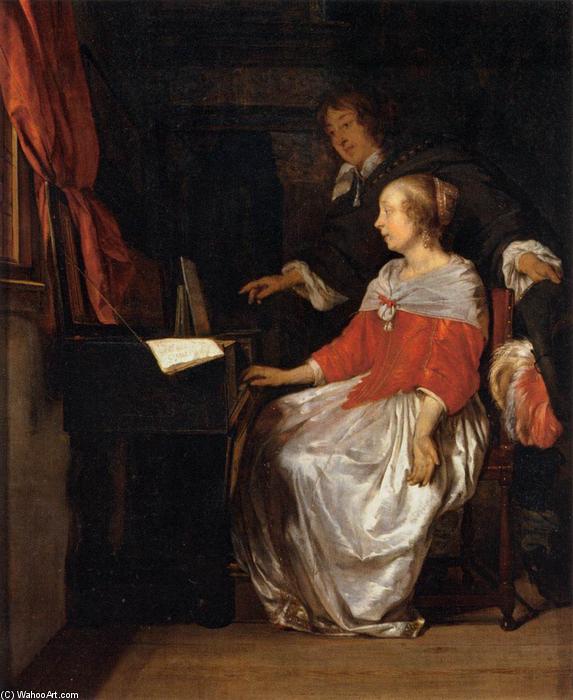
A Moment Frozen in Time: Exploring Gabriel Metsu’s “The Virginal Player”
Gabriel Metsu, a Dutch Golden Age painter born in Leiden in 1629, stands as an enigmatic figure whose artistic legacy continues to captivate scholars and connoisseurs alike. Unlike his contemporaries like Rembrandt and Vermeer who achieved widespread fame during their lifetimes, Metsu's oeuvre remained relatively modest—only fourteen of his estimated 133 paintings bear definitive dates—yet those works possess a remarkable depth of observation and psychological insight that distinguishes them from many others of the era. This essay delves into the artistic world of Metsu, examining “The Virginal Player,” a masterpiece that exemplifies his signature style and offers a poignant glimpse into the social milieu of seventeenth-century Holland.Subject Matter and Composition: A Portrait Steeped in Domestic Tranquility
“The Virginal Player” depicts a serene tableau featuring a woman seated at a virginal (a keyboard instrument popular for playing music) alongside her husband, who is positioned to her right. The scene unfolds within the confines of a richly decorated room—a chair stands behind them, and another sits further back—creating an intimate space that invites contemplation. Metsu’s meticulous attention to detail extends beyond the central figures; a book rests on the left side of the canvas, subtly suggesting an engagement with musical practice or perhaps a moment of quiet reflection. The composition is carefully balanced, emphasizing harmony and conveying a sense of peaceful domesticity—a characteristic feature of Metsu's genre paintings.Style and Technique: Baroque Precision Meets Subtle Emotion
Metsu’s artistic approach defies easy categorization, earning him the moniker “a highly eclectic artist.” He eschewed rigid stylistic conventions, favoring instead a blend of influences drawn from Rembrandt and Vermeer, artists who had established themselves as masters of realism and tonal modulation. Metsu's technique is characterized by exceptional precision—evident in the rendering of fabrics, textures, and facial expressions—yet he skillfully employs subtle gradations of light and shadow to imbue his subjects with palpable emotion. The muted palette—dominated by earthy tones—contributes to the painting’s contemplative atmosphere, mirroring the quiet dignity of the depicted figures.Historical Context: Reflecting Dutch Society's Values
“The Virginal Player” was created around 1661, during the apex of the Dutch Golden Age—a period marked by unprecedented artistic flourishing and economic prosperity. This era witnessed a burgeoning interest in portraiture, particularly amongst the upper classes who sought to commemorate their families and convey social status. Metsu’s depiction captures not only the physical appearance of his subjects but also hints at their inner lives—their intellectual pursuits and emotional connections—reflecting broader societal values concerning education, marriage, and familial piety prevalent during the time.Symbolism: Music as Embodiment of Virtue
The virginal itself serves as a potent symbol within the painting—representing musical virtue and refinement. In seventeenth-century Holland, music was considered an essential element of civilized upbringing, particularly for young women destined for marriage. Metsu’s inclusion of this instrument underscores the importance placed on intellectual pursuits and moral character—themes that resonate throughout his oeuvre. The woman's gaze directs towards the virginal, symbolizing her engagement with culture and demonstrating a commitment to upholding societal ideals.Emotional Impact: Capturing Quiet Dignity and Intimacy
Ultimately, “The Virginal Player” transcends mere visual representation; it evokes a profound sense of tranquility and intimacy. Metsu’s masterful handling of light and shadow creates an atmosphere of understated elegance—drawing the viewer into a moment frozen in time. The figures appear calm, dignified, and deeply connected—suggesting a harmonious relationship underpinned by mutual respect and affection. This enduring quality speaks to Metsu's ability to capture not just what he saw but also what he felt—a testament to his artistic genius and a lasting contribution to the canon of Baroque art.常见问题与解答
根据创作日期判断,"Virginal Player" (1661) 属于 加布里埃尔·梅楚 (Jiābùlǐ'Éli·Méichǔ) 艺术生涯的哪个阶段?
鉴于其创作于1661年,作品《Virginal Player》属于加布里埃尔·梅楚 (Jiābùlǐ'Éli·Méichǔ)的Mature Period时期。
如何描述 加布里埃尔·梅楚 (Jiābùlǐ'Éli·Méichǔ) 的《Virginal Player》 的意境?
“Virginal Player”营造出一种Elegant的氛围。
"Virginal Player" 是否体现了 加布里埃尔·梅楚 (Jiābùlǐ'Éli·Méichǔ) 一贯的创作风格?
加布里埃尔·梅楚 (Jiābùlǐ'Éli·Méichǔ) 的创作主题常涉及 rembrandt inspiration, domestic harmony symbolism, dutch tradition values, genre painting focus, artist’s signature style;而《Virginal Player》则聚焦于 piano music, woman playing piano, musical instrument, domestic scene, dutch golden age, portraiture, genre painting。
 实景预览
实景预览
 分享
分享 分享
分享
 详情
详情 指南
指南

 下载作品
下载作品
 相似作品
相似作品 X射线
X射线 幻灯片播放
幻灯片播放 Q&A
Q&A 统计数据
统计数据






