
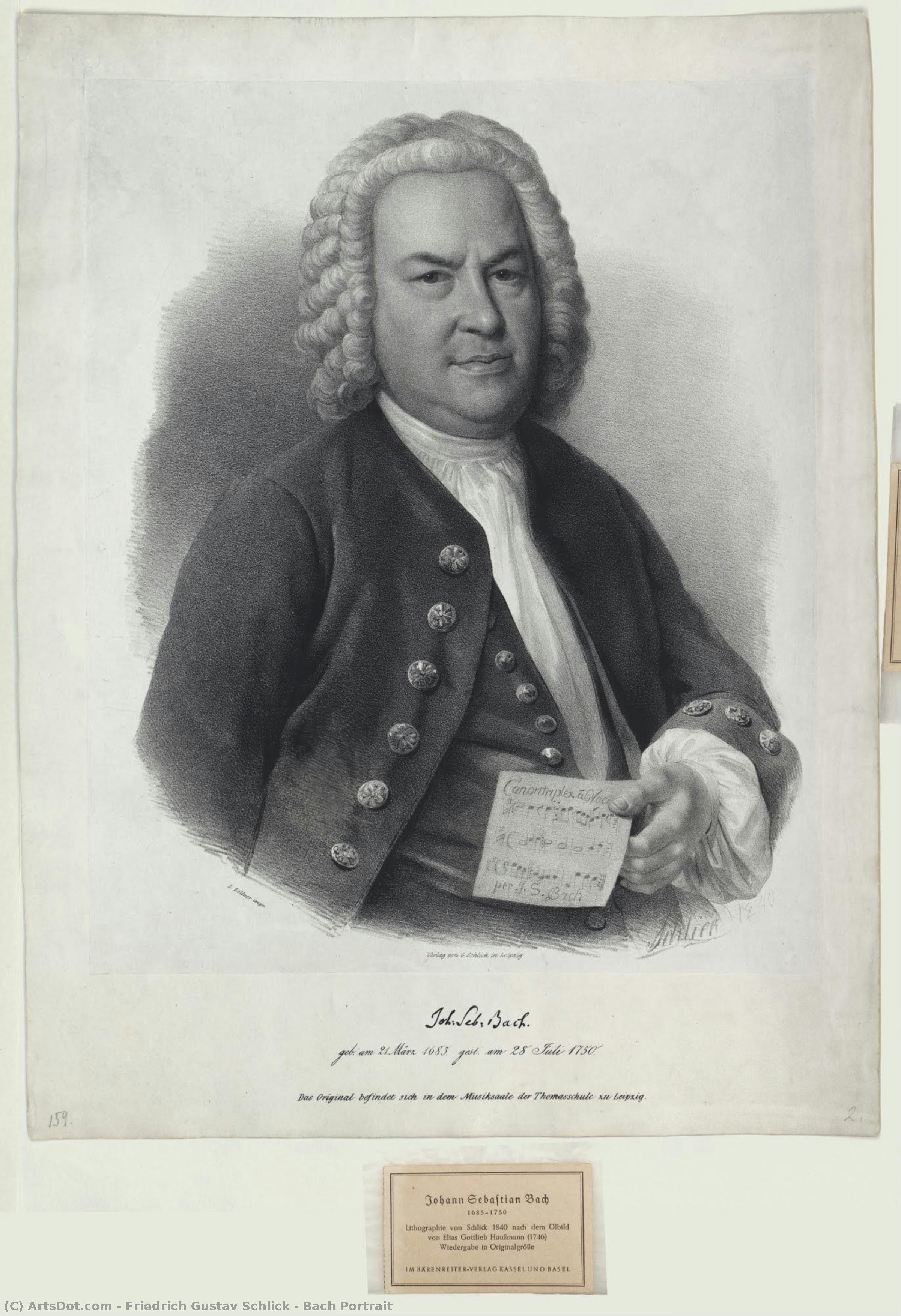
 效果预览
效果预览
 购买手绘画作
 分享
分享 分享
分享
 详情
详情

 下载
下载
 相似作品
相似作品 X射线
X射线 幻灯片播放
幻灯片播放Bach Portrait


 展开详情
展开详情




































从与原作比例一致的预设尺寸中进行选择。

您可以输入自定义尺寸,以适配特定的画框或空间。如果您选择的尺寸与原图比例不符,我们将对作品进行裁剪,或通过镜像填充/纯色填充边缘的方式来扩展图像。在开始制作之前,我们会向您发送一份数字效果图供您确认。
请注意,屏幕上的预览并不能反映实际的裁剪或扩展效果。只有效果图才能准确展示最终的构图。
虽然我们提供定制尺寸,但为了保持原图比例,我们建议您从预设列表中选择尺寸。


 玻璃选项仅适用于110厘米以下的尺寸。

Bach Portrait
艺术微喷/版画
复制品尺寸
-


最终总价
$ 80
艺术家简介
Early Life and Artistic Training
Friedrich Gustav Schlick (1804 – 6 September 1869) emerged from the artistic milieu of Vienna, Austria-Hungary—a city renowned for its burgeoning Symbolist movement and a tradition of portraiture deeply rooted in classical ideals. Born into a family with connections to the arts, Schlick’s formative years were marked by exposure to influential figures like Gustav Bergmann, whose philosophical explorations profoundly impacted Schlick's intellectual sensibilities. Bergmann’s advocacy for thinkers such as Moritz Schlick, Friedrich Waismann, and Rudolf Carnap—members of the Vienna Circle—established a crucial framework for Schlick’s engagement with epistemology and metaphysics. This intellectual lineage would prove instrumental in shaping his artistic vision. Schlick began his formal artistic training at the Akademie der Bildenden Künste Wien (Vienna Academy of Fine Arts), where he honed his skills under Walther Baumgartner, mastering techniques of oil painting and engraving—skills that would define his oeuvre. His early works demonstrated a meticulous attention to detail and an unwavering commitment to capturing the essence of his subjects with accuracy and grace. Notably influenced by Johann Christian Richter’s style, Schlick embraced a restrained palette and favored compositions that prioritized clarity and balance.The Symbolist Influence and Portraiture Style
Schlick's artistic trajectory took a decisive turn during his encounter with Gustave Moreau—a pivotal figure in the Symbolist movement. Moreau’s immersive studio-home, nestled within Paris, served as a crucible for artistic experimentation and challenged conventional notions of representation. Schlick absorbed Moreau’s ethos of blending mythology and biblical narratives into evocative visual forms, recognizing the power of symbolism to convey deeper meanings beyond mere surface appearances. This influence is palpable in his portraits—particularly those depicting Bach—where he eschewed literal depiction in favor of capturing psychological nuance and conveying spiritual contemplation. Schlick's portraiture style distinguished itself by its remarkable realism combined with subtle expressive gestures. He meticulously studied anatomy and drapery, striving to achieve an unparalleled level of accuracy. However, Schlick’s portraits transcended mere technical virtuosity; they possessed a palpable sense of inner life—a feat accomplished through masterful use of chiaroscuro (light and shadow) and nuanced tonal gradations. His canvases emanated an aura of dignified composure, reflecting the subjects' character and conveying their intellectual pursuits with profound sensitivity.Notable Works and Artistic Achievements
Schlick’s artistic output spanned a considerable period, producing numerous paintings and engravings that cemented his reputation as one of Vienna’s foremost portrait artists. Among his most celebrated achievements is undoubtedly the “Bach Portrait,” housed in Musée national Gustave Moreau—a testament to Schlick's dedication to honoring musical genius through visual art. This iconic depiction captures Bach’s contemplative gaze and conveys a sense of profound spiritual connection, embodying the spirit of Symbolist aesthetics. Furthermore, Schlick undertook commissions for prominent Viennese families, documenting their lineage and capturing their social standing with unwavering precision. His portraits adorned aristocratic residences throughout Austria-Hungary, reflecting the cultural prestige of his time. Beyond portraiture, Schlick explored landscapes and mythological subjects—demonstrating versatility within the Symbolist idiom. He skillfully blended classical compositional principles with imaginative embellishments, creating artworks that captivated audiences with their beauty and intellectual depth.Legacy and Historical Significance
Friedrich Gustav Schlick’s artistic legacy extends beyond his individual masterpieces; he represents a cornerstone of Viennese Biedermeier art—a movement characterized by its emphasis on domestic tranquility and psychological realism. His work stands as an exemplar of Symbolist portraiture, prioritizing inner contemplation alongside meticulous observation. Schlick's influence resonated throughout the Austro-Hungarian Empire and continues to inspire artists today who seek to convey profound emotion through carefully crafted imagery. The Musée national Gustave Moreau—where his “Bach Portrait” resides—serves as a poignant reminder of Schlick’s enduring contribution to European art history, ensuring that his artistic vision persists for generations to come.
friedrich gustav schlick
1804 - 1869 , Germany
艺术家简介
- Artistic Movement Or Style: Romanticism
- Artists Or Movements Influenced By This Artist: Biedermeier
- Artists Who Influenced This Artist: Gustav Bergmann
- Date Of Birth: 1804
- Full Name: Friedrich Gustav Schlick
- Nationality: German
- Notable Artworks: ['Bach Portrait']
- Place Of Birth: Germany

