
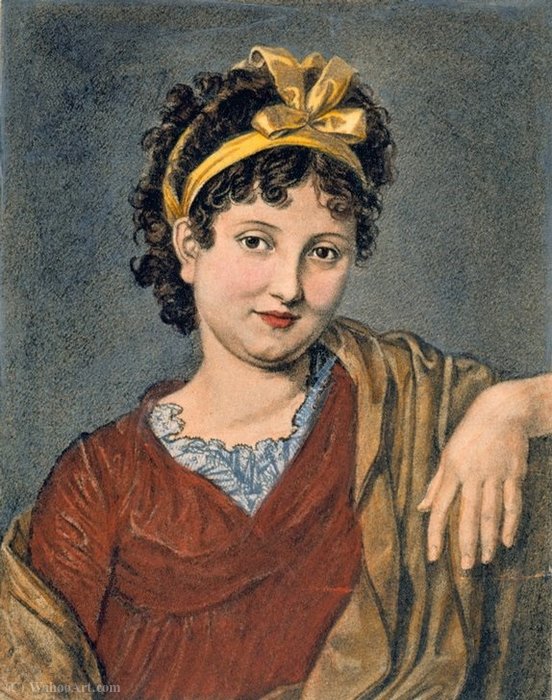
 效果预览
效果预览
 购买印刷品
购买印刷品 分享
分享 分享
分享
 详情
详情

 下载
下载
 相似作品
相似作品 X射线
X射线 幻灯片播放
幻灯片播放Portrait
 展开详情
展开详情
购买高分辨率增强版数字图像,其品质远超在线预览。
每一份文件都由我们的内部专家使用先进工具与专业的后期润色技术精心打造。我们确保每一张图像都具备卓越的清晰度、精准的色彩还原度以及细腻的细节表现。
最终文件将在 72 小时内通过电子邮件交付,并针对专业、编辑及印刷用途进行了优化。其品质与顶级设计工作室、出版社和画廊所信赖的标准完全一致。
每份数字图像订单均包含
专业数字图像交付,品质保障
选择 OriginalUniqueArt.com,您获得的不仅仅是一张图像——您收到的是经过专业级增强、精雕细琢的数字艺术作品,并享有满意保证。以下是您的订单中自动包含的所有内容:

邮件快速送达
您的高分辨率数字图像文件将在下单后 72 小时内通过电子邮件发送给您 —— 即可立即使用。

AI 增强型数字文件
您的艺术品经过专业优化,结合先进的 AI 技术与人工修饰,确保呈现极致的细节、清晰度与色彩准确度。

终身免费重发服务
不小心删除了文件或找不到了?没关系——我们将随时为您免费重发。

无需进口费用,始终如一
即刻拥有您的艺术作品,无需支付任何关税、税费或运费——数字下载始终免税。

色彩精准保证
我们通过专业工具与色彩管理技术,确保您的数字图像尽可能真实地还原原作色彩。

60天满意保证
如果您对所购买的数字图像不满意,我们将在60天内为您进行修改或退还100%的款项——无需任何解释。

100% 退款保证
如果不满意?在收到数字文件后的60天内,我们为您提供全额退款——无需任何理由。

批量订单优惠
购买 3 张图片可享 10% 折扣 - 购买 5 张可享 15% 折扣 - 购买 10+ 张可享 20% 折扣。非常适合创意项目、画廊和机构使用。
艺术家简介
George Morland: A Life Painted in Shadow and Light
Born in London on June 26, 1763 (or possibly May 26th, according to his own account), George Morland’s life was a turbulent tapestry woven with threads of prodigious talent, dissolute living, and ultimately, premature death. His early years were marked by an apprenticeship under his father, Henry Morland, a painter who dabbled in portraiture, fantasy scenes, restoration work, and even forgery – a profession that undoubtedly shaped young George’s understanding of the art market and its potential for deception. This familial legacy instilled within him both a remarkable artistic skill and a somewhat dubious moral compass.
Morland's career began with an astonishing output, producing hundreds of works despite a lifestyle characterized by excessive drinking, gambling debts, and frequent periods of imprisonment. He specialized in small-scale genre scenes, primarily depicting rural life – not the idealized pastoralism of his contemporaries, but rather the gritty realities of taverns, stables, and market squares. These weren’t grand landscapes or heroic narratives; instead, he captured fleeting moments of everyday existence: a group of dogs huddled together for warmth, a drunken brawl in a public house, a horse-drawn cart struggling through muddy lanes. His subjects were largely drawn from the lower classes – stable boys, laborers, and itinerant merchants – offering a rare glimpse into the lives of those often overlooked by the art world.
While his technical skill is undeniable—Morland possessed a remarkable ability to capture light and tone with a spirited, almost frenetic brushstroke—his work is frequently uneven in quality. Some pieces are remarkably vibrant and full of life, while others feel hastily executed. However, it’s precisely this inconsistency that contributes to the enduring fascination with Morland's oeuvre. His paintings became immensely popular during his lifetime, fueled by a network of dealers and printmakers who exploited his prolific output. Numerous prints were produced after his work, some even created by his brother-in-law, William Ward, further amplifying his fame – and contributing to the problem of forgery.
The Influence of John Raphael Smith and the Print Trade
George Morland’s success was inextricably linked to the burgeoning print trade. He collaborated extensively with John Raphael Smith (1752–1812), a prominent engraver and publisher, who recognized Morland's talent and established a lucrative partnership. Smith acted as Morland’s agent, overseeing the production of prints based on his paintings – often without Morland’s direct involvement or compensation. This arrangement significantly boosted Morland’s income but also raised questions about authorship and artistic control.
The print trade played a crucial role in disseminating Morland's work to a wider audience, transforming his small-scale genre scenes into affordable commodities. These prints were incredibly popular, particularly among the middle classes who could not afford the original paintings. The demand for Morland’s images fueled a wave of imitation and forgery, further complicating the issue of authenticity and contributing to the artist's somewhat tarnished reputation.
Furthermore, Smith’s influence extended beyond simply producing prints; he also introduced Morland to the world of theatrical scenery design. This experience likely informed Morland’s depictions of crowded interiors and dynamic group compositions, elements that are evident in his later works.
A Complex Legacy: Talent and Scandal
George Morland's life was marked by a profound contradiction between his artistic talent and his personal conduct. He was a gifted painter who captured the essence of everyday life with remarkable immediacy, yet he lived a life of extravagance and irresponsibility, accumulating significant debts and facing repeated imprisonment. This duality has fueled ongoing debate about Morland’s legacy – is he primarily remembered as a brilliant artist or as a cautionary tale of excess?
Contemporary critics often viewed Morland's lifestyle with disapproval, associating his dissolute behavior with the decline of artistic standards. However, later scholars have recognized the significance of Morland’s work in documenting the realities of rural life and offering a sympathetic portrayal of marginalized communities. His paintings provide valuable insights into the social and economic conditions of 18th-century England.
The artist died suddenly on October 29, 1804, at the age of forty-one, leaving behind a vast body of work that continues to fascinate and intrigue art historians today. His premature death, shrouded in speculation about illness and possibly poisoning, only added to the mystique surrounding his life and career.
Morland’s Influence and Artistic Connections
Despite the controversies surrounding his personal life, George Morland exerted a subtle but discernible influence on other artists of his time. His dynamic compositions, particularly those featuring groups of figures, resonated with painters like Thomas Girtin, who incorporated similar elements into his own works. The connection between Morland and Girtin is further evidenced by the collaboration on *The Earth Stopper*, an etching that showcases a shared interest in capturing fleeting moments of everyday life.
Furthermore, Morland’s work served as a model for printmakers, who sought to emulate his distinctive style and technique. The popularity of his prints contributed to the development of the genre of topographical prints, which depicted scenes of English landscapes and towns. The legacy of George Morland is therefore intertwined with that of the print trade itself, demonstrating how an artist’s work can transcend its original medium and exert a lasting impact on the broader art world.
Morland's paintings remain valuable examples of British genre painting, offering a unique window into the social and cultural landscape of early 19th-century England. His distinctive style and evocative imagery continue to captivate viewers today, solidifying his place as one of the most intriguing and enduring figures in British art history.

弗里德里希·布里
1763 - 1823 , 德国

