
 实景预览
实景预览
 切换至版画销售渠道
 分享
分享 分享
分享
 详情
详情 指南
指南

 下载作品
下载作品
 相似作品
相似作品 X射线
X射线 幻灯片播放
幻灯片播放 问答
问答 统计数据
统计数据Self Portrait (Dedicated to Leon Trotsky)


 展开全文
展开全文
获取远超网页预览效果的印刷级文件。我们销售的每一张数字图像均源自库存数据库中的高分辨率母版——宽度通常在 5,000 至 15,000 像素之间——因此您可以放心地进行大幅打印、局部裁剪或还原细腻的细节。
每一件作品在离开我们的工作室前都经过了精心的处理。数字影像专家会对照原作核对色彩,并在必要时进行校正,随后利用专业修图工具提升清晰度与细节表现——且始终忠实于艺术家的笔触与风格。最终呈现的图像宛如原作本身,而非仅仅是一张加了滤镜的扫描件。
您可以在最终定稿前进行审核:我们的专家将在 72 小时内通过电子邮件向您发送图像以供审阅。如果不满意?您可以要求改进或修正;若质量未达预期,亦可申请退款。
这也是出版商、设计工作室、画廊及印刷厂所信赖的品质。
每份数字图像订单均包含的内容
专业级数字交付,品质保障
选择 OriginalUniqueArt.com,您获得的不仅仅是一张图像——您收到的是经过专业级增强、精雕细琢的数字艺术作品,并享有满意保证。以下是您的订单中自动包含的所有内容:

邮件即时送达
您的高分辨率数字图像文件将在下单后 72 小时内通过电子邮件发送给您 —— 即可立即使用。

AI 增强型数字文件
您的艺术品经过专业优化,结合先进的 AI 技术与人工修饰,确保呈现极致的细节、清晰度与色彩准确度。

终身免费重发服务
不小心删除了文件或找不到了?没关系——我们将随时为您免费重发。

无需进口税费,始终如一
即刻拥有您的艺术作品,无需支付任何关税、税费或运费——数字下载始终免税。

色彩精准保障
我们通过专业工具与色彩管理技术,确保您的数字图像尽可能真实地还原原作色彩。

100天满意保证
如果您对所购数字图像不满意,我们将在100天内为您进行修改或提供100%的全额退款——无需任何理由。

100% 退款保证
不满意?在收到数字文件后的100天内,您可以申请全额退款——无需任何理由。

批量订购优惠
购买 3 张享 10% 折扣 - 购买 5 张享 15% 折扣 - 购买 10 张以上享 20% 折扣。非常适合创意项目、画廊及机构使用。
A Portrait of Passion and Politics: Unveiling Frida Kahlo’s “Self Portrait (Dedicated to Leon Trotsky)”
Frida Kahlo's "Self Portrait (Dedicated to Leon Trotsky)" is more than just a painting; it’s a poignant intersection of personal drama, political fervor, and the artist’s uniquely surreal vision. Completed in 1937, this captivating work offers a glimpse into a turbulent period of Kahlo’s life – a brief but intense affair with the exiled revolutionary Leon Trotsky – while simultaneously embodying her signature blend of vulnerability and defiant strength. The painting, now housed at the National Museum of Women in the Arts in Washington D.C., continues to resonate today as a testament to Kahlo's complex personality and her profound engagement with the world around her. The scene unfolds within a richly layered interior, dominated by a heavy velvet curtain that serves as both a physical barrier and a symbolic one. Kahlo, dressed in an opulent pink gown adorned with intricate embroidery – a deliberate nod to Tehuana dress, a style associated with female warriors from the Isthmus of Tehuantepec – stands poised before this curtain, holding a bouquet of flowers and a letter addressed to Trotsky. Her face is partially veiled by a delicate headpiece, adding an air of mystery and suggesting a carefully constructed persona. The use of color is masterful; the vibrant pink contrasts sharply with the darker tones of the background, drawing immediate attention to Kahlo’s figure and emphasizing her presence within the scene. The artist's meticulous attention to detail – from the delicate folds of the fabric to the subtle shading on her face – speaks volumes about her dedication to her craft and her desire to capture every nuance of human experience. The painting is executed in oil, a medium that allowed Kahlo to build up layers of color and texture, creating a sense of depth and realism that belies the surreal elements at play. Understanding the historical context surrounding this piece is crucial to appreciating its full significance. Following the Russian Revolution, Leon Trotsky became a central figure in the burgeoning communist movement, but he was ultimately exiled by Joseph Stalin for his opposition to the latter’s policies. Seeking refuge in Mexico, Trotsky found sanctuary within the home of Diego Rivera and Frida Kahlo. Their relationship, fraught with both passion and rivalry, provided a fascinating backdrop for this particular painting. Kahlo's dedication is evident not just in the portrait itself but also in the letter she penned to Trotsky, expressing her feelings and offering a personal tribute. The inclusion of flowers symbolizes affection and devotion, while the curtain represents the boundaries between their worlds – a private intimacy shielded from public scrutiny. It’s a visual representation of the delicate balance between love, politics, and artistic expression that defined Kahlo's life. Beyond its biographical details, “Self Portrait (Dedicated to Leon Trotsky)” is deeply rooted in Kahlo’s broader artistic concerns. The painting exemplifies her signature style – a potent blend of surrealism and realism. The dreamlike quality of the setting, combined with the stark portrayal of Kahlo’s emotions, creates a powerful sense of unease and introspection. Kahlo frequently used self-portraits to explore themes of identity, pain, and mortality, often incorporating elements from Mexican folklore and pre-Columbian art into her compositions. The use of symbolism is particularly striking: the flowers represent love and beauty, while the curtain suggests both protection and confinement. Furthermore, Kahlo’s deliberate choice of attire – referencing Tehuana traditions – speaks to her embrace of Mexican identity and her desire to challenge conventional notions of femininity. The painting's enduring appeal lies in its ability to evoke a range of emotions—intrigue, curiosity, vulnerability, and defiance. It is a window into the heart and mind of one of the most iconic artists of the 20th century, offering a glimpse into her personal struggles and artistic vision. Today, reproductions of “Self Portrait (Dedicated to Leon Trotsky)” are highly sought after by art enthusiasts and collectors alike, providing an opportunity to bring this extraordinary work of art into any home or space. OriginalUniqueArt offers meticulously crafted hand-painted reproductions that faithfully capture the painting’s original beauty and emotional depth, allowing you to experience Kahlo's masterpiece in a truly authentic way.Frida Kahlo: A Biographical Overview
Born Magdalena Carmen Frida Kahlo y Calderón on July 6, 1907, in Coyoacán, Mexico City, Frida’s life was marked by both extraordinary talent and profound suffering. Her early childhood was profoundly impacted by polio, which left her with a permanent limp and a lifelong struggle with physical limitations. This experience instilled in her a deep sense of resilience and self-awareness that would later inform her artistic practice. At age six, she began to develop an interest in art, encouraged by her father, Guillermo Kahlo, who was a German-Mexican photographer. In 1925, at the age of eighteen, Frida’s life took a devastating turn when she was involved in a horrific bus accident that left her with severe injuries, including fractures to her spine, pelvis, and leg. This traumatic event fundamentally altered her physical and emotional landscape, leading to years of painful medical treatments and confinement. It was during this period of convalescence that Frida began to paint seriously, using art as a means of processing her pain and exploring her inner world. Her marriage to the renowned muralist Diego Rivera in 1929 further shaped her life and artistic trajectory, bringing both joy and conflict into her existence. Kahlo’s work became increasingly personal and introspective, reflecting her experiences with love, loss, identity, and the complexities of Mexican culture. She died on July 13, 1954, leaving behind a legacy as one of the most important and influential artists of the 20th century.常见问题与解答
“Self Portrait (Dedicated to Leon Trotsky)”在艺术史上的地位如何?
从历史上看,"Self Portrait (Dedicated to Leon Trotsky)" 是广义上 现代主义 时期的 Surrealism 时期作品。
"Self Portrait (Dedicated to Leon Trotsky)" 属于哪种艺术风格?
弗里达·卡罗 的《Self Portrait (Dedicated to Leon Trotsky)》 属于 Surrealism 流派,该流派为这件作品提供了风格背景。
"Self Portrait (Dedicated to Leon Trotsky)" 的创作艺术家是谁?
艺术家简介
芙里达·卡洛:痛苦与激情编织的生命画卷
芙里达·卡洛,一个名字响彻全球的艺术符号。她不仅仅是一位画家,更是一位用生命书写的传奇,一位以痛苦和激情为笔墨,在画布上描绘自我、文化与命运的女性艺术家。1907年7月6日,芙里达·卡洛出生于墨西哥城科约阿坎的一个蓝色小屋——La Casa Azul,这个小屋后来成为了她的家,也成为了她艺术创作的灵感源泉。她的童年并非一帆风顺,六岁时罹患脊髓灰质炎,留下了终生的残疾和痛苦。然而,正是这些身体上的折磨,促使她转向绘画,将内心的挣扎与渴望倾注于画布之上。父亲吉列尔莫·卡洛是一位德国裔的摄影师,他鼓励芙里达发展自己的兴趣爱好,为她提供了画笔和颜料,这成为了她生命中重要的支持。母亲玛蒂尔德·卡尔德隆·伊·冈萨雷斯则是一位虔诚的天主教徒,拥有混血的印第安血统,芙里达深受墨西哥传统文化的影响。一场改变命运的车祸与艺术的诞生
1925年,十八岁的芙里达遭遇了一场可怕的交通事故,这彻底改变了她的人生轨迹。公交车与电车相撞,芙里达的身体遭受了难以想象的重创——脊椎骨折、骨盆断裂、腿部多处骨折……漫长的康复过程让她长期卧床不起,痛苦和孤独成为了她生活的主旋律。为了排遣内心的苦闷,芙里达开始尝试绘画。母亲为她定制了一张特制的画架,让她可以在床上进行创作。就这样,在病痛的折磨中,芙里达开始了她的艺术生涯。最初的自画像,并非简单的肖像描绘,而是对自身痛苦、脆弱与坚韧的深刻反思。她用画笔记录着自己的身体,记录着自己的情感,将内心的挣扎转化为视觉语言。这些早期的作品,虽然技法尚不成熟,却充满了真挚的情感和独特的风格。与迭戈·里维拉:爱、艺术与冲突
芙里达的艺术之路与另一位伟大的墨西哥艺术家——迭戈·里维拉紧密相连。1928年,她鼓起勇气向里维拉展示了自己的作品,得到了他的肯定和鼓励。两人迅速坠入爱河,并在1929年结为夫妻。他们的婚姻充满了激情、艺术灵感与不断的冲突。里维拉是一位著名的壁画家,他将墨西哥的文化和革命精神融入到自己的创作中。芙里达深受里维拉的影响,她的作品也开始展现出浓厚的墨西哥特色——鲜艳的色彩、朴实的造型以及对传统文化的致敬。然而,他们的婚姻也充满了背叛与痛苦。里维拉的花心和不忠让芙里达备受折磨,她将这些情感上的创伤融入到自己的画作中,创作出了许多充满象征意义的作品。《双重肖像》(Las Dos Fridas)便是其中最具代表性的作品之一,画面中展现了芙里达分裂的自我——一个来自欧洲血统的芙里达,和一个来自墨西哥印第安文化的芙里达。痛苦、象征与女性力量
芙里达·卡洛的作品充满了象征意义和隐喻。她经常使用动物、植物和人体等元素来表达自己的情感和思想。例如,猴子在她的画作中常常出现,既代表着欲望,也象征着保护和关爱;蝴蝶则寓意着自由和希望;而荆棘和受伤的身体则象征着痛苦和挣扎。芙里达的作品不仅仅是对自身经历的记录,更是对女性命运的深刻思考。她勇敢地展现了女性在社会中的困境、身体上的痛苦以及情感上的脆弱。她的作品挑战了传统的性别观念,表达了女性的力量和独立自主的精神。 破碎的柱子(La Columna Rota)是芙里达最具代表性的作品之一,画面中,一个身穿紧身长裙的芙里达站在一根断裂的离子柱前,她的身体被铁丝束缚着,象征着她所承受的巨大痛苦和身体上的残疾。永恒的艺术遗产
尽管芙里达·卡洛在世时并未得到广泛的认可,但她在去世后却成为了20世纪最具影响力的艺术家之一。她的作品超越了国界和文化差异,触动了无数人的心灵。她以其独特的风格、深刻的思想以及对痛苦与坚韧的真挚表达,赢得了全球范围内的赞誉。如今,芙里达·卡洛已经不仅仅是一位画家,更是一种象征——象征着女性的力量、墨西哥的文化以及对生命的无限热爱。她的蓝色小屋成为了博物馆,吸引着来自世界各地的游客前来参观,感受这位伟大艺术家的精神和魅力。芙里达·卡洛的作品将继续激励着人们勇敢地面对生活中的挑战,用艺术表达自我,创造属于自己的生命画卷。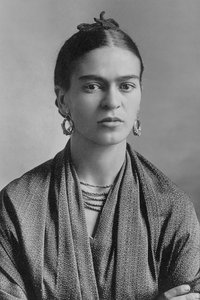
弗里达·卡罗
1907 - 1954 , 墨西哥
基本信息
- 全名: 玛格达莱娜·卡门·弗里达·卡洛·伊·卡尔德隆
- 出生地点: 墨西哥城科约阿坎
- 出生日期: 1907年7月6日
- 受影响的艺术家或运动:
- 奇卡诺艺术
- 女性主义艺术家
- 国籍: 墨西哥人
- 影响艺术家:
- 迭戈·里维拉
- 墨西哥民间艺术家
- 艺术风格: 超现实主义,民间艺术
- 著名作品: ['《二弗里达》、《带荆棘项链的自画像》、《破碎的柱子》、《亨利·福特医院》']