切换至版画销售渠道
 展开全文
展开全文







































 对于任何边长超过 105 厘米(约 41 英寸)的艺术品或复制品,画框将以拆解后的组件形式发货。此方法可确保安全送达并防止运输过程中的损坏。


Summer by Frederick Carl Frieseke: A Glimpse of Tranquility
- Artist: Frederick Carl Frieseke
- Year: 1914
- Medium: Oil on Canvas
- Location: MOA Museum of Art, Japan
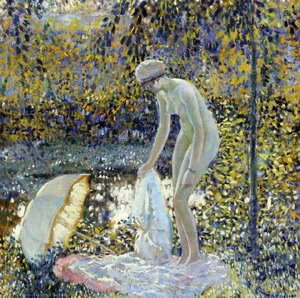
Frederick Carl Frieseke's "Summer" is a captivating example of American Impressionism, transporting viewers to a serene garden setting. The painting depicts two women immersed in a moment of peaceful intimacy, showcasing Frieseke’s mastery of light and color.
Composition and Artistic Style
"Summer" exemplifies Frieseke's signature style – a harmonious blend of Impressionistic techniques with elements of Realism. The composition centers around two figures: one woman reclining languidly on the ground, her head resting comfortably in the lap of another who is playing a musical instrument. Lush greenery and vibrant flowers form a backdrop, creating an atmosphere of tranquility and escape.
Frieseke’s use of broken brushstrokes and bold colors captures the fleeting effects of light, characteristic of Impressionism. The perspective is subtly flattened, prioritizing atmospheric depth over strict realism. This technique draws the viewer into the scene, evoking a sense of being present in that idyllic garden. Details like birds flitting through the foliage and a nearby chair add layers of visual interest.
Historical Context and Influences
Created in 1914, "Summer" reflects the artistic trends of the early 20th century. Frieseke spent much of his career living and working in France, particularly within the Giverny art colony – home to Claude Monet and other prominent artists. While he maintained a degree of independence from Monet's style, Frieseke was undoubtedly influenced by the broader Impressionist movement and admired artists like Renoir.
The painting’s subject matter—leisurely scenes featuring women in idyllic settings—was popular among American expatriate artists during this period. "Summer" embodies a desire to capture moments of beauty and relaxation, reflecting a shift towards more personal and intimate themes in art.
Symbolism and Emotional Impact
Beyond its aesthetic appeal, “Summer” carries subtle symbolic weight. The abundance of flowers represents nature's vitality and fertility, while the nude figure embodies classical ideals of beauty and grace. The act of playing music suggests harmony and emotional connection between the two women.
The overall effect is one of profound tranquility and sensuality. Frieseke’s skillful use of light and color creates a dreamy atmosphere that invites viewers to escape into a world of peace and serenity. "Summer" evokes feelings of warmth, relaxation, and appreciation for the simple pleasures in life—a timeless masterpiece that continues to resonate with audiences today.
常见问题与解答
《Summer》这一Impressionism风格的作品传达了怎样的情感基调?
"Summer" 在 Impressionism 运动中蕴含着 Romantic 的情感基调。
是否有面向学生的 弗雷德里克·卡尔·弗里泽克 (Fúléidélǐkè·Kǎěr·Fúléizíkè) 的《Summer》 详情页?
针对 弗雷德里克·卡尔·弗里泽克 (Fúléidélǐkè·Kǎěr·Fúléizíkè) 的《Summer》,我们提供了一个 指南 页面:这是一份可打印的艺术品资料页,专为学生及课堂教学使用而设计。
"Summer" 的色彩饱和度如何?
弗雷德里克·卡尔·弗里泽克 (Fúléidélǐkè·Kǎěr·Fúléizíkè) 的《Summer》 的色彩饱和度为 Muted。
 实景预览
实景预览
 分享
分享 分享
分享
 详情
详情 指南
指南

 下载作品
下载作品
 相似作品
相似作品 X射线
X射线 幻灯片播放
幻灯片播放 Q&A
Q&A 统计数据
统计数据