
 实景预览
实景预览
 发送
发送 分享
分享
 详情
详情 指南
指南

 下载图片
下载图片
 相似作品
相似作品 X射线
X射线 幻灯片播放
幻灯片播放 统计数据
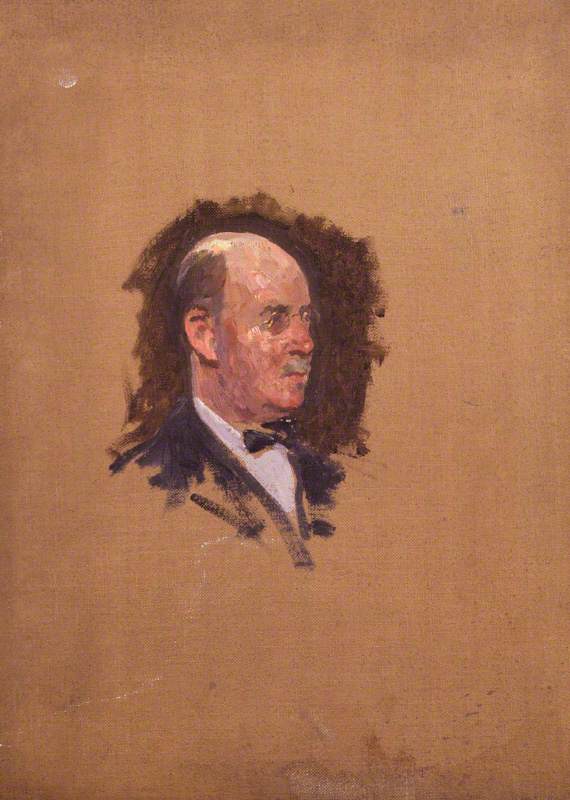
统计数据Sir (Edward) Guy Dawber
 1926
1926 38.0 x 28.0 cm
 阅读全文
阅读全文
手工油画复制品
由我们的艺术家按需定制,为您提供您所选尺寸及画框的布面手工油画。 ( 切换至版画销售渠道 切换至数字图像销售渠道)




































您可以从与原作比例一致的预设尺寸中进行选择。

请输入您需要的宽度和高度,以适配您的画框或墙面。由于作品为手工绘制,若您选择不同的尺寸比例,艺术家可能会在画面边缘多画一些或稍作裁剪 —— 由您决定。在开始绘画之前,我们会为您发送一份数字效果图供您确认。本页面上展示的图片并非最终实物 —— 只有效果图才能反映真实结果。
下单后,OriginalUniqueArt.com 团队将通过电子邮件联系客户获取具体要求,并提供效果预览图


 玻璃选项仅适用于110厘米以下的尺寸。

Sir (Edward) Guy Dawber
复制品材质
复刻品尺寸说明
-


总计金额
¥ 2016
The Artist and His Style
Fred Roe was a talented artist known for his ability to convey the character and personality of his subjects through his paintings. In Sir (Edward) Guy Dawber, he employs a range of techniques, including the use of bold brushstrokes and vivid colors, to create a sense of depth and dimensionality. The subject's stern expression and formal attire are perfectly captured, exuding an air of sophistication and elegance. Key Features of the Painting:- The subject's facial expression, which conveys a sense of seriousness and intensity
- The intricate details of the subject's clothing and accessories, which add to the overall sense of luxury and refinement
- The use of a muted color palette, which creates a sense of calmness and serenity
Similar Works by Other Artists
For those interested in exploring more portraits like Sir (Edward) Guy Dawber, Joseph Henry Sharp's Spotted Elk, Chief and George Meredith by William Strang are excellent examples of portraiture. These paintings can be found on OriginalUniqueArt.com, which offers a wide range of handmade oil painting reproductions.The National Portrait Gallery is home to many notable works, including those by Fred Roe. For art enthusiasts and collectors, OriginalUniqueArt.com provides a unique opportunity to own handmade reproductions of famous paintings, including Sir (Edward) Guy Dawber.
问答详情
Fred Roe 的《Sir (Edward) Guy Dawber》 是在何时创作的?
Fred Roe 的《Sir (Edward) Guy Dawber》 的创作年份为 1926。
是否有面向学生的 Fred Roe 的《Sir (Edward) Guy Dawber》 详情页?
针对 Fred Roe 的《Sir (Edward) Guy Dawber》,我们提供了一个 指南 页面:这是一份可打印的艺术品资料页,专为学生及课堂教学使用而设计。
"Sir (Edward) Guy Dawber" 的色彩呈现出浓郁还是柔和的视觉感?
Fred Roe 的《Sir (Edward) Guy Dawber》 中的色彩呈现出 Vivid 的强度。
艺术家简介
The Visionary Brush of Fred Roe
To step into the world of Fred Roe is to wander through a tapestry of historical grandeur and rugged frontier beauty. A master of both the intimate portrait and the sweeping landscape, Roe possessed a rare ability to breathe life into the past and the wild. While his name may evoke the dusty trails of the American West for some, his roots and much of his technical mastery were deeply entwared with the classical traditions of Europe. Born in 1864, Roe’s artistic identity was shaped by a dual heritage of meticulous academic training and an unquenchable thirst for exploration. Whether he was capturing the solemnity of a religious ceremony or the atmospheric mist rising over a Wyoming valley, his work remains a testament to a life spent observing the profound beauty in both the historical and the natural worlds.
The foundations of Roe’s technique were laid in the prestigious art schools of England. As the son of the painter and engraver Robert Henry Roe, the language of art was his first tongue. He refined his skills at the Heatherley School of Fine Art under the guidance of Seymour Lucas, a period that instilled in him a rigorous command over light, shadow, and anatomical precision. This academic discipline allowed him to achieve early success, exhibiting at the prestigious Royal Academy as early as 1877. His early career was marked by an impressive ascent through the ranks of the British art establishment, earning elections to the Royal Society of British Artists and the Royal Institute of British Painters. During these years, his focus often drifted toward historical genre subjects, where he utilized large-scale compositions and period costumes to recreate scenes of English history, including poignant depictions of Joan of Arc and naval incidents involving Lord Nelson.
From London Studios to the American Frontier
A pivotal shift occurred when Roe’s artistic gaze turned toward the vast, untamed landscapes of the Americas. His journey to Wyoming in 1893 served as a transformative expedition that expanded his repertoire from historical narrative to environmental storytelling. This period of exploration allowed him to document the topography and culture of the American West with the eye of both an artist and a chronicler. The rugged majesty of Yellowstone National Park became a central character in his work, providing him with a canvas of dramatic sunsets, stormy afternoons, and the quiet, misty mornings of the frontier. In these landscapes, Roe moved beyond mere documentation; he utilized expressive brushwork and a sophisticated understanding of tonal harmony to convey the palpable sense of place that defines the American spirit.
This versatility—the ability to pivot from the structured elegance of London’s high society to the raw, unscripted life of Wyoming ranchers and cowboys—is what makes his oeuvre so uniquely captivating. His talent for illustration further bridged these two worlds, as he secured prestigious commissions for Harper's Weekly and The Century Magazine. Through these publications, Roe brought the essence of Western life to a global audience, using visual storytelling to render scenes from historical narratives and contemporary frontier life with equal emotional weight. His work during this era was not merely about what could be seen, but about the feeling of the wind across the plains and the heavy silence of a historical moment frozen in time.
A Legacy of Detail and Discovery
Beyond the canvas, Fred Roe was a man of profound intellectual curiosity. His passion for history extended into the realm of material culture, where he became a leading expert and collector of antique furniture. His scholarly contributions, such as Ancient Coffers and Cupboards and A History of Oak Furniture, reveal an artist who sought to understand the structural soul of the eras he painted. This deep appreciation for craftsmanship and historical authenticity is mirrored in his paintings, where every detail—from the texture of a period garment to the light hitting a piece of weathered wood—is rendered with meticulous care.
As we reflect on the life of Fred Roe, we see an artist who refused to be confined by geography or genre. His legacy is found in the intersection of several profound artistic achievements:
- Mastery of Genre: The seamless transition between historical narrative painting and contemporary landscape art.
- Atmospheric Realism: An unparalleled ability to capture transient weather conditions and the emotional weight of light.
- Cultural Documentation: His role as a visual historian for both the English past and the American frontier.
- Scholarly Depth: The integration of historical research and antique expertise into his visual aesthetic.
Today, Roe’s works continue to resonate with collectors who seek more than just a beautiful image; they seek a window into a vanished world. His paintings remain vibrant, breathing with the energy of the landscapes he traversed and the histories he so lovingly reconstructed.

Fred Roe
1864 - 1947
快速概览
- Full Name: Frederic Roe
- Nationality: American
- Date Of Birth: 1864
- Date Of Death: 1947
- Place Of Birth: Wyoming
- Notable Artworks:
- Frank Short
- The Passing of John Sargent
- Artistic Movement Or Style: Romanticism