切换至版画销售渠道
 展开全文
展开全文







































 对于任何边长超过 105 厘米(约 41 英寸)的艺术品或复制品,画框将以拆解后的组件形式发货。此方法可确保安全送达并防止运输过程中的损坏。


A Symphony in Color: Unpacking the Essence of “Three Animals”
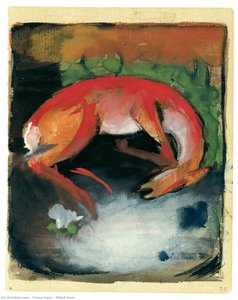
Franz Marc’s “Three Animals (Dog, Fox and Cat)” stands as a cornerstone of German Expressionism—a movement that sought to convey emotion and inner experience rather than objective representation. Painted in 1912 during the height of Der Blaue Reiter’s artistic fervor, this canvas transcends mere depiction; it's an invitation into Marc’s profound contemplation of nature and humanity’s relationship with it.
- Dimensions: 80 x 105 cm
- Location: Staedtische Kunsthalle Mannheim, Germany
- Medium: Oil on Canvas
Composition and Symbolism: Beyond the Familiar
Initially appearing as a straightforward portrayal of three animals—a dog, a fox, and a cat—the painting’s visual complexity reveals layers of meaning. Marc skillfully incorporates smaller figures – birds circling above and others nestled below – creating an interconnected ecosystem that speaks to broader themes of harmony and interdependence. The presence of a human figure on the left side adds another dimension, perhaps representing observation or contemplation.
The Language of Color: Marc’s Expressionist Palette
Marc's masterful use of color is central to understanding “Three Animals.” Employing bold hues—primarily yellows, blues, and greens—he abandons naturalistic coloration in favor of expressive pigments that evoke specific emotions. As a proponent of Jungian psychology, Marc believed colors possessed inherent spiritual significance; the vibrant palette wasn’t merely decorative but actively aimed to stimulate viewers' subconscious minds.
A Reflection on Animal Symbolism
Each animal embodies distinct qualities. The dog symbolizes loyalty and companionship—values deeply cherished by Marc—while the cat represents independence, intuition, and a connection to the feminine spirit. Together, they represent humanity’s capacity for empathy and understanding of the natural world. This painting isn't simply about animals; it’s about conveying an inner state of being.
Influence and Legacy
"Three Animals" exemplifies Marc’s contribution to Expressionism’s broader aesthetic and philosophical agenda. His work resonated with fellow artists like Wassily Kandinsky and Emil Nolde, establishing him as a pivotal figure in shaping the movement's visual vocabulary. Today, reproductions of this iconic piece continue to inspire collectors and interior designers alike, offering a glimpse into Marc’s visionary approach to art—a testament to its enduring power to communicate emotion and provoke contemplation.
常见问题与解答
马克·弗朗茨 的《Three Animals (Dog, Fox and Cat)》 的复制品适合悬挂在什么位置?
关于 马克·弗朗茨 的《Three Animals (Dog, Fox and Cat)》,记录了其规格 (Landscape) 与建议摆放空间 (Living Room) 这两项陈列信息。
哪些色调与主导色彩定义了“Three Animals (Dog, Fox and Cat)”?
马克·弗朗茨 的《Three Animals (Dog, Fox and Cat)》 采用了 Earthy 色调,并以 Walnut (#8f3f1c) 作为主导色。
马克·弗朗茨 的《Three Animals (Dog, Fox and Cat)》 是如何将 German Expressionism 与艺术家的祖籍国联系在一起的?
《Three Animals (Dog, Fox and Cat)》由出生于 德国 的 马克·弗朗茨 在 German Expressionism 运动背景下创作而成。艺术家的原籍地使这部作品与 德国 艺术家所实践的 German Expressionism 风格紧密相连。
 实景预览
实景预览
 分享
分享 分享
分享
 详情
详情 指南
指南

 下载作品
下载作品
 相似作品
相似作品 X射线
X射线 幻灯片播放
幻灯片播放 Q&A
Q&A 统计数据
统计数据