切换至版画销售渠道
 展开全文
展开全文







































 对于任何边长超过 105 厘米(约 41 英寸)的艺术品或复制品,画框将以拆解后的组件形式发货。此方法可确保安全送达并防止运输过程中的损坏。


A Glimpse into a Primal World: Decoding Franz Marc’s *Fabulous Beast II*
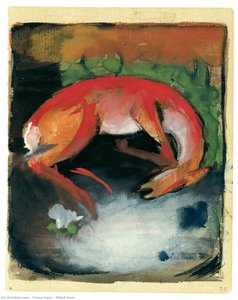
Franz Marc's *Fabulous Beast II*, painted in 1913, is more than just an image of an animal; it’s a vibrant exploration of the spiritual connection between humanity and nature, rendered through the lens of early modernism. This small but powerfully evocative work—measuring only 26 x 30 cm—packs a significant punch, embodying Marc's unique artistic vision and his pivotal role in the development of Expressionism.Subject & Style: Beyond Representation
At first glance, *Fabulous Beast II* presents a fragmented depiction of a horse, its form broken down into geometric shapes and bathed in fiery hues of red and orange. However, to call it simply a “horse” feels inadequate. Marc wasn’t interested in realistic representation; he sought to capture the *essence* of the animal – its inner life, its energy, and its place within the cosmos. This approach aligns with his broader philosophical beliefs about animals as possessing a purity and spiritual depth lacking in human society. The style is undeniably influenced by Cubism, evident in the fractured planes and multiple perspectives, but Marc infuses it with an emotional intensity that sets his work apart.Technique & Materials: A Textured Vision
Executed in tempera on board, the painting’s surface exhibits a noticeable texture, achieved through visible brushstrokes. This impasto technique adds depth and physicality to the composition, enhancing the sense of movement and vitality. The deliberate application of paint isn't merely decorative; it contributes to the overall expressive power of the work, conveying a raw, almost primal energy.Historical Context: Der Blaue Reiter & Spiritual Expression
*Fabulous Beast II* emerged during a period of intense artistic experimentation and societal upheaval. Marc was a founding member of *Der Blaue Reiter* (The Blue Rider), a group of artists who rejected traditional academic art in favor of subjective expression and spiritual exploration. Influenced by Fauvism’s bold color palettes and Cubism's formal innovations, the group sought to create an art that resonated with inner experience rather than external reality. Marc believed animals were closer to this primal state of being, making them ideal subjects for his artistic investigations.Symbolism & Interpretation: Color as Emotion
The dominant use of red and orange is crucial to understanding the painting’s symbolism. For Marc, colors weren't arbitrary choices; they held specific emotional and spiritual significance. Red represented violence, energy, and life force, while orange evoked a sense of warmth and optimism. The horse itself, often associated with freedom and power, becomes a vessel for these intense emotions. The fragmented forms can be interpreted as representing the breakdown of traditional structures and beliefs, mirroring the anxieties of the pre-war era.Emotional Impact & Legacy: A Lasting Resonance
*Fabulous Beast II* is not a passive viewing experience. It’s a work that demands attention, inviting viewers to contemplate their own relationship with nature and the spiritual realm. The painting's dynamic composition and vibrant colors evoke a sense of both excitement and unease, reflecting the complex emotions of its time. Marc’s tragically short life – he died in action during World War I in 1916 – adds another layer of poignancy to his work. Today, *Fabulous Beast II* remains a powerful testament to Marc's artistic genius and continues to inspire artists and art lovers alike.- Perfect for: Collectors of Expressionist art, those seeking unique statement pieces, and interior designers aiming to create spaces that evoke emotion and contemplation.
- Consider pairing this piece with: Works by other *Der Blaue Reiter* artists like Wassily Kandinsky or August Macke, or contemporary abstract paintings that explore similar themes of spirituality and nature.
- A reproduction of *Fabulous Beast II* will bring: A touch of early 20th-century modernism, a vibrant color palette, and a sense of intellectual depth to any room.
常见问题与解答
马克·弗朗茨 的《Fabulous Beast II》 的技法与风格具有哪些特征?
马克·弗朗茨 的《Fabulous Beast II》 将 Acrylic On Canvas 技法与 Cubism 流派风格完美融合。技法与流派分别描述了作品的创作手法及其艺术风格。
鉴于创作日期,"Fabulous Beast II" 属于 马克·弗朗茨 艺术生涯中的哪个阶段?
1913 年的创作日期将《Fabulous Beast II》置于 马克·弗朗茨 艺术发展的 Early Period 时期。
“Fabulous Beast II”的作者是谁?
"Fabulous Beast II" 由 马克·弗朗茨 创作。本页面的信息旨在介绍 马克·弗朗茨 的原作。
 实景预览
实景预览
 分享
分享 分享
分享
 详情
详情 指南
指南

 下载作品
下载作品
 相似作品
相似作品 X射线
X射线 幻灯片播放
幻灯片播放 问答
问答 统计数据
统计数据