
 效果预览
效果预览
 切换至印刷版
 分享
分享 分享
分享
 详情
详情

 下载
下载
 相似作品
相似作品 X射线
X射线 幻灯片播放
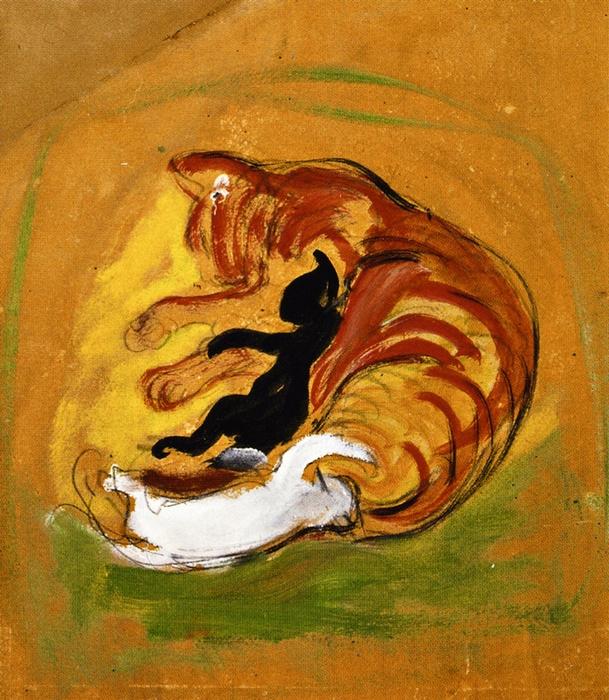
幻灯片播放Cat with Kittens


 展开详情
展开详情




































从与原作比例一致的预设尺寸中进行选择。

您可以输入自定义尺寸,以适配特定的画框或空间。如果所选尺寸与原图比例不符,我们将通过裁剪作品或添加手绘元素来扩展画面。数字样稿将在制作开始前发送给您确认。
请注意,屏幕预览无法准确反映实际的裁剪或扩展效果,只有样稿才能真实呈现最终的构图。
虽然我们提供定制尺寸服务,但为了保留原作比例,建议您从预设列表中选择尺寸。
下单后,OriginalUniqueArt.com 团队将通过电子邮件联系客户获取具体要求,并提供效果预览图。


 玻璃选项仅适用于110厘米以下的尺寸。

Cat with Kittens
复制材质
复制品尺寸
-


最终总价
$ 300
作品详情
Franz Marc’s “Cat with Kittens”: A Symphony of Color and Spiritual Resonance
The painting "Cat with Kittens" by Franz Marc is more than just an image; it's a distillation of Expressionist philosophy into visual form. Created in 1912, during the height of Der Blaue Reiter’s artistic fervor—a movement dedicated to exploring inner emotional experience through abstraction—this oil on canvas piece transcends mere representation, aiming instead for a profound connection with the viewer’s soul. Marc's unwavering belief that art could illuminate the hidden truths of existence is palpable in every brushstroke.Expressionism and Color: Decoding Marc’s Palette
Marc’s stylistic choices are deliberately disruptive to academic conventions. He abandons meticulous realism, opting for bold color palettes—primarily oranges, blacks, and muted blues—that prioritize emotional impact over accurate depiction. The vibrant orange dominating the cat's fur isn’t merely a pigment choice; it symbolizes warmth, vitality, and maternal instinct – qualities central to Marc’s worldview. Contrasting sharply with this fiery hue is the black, representing darkness, mystery, and perhaps even death, yet balanced by the blues that evoke tranquility and contemplation. This juxtaposition underscores the Expressionist preoccupation with confronting anxieties about mortality while simultaneously embracing beauty and harmony.Compositional Harmony: Finding Balance Amidst Chaos
The painting’s composition contributes significantly to its emotive power. Marc employs a simplified geometric structure—circles and squares—to depict the cat and its kittens, creating an illusion of stability within a dynamic visual field. The central feline figure commands attention, radiating confidence and nurturing care. Surrounding it are three smaller figures nestled within the cat's belly, symbolizing vulnerability and dependence. Yet, despite their diminutive size, these kittens are rendered with meticulous detail, emphasizing the interconnectedness of life and highlighting Marc’s reverence for nature—a recurring theme throughout his oeuvre.Marie Laurencin and Cubism: Influences Shaping Marc’s Vision
Franz Marc wasn't operating in isolation; he was deeply influenced by fellow artists like Marie Laurencin, a pioneer of Cubist aesthetics. Laurencin’s fragmented forms and flattened planes mirrored Marc’s desire to challenge traditional perspective, mirroring the movement's rejection of illusionistic representation. This shared interest in exploring new visual languages reflects the broader intellectual climate of early 20th-century Europe—a period marked by experimentation and a yearning for artistic innovation.A Legacy Preserved: Museums and Reproductions
Today, Marc’s “Cat with Kittens” resides in prestigious institutions such as the Thyssen-Bornemisza Museum in Madrid and the Staedtische Galerie im Lenbachhaus in Germany, ensuring its enduring presence within the art historical canon. Furthermore, reproductions crafted by OriginalUniqueArt.com allow enthusiasts worldwide to experience the painting's beauty and emotional depth without incurring the expense of acquiring an original masterpiece. To delve deeper into Laurencin’s contribution to Cubism, consult Wikipedia for comprehensive biographical information.- Explore More: Handmade Oil Painting Reproductions
- Learn About Marie Laurencin:Wikipedia
艺术家简介
Franz Marc (1880-1916): Pioneer of German Expressionism and the Soulful Vision of Color
Franz Moritz Wilhelm Marc, born on February 8, 1880, in Munich, was a painter whose brief but intensely focused career irrevocably altered the course of German Expressionism. His story is one of profound spiritual seeking translated into a vibrant visual language—a quest to understand the essence of life through the purity he found in the natural world, particularly within the animal kingdom. Initially influenced by his father, Wilhelm Marc, a landscape painter who instilled in him a love for observation and detail, young Franz’s artistic path wasn't immediately certain. He briefly contemplated theology, grappling with questions of faith and existence before ultimately dedicating himself to art at the Academy of Fine Arts in Munich—a decision driven by an innate desire to express inner truths through visual form.Early Influences and Artistic Training
Marc’s formative years were marked by a fascination with Romantic literature and philosophy, mirroring the sensibilities of his time. He studied drawing first with Gabriel Hackl and then painting with Wilhelm von Diez at Munich University—receiving instruction from masters who championed naturalism and studio production. However, it was a transformative encounter with Vincent van Gogh’s paintings during visits to Paris that truly ignited his artistic vision. Van Gogh's expressive use of color and raw emotion resonated deeply with Marc—liberating him from conventional techniques and setting him on a path toward a more subjective and emotionally charged style. This influence is palpable in Marc’s early works, characterized by muted palettes and meticulous attention to detail—reflecting the prevailing artistic trends of his era. He sought to capture not merely what he saw but also *how* he felt—a deeply personal response to the world around him.The Birth of Der Blaue Reiter and Artistic Collaboration
Marc’s artistic development wasn't solitary; it flourished within the dynamic context of Munich’s burgeoning bohemian scene. He experimented with various artist groups, including the Neue Künstlervereinigung München, before co-founding *Der Blaue Reiter* (The Blue Rider) in 1911 alongside Wassily Kandinsky—a pivotal moment that would define his artistic trajectory and solidify his place as a leader of German Expressionism. This wasn’t merely a group or an exhibition series; it was a philosophical and artistic revolution—a concerted effort to move beyond representational art and express inner spiritual truths through abstraction and symbolic color. The journal *Der Blaue Reiter* became a platform for disseminating these ideas, showcasing not only their own work but also that of fellow artists who shared his vision—artists like August Macke and Franz Kupffer—and exploring diverse cultural influences from folk art to primitive sculpture. Marc’s contribution during this period was instrumental in establishing the core tenets of Expressionism: prioritizing emotion over rational observation and utilizing simplified forms and bold colors to convey profound spiritual concepts.Exploring Animal Symbolism and Color Theory
Marc's artistic style is immediately recognizable for its distinctive use of color—a conscious departure from naturalistic conventions that reflected his belief in art’s capacity to transcend the material realm. He eschewed descriptive color palettes, instead employing hues imbued with symbolic meaning—primarily blue (representing spirituality), yellow (signifying joy and femininity), and red (embodied violence and materiality). This systematic approach to color—informed by Kandinsky's theories of color psychology—was a hallmark of his oeuvre and underscored his conviction that art could communicate ideas beyond the literal level. His fascination with animals stemmed from their perceived purity and connection to nature—a perspective rooted in Romantic ideals and mirroring the broader cultural preoccupation with the sublime during his time. Marc’s paintings of horses, deer, foxes, and other creatures are not merely depictions of animals; they are symbolic representations of fundamental human values—innocence, harmony, courage, and vulnerability—expressed through simplified forms and vibrant colors.Legacy and Enduring Influence
Marc's untimely death on March 4, 1916, during the Battle of Verdun—a tragic consequence of his involvement in World War I—marked a devastating loss for the art world but cemented his legacy as one of the most influential figures in modern art history. His work continues to inspire awe and contemplation today—demonstrating the enduring power of art to provoke emotion and engage intellect. Marc’s paintings are exhibited in prominent museums worldwide, including the Lenbachhaus in Munich—where a comprehensive collection showcases the breadth and depth of his artistic vision. He is remembered not only as a pioneer of German Expressionism but also as a visionary artist who dared to explore the profound connection between art, spirituality, and the natural world—a legacy that transcends time and continues to resonate with audiences across generations. His exploration of color symbolism and abstraction remains a cornerstone of artistic thought—a testament to his unwavering belief in art’s ability to illuminate the human condition and inspire transformative insight.
马克·弗朗茨
1880 - 1916 , 德国
艺术家简介
- Artistic Movement Or Style: 德國表現主義
- Artists Or Movements Influenced By This Artist: ['抽象藝術']
- Artists Who Influenced This Artist:
- 梵高
- 德拉奧內
- Date Of Birth: 二月八日, eighteen eighty 年
- Date Of Death: 三月四日, nineteen sixteen 年
- Full Name: Franz Moritz Wilhelm Marc
- Nationality: 德國人
- Notable Artworks:
- 紅鹿
- 藍馬塔
- Place Of Birth: 慕尼黑,德國
相关文章
马尔克·夏加尔:25幅传世名作,点亮艺术与家居空间 | OriginalUniqueArt
探索马尔克·夏加尔25幅传世名作,沉浸于这位超现实主义大师的梦幻世界。了解其独特的色彩、犹太文化背景与艺术灵感。在OriginalUniqueArt.com发现高品质艺术复制品,点亮您的家居空间!
纽约大都会艺术博物馆25幅必赏杰作:艺术、历史与家居灵感
探索纽约大都会艺术博物馆25幅传世杰作!从梵高、莫奈到达芬奇,深入了解艺术大师的故事与创作灵感。精美油画复制品,为您的家居带来艺术气息。立即在OriginalUniqueArt.com发现更多经典作品。
埃贡·席勒:25幅震撼人心的杰作,艺术与灵魂的深度探索 | OriginalUniqueArt
探索埃贡·席勒25幅震撼人心的杰作!深入了解这位表现主义大师的绘画技巧、情感表达与生命哲思。OriginalUniqueArt.com提供高品质艺术复制品,为您的室内设计带来经典之美。立即在线探索完整系列!

German Expressionism's 10 Defining Masterpieces | Art for Your Home
Explore 10 defining German Expressionism masterpieces – from Munch's 'The Scream' to Kandinsky’s abstracts. Discover the artists, stories & bold colors behind this powerful art movement. Find museum-quality reproductions at OriginalUniqueArt.com.
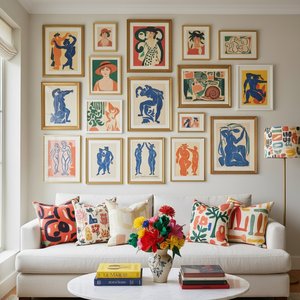
马蒂斯大师25幅杰作:色彩与光影的艺术传奇 | OriginalUniqueArt
探索亨利·马蒂斯25幅杰作,感受野兽派色彩的魅力!从《舞蹈》到《红色和谐》,揭秘大师背后的故事与艺术灵感。OriginalUniqueArt.com提供博物馆级高质量油画复制品,为您的家居增添奢华艺术气息。立即在线探索完整系列!



