

 实景预览
实景预览
 发送
发送 分享
分享
 详情
详情 指南
指南

 下载图片
下载图片
 相似作品
相似作品 X射线
X射线 幻灯片播放
幻灯片播放 统计数据
统计数据Floor plan Sleeping room (with interior furnishings)
 Acrylic On Canvas
- WallArt
- Bauhaus Expressionism
 1962
1962 42.0 x 30.0 cm
 Bauhaus Dessau 美術館
 阅读全文
阅读全文
手工油画复制品
由我们的艺术家按需定制,为您提供您所选尺寸及画框的布面手工油画。 ( 切换至版画销售渠道 切换至数字图像销售渠道)




P118B $10

P118H $10

P118W $10

P438Z $10

P508JH $12

P508YH $12

P805H $10

P805Z $10

P919BZ $10

P919G $10

P919XJ $10

P959ZH $10

P968JZ $12

W106C $8

W218G $10

W218JH $8

W218Y $10

W307PJ $10

W316G $10

W316PJ $8

W316Y $10

W398PJ $8

W4111J $10

W500HY $15

W500JH $15

W692G $12

W849H $8

W940BG $15

W953PJ $8




您可以从与原作比例一致的预设尺寸中进行选择。

您可以输入自定义尺寸,以适配特定的画框或空间。如果所选尺寸与原图比例不符,我们将通过裁剪作品或添加手绘元素来扩展画面。数字样稿将在制作开始前发送给您确认。
请注意,屏幕预览无法准确反映实际的裁剪或扩展效果,只有样稿才能真实呈现最终的构图。
虽然我们提供定制尺寸服务,但为了保留原作比例,建议您从预设列表中选择尺寸。
下单后,OriginalUniqueArt.com 团队将通过电子邮件联系客户获取具体要求,并提供效果预览图


 玻璃选项仅适用于110厘米以下的尺寸。

Floor plan Sleeping room (with interior furnishings)
复制品材质
复刻品尺寸说明
-


总计金额
$ 300
A Quiet Reflection on Space: Franz Ehrlich’s Floor Plan for “Neues Leben – Neues Wohnen”
Franz Ehrlich's "Floor plan Sleeping room (with interior furnishings, for the exhibition neues leben - neues wohnen”, 1962 in Berlin-Fennpfuhl)" isn’t merely a technical drawing; it’s a distilled essence of Bauhaus principles—a testament to functionality imbued with an understated elegance that speaks volumes about the era's preoccupation with rational design and humanist ideals. Created during Ehrlich’s formative years at Dessau, this piece embodies the spirit of experimentation fostered by Walter Gropius and his colleagues, marking a crucial juncture in German architectural history. The drawing itself—a meticulously rendered graphite pencil sketch on off-white paper—captures a deceptively simple scene: a small room furnished with benches and a chair, bathed in diffused light. Yet, within its geometric confines lies a profound exploration of spatial relationships and the pursuit of harmonious living spaces.Composition and Technique: Embracing Orthographic Precision
The artwork’s compositional strategy prioritizes clarity and balance. Dominating the canvas is a rectangular outline delineating the room's dimensions—a foundational element reflecting the Bauhaus ethos of geometric abstraction. Lines converge to define walls, furniture placements, and doorways, meticulously measured and annotated with precise notations. These lines aren’t merely structural; they are conduits for conveying information about scale and proportion, mirroring the Bauhaus commitment to didactic design. Subtle hatching and cross-hatching contribute tonal variation—a restrained technique that avoids distracting from the core message of spatial organization. The graphite pencil demonstrates remarkable control, capturing textures with subtle gradations that hint at the materiality of surfaces without resorting to illusionistic rendering.Historical Context: Bauhaus Ideals Amidst Cold War Uncertainty
Ehrlich’s creation emerged against the backdrop of post-war Germany—a nation grappling with rebuilding its economy and redefining its cultural identity. The Bauhaus movement, established in 1919, championed a radical reimagining of architectural practice, rejecting ornamentation in favor of functionalism and prioritizing craftsmanship alongside technological innovation. “Neues Leben – Neues Wohnen,” the exhibition showcasing this floor plan, aimed to articulate the vision for a new kind of domestic life—one rooted in simplicity, efficiency, and human connection. The drawing serves as a tangible embodiment of these ideals, reflecting Bauhaus’s enduring influence on subsequent generations of architects and designers.Symbolism Beyond Geometry: Order and Human Scale
Despite its austere aesthetic, “Floor plan Sleeping room…” resonates with symbolic significance. The geometric precision—the dominant rectangles and squares—represents rationality and control—values central to the Bauhaus worldview. However, it’s equally important to recognize the drawing's subtle suggestion of human scale. The placement of furniture—particularly the benches—indicates a consideration for comfort and practicality—a deliberate counterbalance to the movement’s emphasis on abstraction. This harmonious blend of form and function underscores Bauhaus’s belief in architecture as a tool for enhancing human experience.Emotional Resonance: A Quiet Statement of Purpose
Ultimately, Ehrlich's floor plan transcends mere documentation; it communicates a quiet statement of purpose—a conviction that thoughtful design can elevate everyday life. The drawing evokes a sense of serenity and order—qualities prized during the Cold War era as Germany sought to forge a path toward stability and progress. It’s a reminder that beauty can reside in simplicity, and that architectural innovation should serve not only aesthetic considerations but also fundamental human needs. Viewing this reproduction offers an opportunity to appreciate Ehrlich's masterful distillation of Bauhaus principles—a legacy preserved through OriginalUniqueArt.’s dedication to presenting exceptional artwork reproductions.艺术家简介
早年生活与教育历程
弗兰茨·埃利希 (Franz Ehrlich) 是一位享誉盛名的德国建筑师、书法家及平面设计师,于1907年诞生。在他成长的岁月里,一种对艺术天生的敏锐直觉便已悄然萌芽,这促使他在1927年至1930年间进入德绍包豪斯学院深造。这所享誉世界的顶尖学府在塑造埃利希的艺术视野方面发挥了至关重要的作用,让他得以深度接触并融入当时最前卫的艺术运动之中。艺术生涯与共产主义背景
埃利希与共产党的紧密联系对其个人生活及职业生涯产生了深远的影响。1935年,他不幸遭到纳粹政权的逮捕与监禁,这一沉重的历史事件极大地改变了他艺术探索的轨迹。然而,即便身处如此严峻的挑战之中,埃利修建仍不懈地为艺术界做出贡献,留下了一份既令人振奋又引人深思的宝贵遗产。代表作品
埃利希最为人称道的杰作包括:- 《800年:Das Buch [书]》。平面图与视图(莱比锡贸易博览会展品展示架),这件作品见证了他在设计与建筑领域极具创新性的探索精神。
- 鲍曼教授住宅施工图(基础平面图),充分展现了他在建筑规划方面的深厚造诣。
- 1933年(摄影雕塑广告项目),这是一场摄影与雕塑的独特融合,彰显了他实验性的艺术本质。
收藏埃利希作品的博物馆与机构
OriginalUniqueArt.com 拥有丰富的埃利希作品馆藏,其中包括上述提及的多件重要杰作。此外,位于德国德绍-罗斯劳的包豪斯德绍基金会 (Bauhaus Dessau Foundation) 也是其艺术成就的重要存放地。传承与影响
弗兰茨·埃利希对艺术界的贡献是多维度的,反映了他广泛的兴趣与卓越的才华。无论是在创作层面还是个人经历层面,他的生命轨迹都为我们观察德国历史上关键时刻中艺术与政治的交织提供了极其珍贵的视角。- 在 https://OriginalUniqueArt.com/@/franz-ehrlich 浏览更多埃利希的作品
- 前往 包豪斯德绍基金会 (德国,德绍-罗斯劳) 探索其馆藏珍品
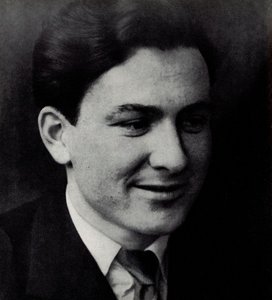
弗兰茨·埃利希
1907 - 1984 , 德国
快速概览
- Artistic Movement Or Style: 包豪斯, 表现主义
- Artists Or Movements Influenced By This Artist:
- 包豪斯
- 共产主义青年团
- Artists Who Influenced This Artist:
- 沃尔特·格罗皮乌斯
- 莫霍利-纳吉
- 克利
- 约斯特·施密特
- Date Of Birth: 1907
- Date Of Death: 1984
- Full Name: 弗兰茨·埃利希
- Nationality: 德国
- Notable Artworks:
- 800 YRS. FRAMEWORK WALL 3
- 无题 (HKB I 或 II)
- 小提琴绘画
- Place Of Birth: 德国,罗伊特
相关文章
Harmonizing Contrasts: Integrating Abstract Art into Classic Interiors for Timeless Modernity
Elevate your classic home with abstract art! Discover expert tips for seamlessly blending modern pieces into timeless interiors. Find the perfect artwork & design advice at OriginalUniqueArt.

German Expressionism's 10 Defining Masterpieces | Art for Your Home
Explore 10 defining German Expressionism masterpieces – from Munch's 'The Scream' to Kandinsky’s abstracts. Discover the artists, stories & bold colors behind this powerful art movement. Find museum-quality reproductions at OriginalUniqueArt.com.

Mastering the Line: A Comprehensive Expert Guide to Technical Precision and Expressive Depth in Drawing
Elevate your artistic practice with this expert guide to mastering the line. Discover advanced techniques in graphite, charcoal, and contour drawing designed for art students seeking technical precision and expressive depth in their fine art studies.

The Nuances of Graphite: Exploring Emotional Depth & Technical Mastery in Pencil Drawing
Explore the captivating world of graphite drawing! Discover its rich history, master essential techniques like chiaroscuro, and learn how artists evoke emotion through this timeless medium. Expert insights for art enthusiasts.
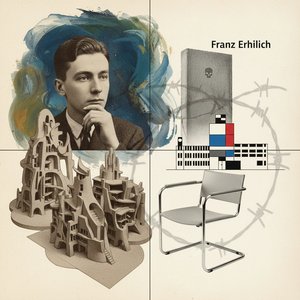
Franz Ehrlich: Bridging Expressionism, Bauhaus & the Shadows of History
Explore the life of Franz Ehrlich, a pivotal Bauhaus architect whose career spanned Expressionism, resistance during Nazi Germany, and GDR reconstruction. Discover his complex legacy & view museum-quality reproductions at OriginalUniqueArt.