

 实景预览
实景预览
 发送
发送 分享
分享
 详情
详情 指南
指南

 下载图片
下载图片
 相似作品
相似作品 X射线
X射线 幻灯片播放
幻灯片播放 统计数据
统计数据CONSTRUCTION SCHEDULE FOR THE MOST FAVOURABLE IMPLEMENTATION OF AN INVESTMENT PROJECT TV STUDIOS FOR 4-HOUR PER WEEK PROGRAM
 Ink On Paper
- Bauhaus
 1959
1959- Modern
 49.0 x 84.0 cm
 Bauhaus Dessau 美術館
 阅读全文
阅读全文
手工油画复制品
由我们的艺术家按需定制,为您提供您所选尺寸及画框的布面手工油画。 ( 切换至版画销售渠道 切换至数字图像销售渠道)




P118B $10

P118H $10

P118W $10

P438Z $10

P508JH $12

P508YH $12

P805H $10

P805Z $10

P919BZ $10

P919G $10

P919XJ $10

P959ZH $10

P968JZ $12

W106C $8

W218G $10

W218JH $8

W218Y $10

W307PJ $10

W316G $10

W316PJ $8

W316Y $10

W398PJ $8

W4111J $10

W500HY $15

W500JH $15

W692G $12

W849H $8

W940BG $15

W953PJ $8




您可以从与原作比例一致的预设尺寸中进行选择。

您可以输入自定义尺寸,以适配特定的画框或空间。如果所选尺寸与原图比例不符,我们将通过裁剪作品或添加手绘元素来扩展画面。数字样稿将在制作开始前发送给您确认。
请注意,屏幕预览无法准确反映实际的裁剪或扩展效果,只有样稿才能真实呈现最终的构图。
虽然我们提供定制尺寸服务,但为了保留原作比例,建议您从预设列表中选择尺寸。
下单后,OriginalUniqueArt.com 团队将通过电子邮件联系客户获取具体要求,并提供效果预览图


 玻璃选项仅适用于110厘米以下的尺寸。

CONSTRUCTION SCHEDULE FOR THE MOST FAVOURABLE IMPLEMENTATION OF AN INVESTMENT PROJECT TV STUDIOS FOR 4-HOUR PER WEEK PROGRAM
复制品材质
复刻品尺寸说明
-


总计金额
$ 300
The Precision of Progress: A Blueprint of Visionary Intent
In the intersection of architectural rigor and graphic artistry lies a remarkable piece of mid-century documentation: CONSTRUCTION SCHEDULE FOR THE MOST FAVOURABLE IMPLEMENTATION OF AN INVESTMENT PROJECT TV STUDIOS FOR 4-HOUR PER WEEK PROGRAM. Created in 1959 by the master of form, Franz Ehrlich, this work transcends its utilitarian origins to become a captivating study of order and anticipation. At first glance, the viewer is met with an intricate tapestry of tables, diagrams, and charts that map out the birth of a media space. It is not merely a schedule; it is a visual manifesto of structural possibility, where every line and cell serves as a heartbeat in the rhythm of industrial progress.
The painting, executed on paper with a delicate yet commanding presence, measures 49 x 84 cm, offering a panoramic view into the meticulous mind of its creator. Ehrlich utilizes a technique that blends the precision of technical drafting with the expressive soul of graphic design. The composition is dense with information, yet it maintains a rhythmic balance that guides the eye through a labyrinth of data. For the collector or interior designer, this piece offers a sophisticated geometric complexity that serves as a stunning focal point in modern, minimalist, or industrial-themed spaces, providing a sense of intellectual depth and structured elegance.
A Legacy Forged in Bauhaus Discipline
To understand the soul of this work, one must look to the hands that held the pen. Franz Ehrlich was a product of the legendary Bauhaus Dessau, an institution that redefined the relationship between art, craft, and industry. Having studied there between 1927 and 1930, Ehrlich carried the avant-garde principles of functionalism and clarity into his later works. This specific piece, created decades after his formative years, reflects a matured mastery of the Bauhaus ethos—the idea that beauty is found in the most efficient and logical arrangement of elements.
The historical context of 1959 adds a layer of profound gravity to the work. Living through the turbulent shifts of mid-century Germany, Ehrlich’s work often mirrored the tension between individual creativity and the collective necessity of reconstruction and planning. The subject matter—the implementation of TV studios—speaks to an era of burgeoning communication and the technological optimism of the post-war period. There is a quiet heroism in these charts; they represent the blueprint for a new way of seeing the world through the lens of emerging mass media.
The Aesthetic of Order and Emotional Resonance
Beyond its technical merits, the artwork possesses an evocative emotional impact that resonates with anyone moved by the beauty of logic. There is a certain serenity found in its absolute organization. The repetition of tables and the structured flow of diagrams create a meditative quality, inviting the viewer to lose themselves in the details of the project's timeline. It evokes a sense of nostalgia for an era when progress was measured in tangible, meticulously planned steps.
For those seeking to adorn a curated collection or a professional studio, this reproduction offers more than just decoration; it offers a conversation piece that bridges the gap between historical documentation and fine art. The interplay of light and shadow within the intricate linework provides a tactile richness that makes every viewing a new discovery. It is a celebration of the architect's vision—a moment frozen in time where the future was being carefully, beautifully constructed.
艺术家简介
早年生活与教育历程
弗兰茨·埃利希 (Franz Ehrlich) 是一位享誉盛名的德国建筑师、书法家及平面设计师,于1907年诞生。在他成长的岁月里,一种对艺术天生的敏锐直觉便已悄然萌芽,这促使他在1927年至1930年间进入德绍包豪斯学院深造。这所享誉世界的顶尖学府在塑造埃利希的艺术视野方面发挥了至关重要的作用,让他得以深度接触并融入当时最前卫的艺术运动之中。艺术生涯与共产主义背景
埃利希与共产党的紧密联系对其个人生活及职业生涯产生了深远的影响。1935年,他不幸遭到纳粹政权的逮捕与监禁,这一沉重的历史事件极大地改变了他艺术探索的轨迹。然而,即便身处如此严峻的挑战之中,埃利修建仍不懈地为艺术界做出贡献,留下了一份既令人振奋又引人深思的宝贵遗产。代表作品
埃利希最为人称道的杰作包括:- 《800年:Das Buch [书]》。平面图与视图(莱比锡贸易博览会展品展示架),这件作品见证了他在设计与建筑领域极具创新性的探索精神。
- 鲍曼教授住宅施工图(基础平面图),充分展现了他在建筑规划方面的深厚造诣。
- 1933年(摄影雕塑广告项目),这是一场摄影与雕塑的独特融合,彰显了他实验性的艺术本质。
收藏埃利希作品的博物馆与机构
OriginalUniqueArt.com 拥有丰富的埃利希作品馆藏,其中包括上述提及的多件重要杰作。此外,位于德国德绍-罗斯劳的包豪斯德绍基金会 (Bauhaus Dessau Foundation) 也是其艺术成就的重要存放地。传承与影响
弗兰茨·埃利希对艺术界的贡献是多维度的,反映了他广泛的兴趣与卓越的才华。无论是在创作层面还是个人经历层面,他的生命轨迹都为我们观察德国历史上关键时刻中艺术与政治的交织提供了极其珍贵的视角。- 在 https://OriginalUniqueArt.com/@/franz-ehrlich 浏览更多埃利希的作品
- 前往 包豪斯德绍基金会 (德国,德绍-罗斯劳) 探索其馆藏珍品
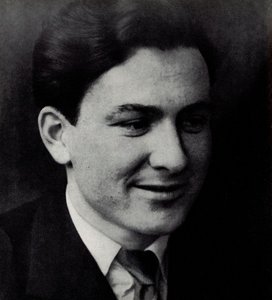
弗兰茨·埃利希
1907 - 1984 , 德国
快速概览
- Artistic Movement Or Style: 包豪斯, 表现主义
- Artists Or Movements Influenced By This Artist:
- 包豪斯
- 共产主义青年团
- Artists Who Influenced This Artist:
- 沃尔特·格罗皮乌斯
- 莫霍利-纳吉
- 克利
- 约斯特·施密特
- Date Of Birth: 1907
- Date Of Death: 1984
- Full Name: 弗兰茨·埃利希
- Nationality: 德国
- Notable Artworks:
- 800 YRS. FRAMEWORK WALL 3
- 无题 (HKB I 或 II)
- 小提琴绘画
- Place Of Birth: 德国,罗伊特
相关文章
Frederick Bridgman: Anatomical Mastery & the Evolution of Figure Drawing Instruction
Explore the anatomical mastery of George B. Bridgman & his revolutionary figure drawing techniques. Discover how his methods transformed art instruction and continue to inspire artists today. Learn more at OriginalUniqueArt.
The Nuances of Graphite: Exploring Emotional Depth & Technical Mastery in Pencil Drawing
Explore the captivating world of graphite drawing! Discover its rich history, master essential techniques like chiaroscuro, and learn how artists evoke emotion through this timeless medium. Expert insights for art enthusiasts.
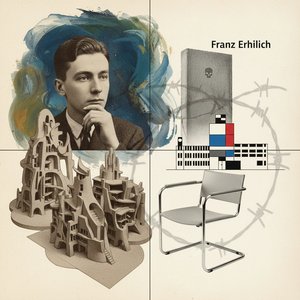
Franz Ehrlich: Bridging Expressionism, Bauhaus & the Shadows of History
Explore the life of Franz Ehrlich, a pivotal Bauhaus architect whose career spanned Expressionism, resistance during Nazi Germany, and GDR reconstruction. Discover his complex legacy & view museum-quality reproductions at OriginalUniqueArt.

Mastering the Line: A Comprehensive Expert Guide to Technical Precision and Expressive Depth in Drawing
Elevate your artistic practice with this expert guide to mastering the line. Discover advanced techniques in graphite, charcoal, and contour drawing designed for art students seeking technical precision and expressive depth in their fine art studies.
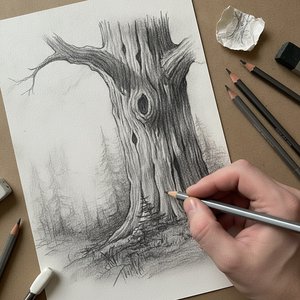
The Power of Graphite: Mastering Depth, Texture, and Detail in the Art of Pencil Drawing
Explore the profound artistry of graphite drawing. Discover professional techniques for mastering depth, texture, and detail through a lens of art history, from classical sketches to modern masterpieces. Elevate your understanding of the pencil medium with our expert guide.