切换至版画销售渠道
 展开全文
展开全文







































 对于任何边长超过 105 厘米(约 41 英寸)的艺术品或复制品,画框将以拆解后的组件形式发货。此方法可确保安全送达并防止运输过程中的损坏。


The Fruit Basket: A Baroque Ode to Abundance
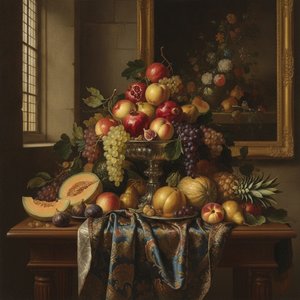
Frans Snyders’ “The Fruit Basket,” completed in 1633, transcends mere depiction; it embodies the very spirit of Baroque art—a celebration of opulent detail and dramatic visual impact. Housed within the Museo del Prado in Madrid, Spain, this oil on canvas masterpiece isn't simply a still life; it’s a carefully constructed tableau designed to stimulate contemplation and evoke a profound appreciation for earthly beauty. The painting immediately draws the eye with its vibrant palette—deep reds dominate the apples and oranges, contrasted by lush greens representing the foliage and vegetables. These colors aren’t merely decorative; they were painstakingly chosen to convey emotion and heighten the sense of realism achieved through masterful chiaroscuro lighting.- Composition & Technique: Snyders employs a pyramidal composition, anchoring the eye on the basket itself while subtly guiding it across the table towards the woman holding it. The artist’s meticulous brushwork captures the textures of fruit skins—the velvety sheen of peaches and plums alongside the rough surface of apples—creating an illusion of palpable physicality. Notice how light sculpts the forms, emphasizing volume and depth, mirroring the grandeur of Baroque artistic ideals.
- Historical Context: Created during Philip IV’s reign, “The Fruit Basket” reflects the prevailing fascination with naturalism within European art circles. The Baroque period prioritized portraying the world as it appeared to the senses—a reaction against the stylized conventions of Mannerism. Snyders' work aligns perfectly with this trend, demonstrating a commitment to capturing fleeting moments of sensory experience.
- Symbolism & Narrative: Beyond its visual splendor, “The Fruit Basket” carries symbolic weight. The basket itself represents fertility and nourishment—themes central to Baroque iconography. The woman’s gesture suggests generosity and hospitality, embodying the humanist values championed during this era. Furthermore, the inclusion of a knife hints at preparation and transformation, subtly referencing the cycle of life and death.
- Influence & Legacy: Snyders' meticulous realism profoundly impacted subsequent still life painters. His influence can be seen in works by artists like Jacob Jordaens and Willem Claeszoon Heda who adopted similar techniques to convey a sense of immediacy and grandeur. “The Fruit Basket” remains an enduring testament to Baroque artistry, inspiring admiration for its technical prowess and emotional resonance.
常见问题与解答
弗朗斯·斯奈德斯 (Fú Lǎng Sī · Sī Nài Dé Sī) 的《The Fruit Basket》 创作于哪一年?
"The Fruit Basket"创作于1633年。这一时期将该作品置于弗朗斯·斯奈德斯 (Fú Lǎng Sī · Sī Nài Dé Sī)的艺术生涯及其所处时代之中。
建议将 弗朗斯·斯奈德斯 (Fú Lǎng Sī · Sī Nài Dé Sī) 的《The Fruit Basket》 悬挂在哪个空间?
弗朗斯·斯奈德斯 (Fú Lǎng Sī · Sī Nài Dé Sī) 的《The Fruit Basket》 的推荐陈列空间为 Living Room。当然,该建议也可根据您的室内装饰进行灵活调整。
目前可以在哪里观赏到弗朗斯·斯奈德斯 (Fú Lǎng Sī · Sī Nài Dé Sī) 的《The Fruit Basket》?
弗朗斯·斯奈德斯 (Fú Lǎng Sī · Sī Nài Dé Sī) 的《The Fruit Basket》 目前正在 普拉多博物馆, Madrid, Spain 展出。此处列出的博物馆指代原作,而非复制品。
 实景预览
实景预览
 分享
分享 分享
分享
 详情
详情 指南
指南

 下载作品
下载作品
 相似作品
相似作品 X射线
X射线 幻灯片播放
幻灯片播放 问答
问答 统计数据
统计数据