效果预览
效果预览
 购买印刷品
购买印刷品 分享
分享 分享
分享
 详情
详情

 下载
下载
 相似作品
相似作品 X射线
X射线 幻灯片播放
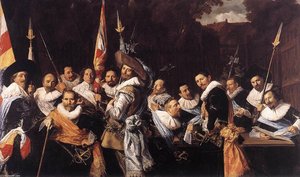
幻灯片播放Lucas de Clercq
 Oil
Oil- WallArt
- Dutch Golden Age Portraiture
 1635
1635- Early Modern
 126.0 x 93.0 cm
 国家博物馆 (Rijksmuseum)
 展开详情
展开详情




P118B $10

P118H $10

P118W $10

P438Z $10

P508JH $12

P508YH $12

P805H $10

P805Z $10

P919BZ $10

P919G $10

P919XJ $10

P959ZH $10

P968JZ $12

W106C $8

W218G $10

W218JH $8

W218Y $10

W307PJ $10

W316G $10

W316PJ $8

W316Y $10

W398PJ $8

W4111J $10

W500HY $15

W500JH $15

W692G $12

W849H $8

W940BG $15

W953PJ $8




从与原作比例一致的预设尺寸中进行选择。

您可以输入自定义尺寸,以适配特定的画框或空间。如果所选尺寸与原图比例不符,我们将通过裁剪作品或添加手绘元素来扩展画面。数字样稿将在制作开始前发送给您确认。
请注意,屏幕预览无法准确反映实际的裁剪或扩展效果,只有样稿才能真实呈现最终的构图。
虽然我们提供定制尺寸服务,但为了保留原作比例,建议您从预设列表中选择尺寸。
下单后,OriginalUniqueArt.com 团队将通过电子邮件联系客户获取具体要求,并提供效果预览图。


 玻璃选项仅适用于110厘米以下的尺寸。

Lucas de Clercq
复制材质
复制品尺寸
-


最终总价
$ 300
A Glimpse into Haarlem’s Golden Soul
In the heart of the Dutch Golden Age, amidst the bustling commerce and burgeoning intellectual fervor of 17th-century Haarlem, Frans Hals I captured something far more profound than a mere likeness. His portrait of Lucas de Clercq stands as a breathtaking testament to an era defined by both prosperity and piety. As we gaze upon this masterpiece, we are not simply looking at a man, but rather stepping into the very soul of a period where the lines between mercantile success and spiritual devotion were beautifully intertwined. De Clercq, a prominent Mennonite businessman, is presented with a striking sense of presence that commands the room, offering a window into the understated elegance and quiet confidence of the Haar/Mennonite community.
The painting serves as a poignant historical document, reflecting the social fabric of a society navigating the turbulent waters of religious and political change. Through Hals’s lens, we see the dignity of the merchant class—a group whose wealth was built on industry yet whose lifestyle was anchored in the sober, disciplined values of their faith. This tension between worldly achievement and spiritual humility is palpable in every stroke, making the work an essential piece for any collector who appreciates art that tells a deep, human story.
The Mastery of the Expressive Brush
What truly distinguishes this work from the meticulous, almost photographic precision of his contemporaries is Hals’s revolutionary approach to technique. He was a master of the alla prima style, utilizing a loose, spontaneous brushstroke that feels remarkably modern even centuries later. Rather than hiding his hand behind layers of smooth, blended glazes, Hals deliberately left visible traces of his movement across the canvas. This creates a palpable energy, a sense of vitality that makes the subject feel as though he might breathe or shift at any moment.
The artist’s use of chiaroscuro—the dramatic interplay between light and shadow—is nothing short of cinematic. Light cascades across De Clercq’s face and torso, sculpting his muscular physique and highlighting the textures of his attire with brilliant clarity. This strategic illumination does more than just define form; it directs the viewer's emotional journey, pulling our eyes toward the subject's gaze and the subtle details of his expression. For interior designers, this dramatic lighting provides a focal point that can transform the atmosphere of a room, adding depth, sophistication, and a sense of classical grandeur to any curated space.
Symbolism and the Spirit of the Age
Every element within the composition is imbued with a layer of meaning that rewards the attentive observer. The inclusion of a pipe in De Clercq’s hand is far from a casual accessory; it serves as a sophisticated symbol of both status and contemplation. In the context of the 17th century, such an object suggested a man of intellect and leisure, someone capable of quiet reflection amidst a life of active commerce. This subtle nod to the humanist ideals of the era adds a layer of intellectual richness to the portrait.
Furthermore, the attire—the crisp white collar and the rich red cravat—speaks to the "understated elegance" favored by the Mennonite elite. It is a study in controlled opulence, where wealth is displayed through quality and texture rather than gaudy ornamentation. To possess a reproduction of this work is to invite a piece of history into one's home that celebrates the enduring values of character, stability, and refined taste. Whether placed in a private study or a grand living area, the portrait of Lucas de Clercq acts as an anchor of timelessness, bridging the gap between the triumphs of the Dutch Golden Age and the aesthetic desires of the modern connoisseur.
艺术家简介
弗兰斯·哈尔斯一世:光影中的荷兰灵魂
大约在1580年,弗兰斯·哈尔斯一世诞生于比利时安特卫普。尽管他早期的生活细节鲜为人知,但他很快便成为荷兰黄金时代最重要的画家之一,以其创新的肖像画和风俗画而闻名。哈尔斯并非仅仅是一位技艺精湛的艺术家,更是一位敏锐的观察者,一位能够捕捉人物灵魂深处情感的诗人。
早年生活与艺术启蒙
关于哈尔斯早期的训练情况记载不多,普遍认为他最初在安特卫普接受了绘画教育。然而,由于宗教和政治动荡,他的家庭迁居荷兰哈勒姆。1610年,他加入了哈勒姆圣卢卡行会,标志着其职业生涯的正式开始。安特卫普的艺术氛围为他奠定了坚实的基础,而哈勒姆则成为了他挥洒才华、逐渐成名的舞台。那个时代,荷兰正经历着经济繁荣和文化蓬勃发展时期,这无疑也影响了哈尔斯作品的主题和风格。
独特的绘画语言:瞬间永恒的捕捉
哈尔斯以其清新而自发的画风独树一帜。与许多同时代画家注重精细刻画不同,他采用了一种自由奔放的笔触。这种技法赋予了他的作品一种鲜活的生命力,能够生动地展现人物的个性和气质,这在当时是一项革命性的突破。他的肖像画并非简单的容貌复制,而是深刻的心理研究。他擅长捕捉转瞬即逝的瞬间——欢笑、交谈或沉思,将这些稍纵即逝的情感凝固于画布之上。
哈尔斯对光影的运用也极具匠心,为他的构图增添了深度和戏剧性。他善于利用光线来突出人物的面部特征和情感表达,营造出一种引人入胜的氛围。这种对光线的敏锐感知和巧妙运用,使得他的作品充满了活力和感染力。
代表作与艺术成就
哈尔斯创作了大量的作品,其中以肖像画最为著名。他的一些最受赞誉的作品包括:
- 笑 Cavalier (1624) – 这是他捕捉人物性格和动态的典范之作,展现了他非凡的绘画技巧和对人性的深刻理解。
- 马勒·巴贝 (约1633-1635) – 这幅画生动地描绘了一位老妇人的形象,充分展示了哈尔斯刻画年龄和个性的高超技艺。
- 哈勒姆养老院管理人员肖像 (1664) - 展示了他对集体肖像的精湛掌握能力。
此外,他还创作了许多引人入胜的风俗画——描绘日常生活的场景,为人们提供了了解荷兰社会风貌的窗口。
影响与传承:光影流动的艺术遗产
确定哈尔斯直接的影响因素颇具挑战性,因为他发展出了一种高度个性化的风格。然而,可以肯定的是,他对早期佛兰德斯画家如彼得·勃鲁盖尔的作品有所了解。他的创新肖像画方法对后世的艺术家产生了深远影响。
- 他影响了阿德里安·布劳威尔和约翰内斯·维米尔等艺术家。
- 他对捕捉人物个性的强调为更亲密和心理化的肖像画铺平了道路。
- 后来的艺术家,包括印象派画家,钦佩他的自由笔触和对光线的关注。
历史意义:荷兰黄金时代的艺术缩影
弗兰斯·哈尔斯一世在塑造荷兰黄金时代的绘画方面发挥了至关重要的作用。他的作品反映了当时荷兰蓬勃的繁荣和个人主义精神。他摆脱了僵化的形式,转向一种更自然、更具表现力的风格,为艺术世界留下了持久的遗产。
今天,他的画作备受追捧,可以在世界各大博物馆找到,包括哈勒姆的弗兰斯·哈尔斯博物馆,那里收藏了他最多的作品。他的贡献继续激励着艺术家,几个世纪以来一直吸引着观众。

弗朗斯·哈尔斯一世 (Fú Lǎng Sī · Hā Ěr Sī Yī Shì)
1580 - 1585 , 比利时
艺术家简介
- 代表作品:
- 笑 Cavalier
- 马勒·巴贝
- 出生地: 比利时安特卫普
- 出生日期: 约1580年
- 受影响者:
- 阿德里安·布鲁瓦
- 约翰内斯·维米尔
- 国籍: 荷兰
- 姓名: 弗朗斯·哈尔斯一世
- 艺术运动或风格: 荷兰黄金时代绘画
- 逝世日期: 1585年
相关文章

Frans Hals I: Innovation, Intimacy & the Dutch Golden Age Portrait
Explore the revolutionary portraiture of Frans Hals I, a master of the Dutch Golden Age. Discover his innovative techniques, captivating character studies & lasting impact on art history. Learn more at OriginalUniqueArt.

荷兰黄金时代:十幅定义艺术史的巨作 | OriginalUniqueArt
探索荷兰黄金时代的艺术巅峰! 伦勃朗、维米尔等大师名作,带您领略巴洛克艺术的辉煌。高清画作、博物馆级品质,点亮您的家居空间。OriginalUniqueArt.com 提供精选艺术复制品和定制装饰方案。立即在线探索全系列!

Golden Light & Dutch Skies: The Timeless Magic of Dutch Golden Age Landscapes
Discover the breathtaking beauty of Dutch Golden Age landscapes. Explore the mastery of light, chiaroscuro, and 17th-century realism through an expert art history lens, celebrating the enduring legacy of the Dutch Masters for discerning collectors and art lovers.

光影交织的时代:荷兰黄金时代绘画艺术的兴盛与创新
深入探索荷兰黄金时代的绘画艺术:伦勃朗、维米尔等大师的技法与创新,了解巴洛克风格的独特演绎。OriginalUniqueArt提供手绘油画复制、艺术咨询及收藏建议,助您领略经典艺术之美。
十七世纪荷兰黄金时代绘画:光影、现实与人文精神的辉煌
深入探索十七世纪荷兰黄金时代绘画的辉煌!解读林布兰、维米尔等大师的光影技巧与人文精神,了解巴洛克风格、风俗画的演变。艺术史专家带您领略珍品收藏,提升艺术鉴赏力。