切换至版画销售渠道
 展开全文
展开全文







































 对于任何边长超过 105 厘米(约 41 英寸)的艺术品或复制品,画框将以拆解后的组件形式发货。此方法可确保安全送达并防止运输过程中的损坏。


A Vision of Artistic Intellect
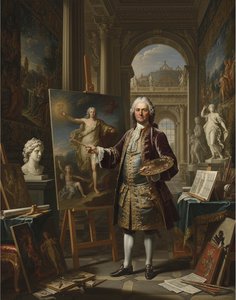
In the quiet, dignified presence of François Hubert Drouais' 1758 masterpiece, Portrait of Edmé Bouchardon, we encounter more than just a likeness; we enter the very mind of the Enlightenment. This exquisite oil on canvas serves as a profound window into the life of one of France’s most celebrated sculptors, capturing not merely his physical features but the very essence of his creative spirit. As the viewer approaches this portrait, they are immediately struck by an aura of intellectual contemplation and a sense of dignified repose that seems to emanode from the sitter himself. Drouais, a master of the Rococo era, transcends the boundaries of traditional portraiture to present a narrative of dedication, where every brushstroke contributes to a larger story of artistic legacy and cultural significance.
The composition is a triumph of classical balance and subtle sophistication. Positioned slightly off-center within an ornate, sculptural chair, Bouchardon gazes toward the viewer with an expression that invites deep reflection. Drouais employs a masterful use of chiaroscuro, allowing light to wash across the subject's face from the left, carving out his features with a soft yet commanding dimensionality. This interplay of light and shadow does more than create depth; it imbues the scene with a psychological weight, highlighting the textures of his powdered wig and the crisp white of his shirt cuffs against a somber, atmospheric background. The deliberate arrangement of the sitter alongside sculptural elements on a nearby pedestal serves as a silent testament to his vocation, grounding the portrait in the tangible reality of his craft.
The Language of Symbolism and Technique
Beyond the surface beauty lies a rich tapestry of symbolism that speaks to the cultural fervor of 18th-century France. The inclusion of sculptures prominently displayed within the frame is no mere decorative choice; these objects act as emblems of Bouchardon’s identity, anchoring his status as a titan of sculpture. Through these elements, Drouais elevates the portrait from a personal study to a celebration of craftsmanship and the intellectual currents of the Enlightenment. The warm, harmonious palette—dominated by rich browns, deep reds, and soft beiges—creates an atmosphere of timeless elegance, making the piece feel both intimately personal and historically monumental.
For the discerning collector or interior designer, this artwork offers a rare opportunity to integrate a piece of history into a contemporary space. The technical prowess displayed in Drouais' meticulous blending of brushstrokes creates a seamless transition of tones that lends the painting a lifelike, breathing quality. Whether placed in a grand library, a formal study, or as a focal point in a sophisticated living area, this reproduction brings with it an air of academic prestige and aesthetic grace. It is a work that does not merely decorate a wall but enriches the very soul of a room, offering a continuous dialogue between the grandeur of the past and the refined tastes of the present.
常见问题与解答
“EDME BOUCHARDON”采用了什么技法制作?
弗朗索瓦·休伯特·德鲁瓦 的《EDME BOUCHARDON》 的媒介为 Oil On Canvas。复制品旨在呈现该技法的视觉效果。
建议将"EDME BOUCHARDON"用于何处及何种用途?
建议将“EDME BOUCHARDON”用于Accent,推荐摆放空间为Living Room。
弗朗索瓦·休伯特·德鲁瓦 的《EDME BOUCHARDON》 属于哪种艺术流派?
“EDME BOUCHARDON”是一件Neoclassicism时期的作品。该艺术流派体现了作品所属的艺术传统。
 实景预览
实景预览
 分享
分享 分享
分享
 详情
详情 指南
指南

 下载作品
下载作品
 相似作品
相似作品 X射线
X射线 幻灯片播放
幻灯片播放 Q&A
Q&A 统计数据
统计数据