切换至版画销售渠道
 展开全文
展开全文







































 对于任何边长超过 105 厘米(约 41 英寸)的艺术品或复制品,画框将以拆解后的组件形式发货。此方法可确保安全送达并防止运输过程中的损坏。


The Portrait’s Genesis: François Boucher and the Dawn of Rococo
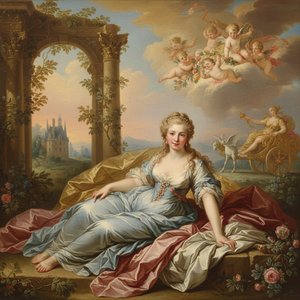
François Boucher's "A Lady on Her Day Bed," painted in 1743, isn’t merely a portrait; it’s a carefully constructed tableau vivant—a snapshot of an era. Born into a family already touched by artistic talent, Boucher’s journey began humbly, apprenticed to François Lemoyne before securing the prestigious Grand Prix de Rome, a gateway to the heart of French art. This early success paved the way for his appointment to the Académie Royale de Peinture et de Sculpture and ultimately, to the role of Premier Peintre du Roi – a position that solidified his status as one of the most influential figures in the burgeoning Rococo style. The painting itself emerged from Boucher’s close collaboration with Madame de Pompadour, the influential mistress of Louis XV, reflecting the refined tastes and opulent sensibilities of the French court. It's a testament to the era’s fascination with pleasure, beauty, and the delicate balance between intimacy and public display.
- Rococo Roots: Boucher masterfully embodies the Rococo movement – characterized by its graceful curves, pastel palettes, and playful subject matter.
- Courtly Patronage: The painting’s creation was intrinsically linked to the patronage system of the French court, shaping both its aesthetic and its narrative.
- A Window into a World: The room depicted offers a glimpse into Boucher's own apartment, revealing his personal style and reflecting the trends of the time – particularly the embrace of Oriental influences.
An Intimate Scene: Marie-Jeanne Buzeau and the Model’s Role
At the heart of "A Lady on Her Day Bed" is Marie-Jeanne Buzeau, a woman whose identity remains somewhat shrouded in history but who nonetheless emerges as a captivating presence. Boucher frequently employed his wife as a model, capturing her likeness in numerous paintings and engravings – a practice that speaks to both their personal relationship and the artist’s desire to portray authentic beauty. The portrait isn't simply a representation of Buzeau; it’s an exploration of femininity, leisure, and the quiet dignity of domestic life. Her pose—relaxed yet poised, her legs crossed with effortless grace—suggests a moment of contemplation, perhaps a stolen respite from the demands of motherhood and household duties. The painting subtly challenges conventional representations of women in art, presenting a figure of serene beauty rather than one defined solely by her role as wife or mother.
Note: Historians believe Buzeau’s pose was deliberately inspired by Titian's Venus of Urbino, creating a witty commentary on classical ideals within the context of Rococo aesthetics.Symbolism and Detail: A Symphony of Refinement
Beyond its immediate beauty, "A Lady on Her Day Bed" is rich in symbolic detail. The porcelain figurine and tea service adorning the hanging étagère—a feature of Boucher’s apartment—are emblems of luxury and Oriental influence, reflecting the fashionable taste for exotic objects during the 18th century. The clock above the bed serves as a subtle reminder of time's passage, while the books suggest an appreciation for learning and intellectual pursuits. The carefully arranged flowers – likely roses and lilies – represent love and purity, further reinforcing the painting’s themes of domestic harmony and refined sensibility. Even the pink hue of the room contributes to the overall atmosphere of tranquility and indulgence.
Key Elements:- Porcelain Figurine: Symbolizes luxury and Oriental influence.
- Tea Service: Represents social status and refined taste.
- Clock: A reminder of time and the importance of leisure.
- Flowers: Represent love, purity, and beauty.
Emotional Resonance: A Moment Frozen in Time
“A Lady on Her Day Bed” transcends its status as a mere portrait; it evokes a profound sense of intimacy and nostalgia. The painting’s soft light, delicate brushstrokes, and carefully composed details create an atmosphere of serene beauty—a world removed from the pressures and anxieties of everyday life. It invites us to step into this private moment, to imagine the quiet pleasures of a leisurely afternoon, and to appreciate the artistry with which Boucher captured a fleeting glimpse of domestic tranquility. The painting’s enduring appeal lies in its ability to transport us back to a bygone era—a time of elegance, refinement, and an appreciation for the simple joys of life. It remains a powerful testament to Boucher's mastery and his profound understanding of human emotion.
常见问题与解答
弗朗索瓦·布歇 的《A Lady on Her Day Bed》 的色彩是鲜艳还是柔和?
“A Lady on Her Day Bed”的色彩饱和度为Balanced Soft,色彩强度为Balanced。
对于 弗朗索瓦·布歇 的《A Lady on Her Day Bed》 而言,情感表达与送礼场合是如何完美融合的?
凭借其Nostalgic的情感基调,弗朗索瓦·布歇 的《A Lady on Her Day Bed》是送给Wedding的理想礼选。
弗朗索瓦·布歇 的《A Lady on Her Day Bed》 的构图比例如何,尺寸是多少?
"A Lady on Her Day Bed" 的形式为 Landscape,原件尺寸为 57 x 68 cm。这两项信息在规划复制品时都非常有用。
 实景预览
实景预览
 分享
分享 分享
分享
 详情
详情 指南
指南

 下载作品
下载作品
 相似作品
相似作品 X射线
X射线 幻灯片播放
幻灯片播放 问答
问答 统计数据
统计数据