
 效果预览
效果预览
 分享
分享 分享
分享
 详情
详情

 下载
下载
 相似作品
相似作品 X射线
X射线 幻灯片播放
幻灯片播放 统计数据
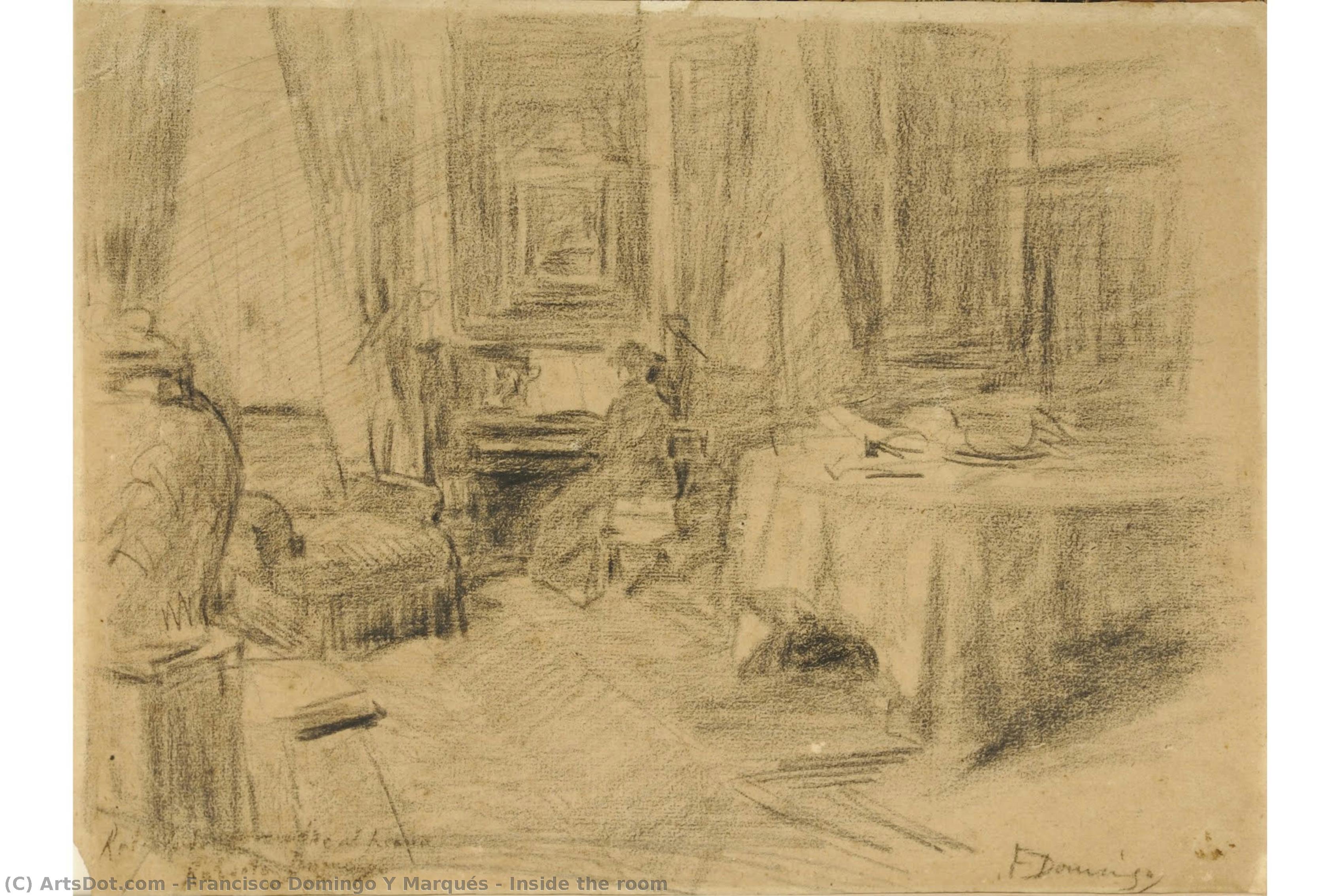
统计数据Inside the room

 展开详情
展开详情
手工油画复制品
由我们的艺术家按需定制,为您提供您所选尺寸及画框的布面手工油画。 ( 切换至版画销售渠道 切换至数字图像销售渠道)




































从与原作比例一致的预设尺寸中进行选择。

您可以输入自定义尺寸,以适配特定的画框或空间。如果所选尺寸与原图比例不符,我们将通过裁剪作品或添加手绘元素来扩展画面。数字样稿将在制作开始前发送给您确认。
请注意,屏幕预览无法准确反映实际的裁剪或扩展效果,只有样稿才能真实呈现最终的构图。
虽然我们提供定制尺寸服务,但为了保留原作比例,建议您从预设列表中选择尺寸。
下单后,OriginalUniqueArt.com 团队将通过电子邮件联系客户获取具体要求,并提供效果预览图。


 玻璃选项仅适用于110厘米以下的尺寸。

Inside the room
复制材质
复制品尺寸
-


最终总价
$ 300
艺术家简介
The Baroque Visionary: The Life and Legacy of Francisco Domingo y Marqués
Francisco José Domingo y Marqués stands as a luminous figure in the tapestry of nineteenth-century Spanish art, an artist whose brushwork breathed new life into the dramatic traditions of the past. Born in Valencia in 1842, his artistic soul was forged in the crucible of classical training and deep reverence for the masters. His early education at the Real Academia de Bellas Artes de San Carlos placed him under the tutelage of Rafael Montesinos y Ramiro, a mentor who instilled in him a profound admiration for the chiaroscuro and emotional intensity of José de Ribera. This foundational connection to the Spanish Baroque would become the heartbeat of his entire oeuvre, guiding his hand toward a style that balanced meticulous realism with a haunting, atmospheric grandeur.
As his ambitions grew, so did his geographical horizons. The move to Madrid in 1864 allowed him to refine his technique at the Real Academia de Bell and Artes de San Fernando under the esteemed Federico de Madrazo. However, it was the allure of Rome that truly catalyzed his development. Supported by a royal pension in 1868, Domingo entered the vibrant Italian artistic scene, immersing himself in the workshop of Eduardo Rosales. This period of Roman study was transformative; it allowed him to engage with the classical heritage of Europe and refine a sense of historical gravity that would define his most celebrated works. Even when health struggles, specifically bouts of malaria, forced a premature return to Spain, the echoes of Rome remained etched in his compositions.
Mastery of Light and Dramatic Narrative
The brilliance of Domingo y Marqués lies in his ability to navigate the diverse realms of landscape, portraiture, and historical genre painting with equal virtuosity. His work often transcends mere representation, seeking instead to capture a specific emotional resonance or a fleeting moment of tension. In his landscapes, such as the evocative Paisaje, he demonstrates a romantic sensibility, utilizing misty valleys and soft light to create scenes of serene, pastoral beauty that invite the viewer into a world of quiet contemplation.
Conversely, his genre paintings reveal a much darker, more theatrical side of his talent. In works like Duelo, one can witness the full weight of his Baroque inspiration. Through the use of deep shadows and high-contrast lighting, he constructs scenes of intense human conflict, where every muscle tension and facial expression is rendered with breathtaking precision. This mastery of light—the ability to pull figures out of an encroaching darkness—serves not just as a technical feat, but as a narrative tool that heightens the psychological stakes of his subjects. Even in more intimate sketches, such as Inside the Palacio de Oriente, his use of charcoal reveals an expressive line and a dramatic command over light that speaks to his profound understanding of form and atmosphere.
A Lasting Impression on Spanish Art
Throughout his career, Domingo y Marqués achieved significant milestones that cemented his reputation within the European art world. His victory at the 1871 exhibition with his portrait of Santa Clara praying serves as a testament to his ability to infuse religious subject matter with a palpable spiritual essence. Beyond the canvas, his contributions to the decorative arts—including commissions for opulent structures like the Palace of Eduardo, Duque de Bailén—demonstrate his versatility and his role in shaping the visual splendor of Spanish civic life.
The historical significance of Francisco Domingo y Marqués resides in his role as a bridge between eras. While many of his contemporaries were turning toward the fleeting impressions of modernism, he looked backward to find the strength to move forward, revitalizing the dramatic techniques of the seventeenth century for a nineteenth-century audience. His life, which took him from the academies of Valencia and Madrid to the studios of Rome and the cultural heart of Paris, reflects the eclectic and wandering spirit of an artist who refused to let the grandeur of the Baroque fade into obscurity. He remains a master of the emotive power of paint, leaving behind a legacy of works that continue to captivate with their depth, drama, and enduring beauty.

francisco domingo y marqués
1842 - 1920 , Spain
艺术家简介
- Artistic Movement Or Style: Eclectic
- Artists Or Movements Influenced By This Artist:
- Meissonier
- Impressionists
- Artists Who Influenced This Artist:
- José de Ribera
- Rafael Montesinos y Ramiro
- Date Of Birth: Valencia, Spain (1842)
- Date Of Death: 1920
- Full Name: Francisco José Domingo y Marqués
- Nationality: Spanish
- Notable Artworks:
- African Chief
- A Votre Sante
- Place Of Birth: Valencia