
 效果预览
效果预览
 购买印刷品
购买印刷品 分享
分享 分享
分享
 详情
详情

 下载
下载
 相似作品
相似作品 X射线
X射线 幻灯片播放
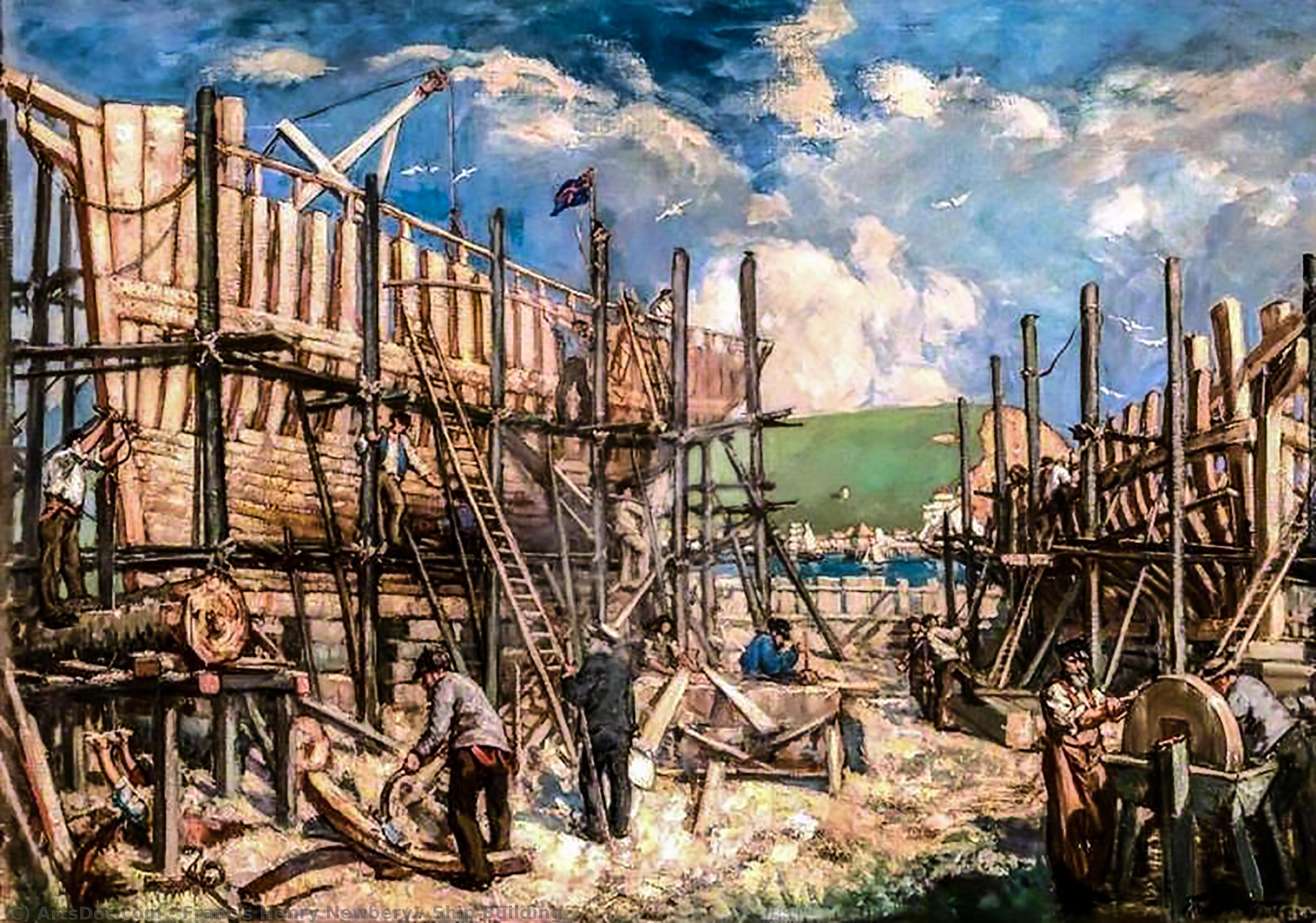
幻灯片播放Ship Building
 1927
1927 120.0 x 170.0 cm
 展开详情
展开详情




































从与原作比例一致的预设尺寸中进行选择。

您可以输入自定义尺寸,以适配特定的画框或空间。如果所选尺寸与原图比例不符,我们将通过裁剪作品或添加手绘元素来扩展画面。数字样稿将在制作开始前发送给您确认。
请注意,屏幕预览无法准确反映实际的裁剪或扩展效果,只有样稿才能真实呈现最终的构图。
虽然我们提供定制尺寸服务,但为了保留原作比例,建议您从预设列表中选择尺寸。
下单后,OriginalUniqueArt.com 团队将通过电子邮件联系客户获取具体要求,并提供效果预览图。


 玻璃选项仅适用于110厘米以下的尺寸。

Ship Building
复制材质
复制品尺寸
-


最终总价
$ 300
艺术家简介
Francis Henry Newbery: Shaping Scottish Art Through Visionary Leadership
Francis Henry Newbery (1855 – 1946) stands as a pivotal figure in the history of British art education and Glasgow Style painting, leaving an indelible mark on Scotland’s artistic landscape. Born in Devon to shoemaker William Newbery and Eliza (née Treloar), his early life instilled a grounding in craftsmanship alongside a burgeoning passion for visual arts—a duality that would profoundly shape his career trajectory. He pursued formal schooling in Bridport, Dorset, earning qualifications as both a teacher and an art master, experiences which honed his pedagogical skills and deepened his understanding of artistic principles. A scholarship to London’s Slade School of Art in 1881 propelled him into the heart of London’s artistic milieu where he cultivated connections with prominent artists like James Guthrie and John Lavery. These formative years nurtured his artistic sensibilities and solidified his commitment to fostering creativity within young minds. Recognizing the importance of practical training alongside theoretical knowledge, Newbery championed a revolutionary approach at Glasgow School of Art—establishing it as one of the first UK art schools to prioritize practising artists over certificated instructors. This bold decision fostered an environment where innovation thrived and encouraged students to explore their individual artistic voices. His leadership at Glasgow School of Art between 1885 and 1917 cemented his legacy as a transformative educator and visionary director. Crucially, he collaborated closely with Charles Rennie Mackintosh on the design of the school’s iconic building—a testament to his belief in architectural harmony and artistic collaboration. Mackintosh's influence extended beyond the physical structure; Newbery actively promoted Mackintosh’s distinctive Glasgow Style, nurturing a generation of artists who embraced its geometric forms and decorative motifs. Furthermore, he instituted craft workshops and introduced embroidery classes, recognizing the value of diverse artistic disciplines and empowering students to develop multifaceted skills. Newbery’s own painting style aligned with the Glasgow Boys movement—a group of young Scottish painters who championed Impressionism and plein air painting techniques. He produced evocative landscapes and portraits imbued with a sensitivity to light and color, reflecting his profound connection to the Dorset countryside where he resided in Corfe Castle during his retirement years. Continuing to paint until 1932, Newbery remained dedicated to artistic expression until his death on December 18, 1946. His contribution to art education and his role in shaping Glasgow Style—a movement that redefined British decorative arts—solidifies his place as a cornerstone of Scottish artistic heritage.- Notable Works: “The Lady of the Carnation,” “Herbert Fitton Stockdale,” “The Spirit of Bridport, Dorset”
- Influences: Whistler, Barbizon School, Impressionism
- Achievements: Director of Glasgow School of Art; Collaborator with Charles Rennie Mackintosh; Champion of Scottish Artists

francis henry newbery
1855 - 1946
艺术家简介
- Artistic Movement Or Style: Glasgow Style
- Artists Or Movements Influenced By This Artist: ['Mackintosh Designs']
- Artists Who Influenced This Artist:
- James Guthrie
- John Lavery
- Date Of Birth: 1855
- Date Of Death: 1946
- Full Name: Francis Henry Newbery
- Nationality: British
- Notable Artworks:
- The Lady of the Carnation
- Herbert Fitton Stockdale
- The Spirit of Bridport
- Place Of Birth: Devon, England

