
 实景预览
实景预览
 切换至版画销售渠道
 分享
分享 分享
分享
 详情
详情 指南
指南

 下载作品
下载作品
 相似作品
相似作品 X射线
X射线 幻灯片播放
幻灯片播放 问答
问答 统计数据
统计数据between two fires

 展开全文
展开全文
获取远超网页预览效果的印刷级文件。我们销售的每一张数字图像均源自库存数据库中的高分辨率母版——宽度通常在 5,000 至 15,000 像素之间——因此您可以放心地进行大幅打印、局部裁剪或还原细腻的细节。
每一件作品在离开我们的工作室前都经过了精心的处理。数字影像专家会对照原作核对色彩,并在必要时进行校正,随后利用专业修图工具提升清晰度与细节表现——且始终忠实于艺术家的笔触与风格。最终呈现的图像宛如原作本身,而非仅仅是一张加了滤镜的扫描件。
您可以在最终定稿前进行审核:我们的专家将在 72 小时内通过电子邮件向您发送图像以供审阅。如果不满意?您可以要求改进或修正;若质量未达预期,亦可申请退款。
这也是出版商、设计工作室、画廊及印刷厂所信赖的品质。
每份数字图像订单均包含的内容
专业级数字交付,品质保障
选择 OriginalUniqueArt.com,您获得的不仅仅是一张图像——您收到的是经过专业级增强、精雕细琢的数字艺术作品,并享有满意保证。以下是您的订单中自动包含的所有内容:

邮件即时送达
您的高分辨率数字图像文件将在下单后 72 小时内通过电子邮件发送给您 —— 即可立即使用。

AI 增强型数字文件
您的艺术品经过专业优化,结合先进的 AI 技术与人工修饰,确保呈现极致的细节、清晰度与色彩准确度。

终身免费重发服务
不小心删除了文件或找不到了?没关系——我们将随时为您免费重发。

无需进口税费,始终如一
即刻拥有您的艺术作品,无需支付任何关税、税费或运费——数字下载始终免税。

色彩精准保障
我们通过专业工具与色彩管理技术,确保您的数字图像尽可能真实地还原原作色彩。

100天满意保证
如果您对所购数字图像不满意,我们将在100天内为您进行修改或提供100%的全额退款——无需任何理由。

100% 退款保证
不满意?在收到数字文件后的100天内,您可以申请全额退款——无需任何理由。

批量订购优惠
购买 3 张享 10% 折扣 - 购买 5 张享 15% 折扣 - 购买 10 张以上享 20% 折扣。非常适合创意项目、画廊及机构使用。
艺术家简介
A Life Interrupted: The Tragic Story of Francis Davis Millet
Francis Davis Millet, a name resonating with both artistic achievement and profound sorrow, was an American academic classical painter, sculptor, and writer whose life was tragically cut short aboard the RMS Titanic in April 1912. Born in Mattapoisett, Massachusetts, in either 1846 or 1848 – conflicting accounts exist, a diary suggesting the latter date – Millet’s journey from a young drummer boy in the Civil War to a celebrated artist and influential figure in American art circles is a testament to his multifaceted talent and unwavering dedication. His early experiences profoundly shaped his artistic sensibility; he often spoke of how assisting his surgeon father during the war instilled within him a deep appreciation for the vivid, arresting power of red – a color that would frequently appear in his paintings, lending them an emotional intensity. After graduating from Harvard with a Master of Arts degree, Millet embarked on a diverse career path, working as a reporter and editor before fully committing to his artistic pursuits.From Battlefield to Beaux-Arts: Artistic Development and Recognition
Millet’s formal artistic training began in 1876 when he returned to Boston to contribute murals at Trinity Church alongside John La Farge, a pivotal figure in the American art scene. This experience ignited his passion for large-scale decorative work. He then journeyed to Europe, specifically Antwerp, Belgium, where he studied at the Royal Academy of Fine Arts. His talent was immediately recognized; he became the first student to win a silver medal in his initial year and followed it up with a gold medal the following year. This European sojourn proved crucial in shaping his artistic style, firmly grounding him within the academic classical tradition. However, Millet’s adventurous spirit extended beyond the studio. He served as a war correspondent during the Russo-Turkish War of 1877–78, reporting for prominent publications like the *New York Herald* and the *London Daily News*. His bravery under fire earned him decorations from both Russia and Romania, adding another layer to his already remarkable life story. This period demonstrates Millet’s willingness to engage with the world beyond art, bringing a unique perspective to his work.A Champion of American Art: Institutions and Influence
Upon returning to America, Millet quickly became a leading voice in the burgeoning American art establishment. He was elected a member of both the Society of American Artists and the National Academy of Design, eventually rising to Vice-Chairman of the latter’s Fine Arts Committee. His influence extended into museum administration as a trustee of the Metropolitan Museum of Art and an advisor to the National Gallery of Art. Millet played a key role in shaping the artistic landscape of his time, notably serving as decorations director for the World's Columbian Exposition in Chicago in 1893. While stories surrounding his innovative use of compressed air spray painting during the exposition are debated – contemporary accounts suggest the technology was already in use – it underscores his forward-thinking approach to large-scale artistic projects. He was a founding member and vice chairman of the U.S. Commission of Fine Arts, dedicating himself to promoting excellence in American art and architecture until his untimely death. Furthermore, Millet was instrumental in establishing the School of the Museum of Fine Arts, Boston, and securing Emil Otto Grundmann as its first head, demonstrating his commitment to nurturing future generations of artists. His involvement with the American Academy in Rome further solidified his dedication to fostering artistic exchange and education.Beyond the Canvas: Literary Pursuits and Personal Life
Francis Davis Millet was not solely defined by his visual art; he was also a prolific writer and journalist. He translated works by Tolstoy, showcasing his intellectual curiosity and linguistic skills, and penned essays and short stories, including *Capillary Crime and Other Stories* (1892) and *The Danube From the Black Forest to the Black Sea* (1892). These literary endeavors reveal a multifaceted personality capable of expressing himself through various mediums. His personal life was equally rich and complex. He married Elizabeth (“Lily”) Greely Merrill in Paris in 1879, with Mark Twain serving as his best man, highlighting his close friendships with prominent figures of the era. The couple had three children: Kate, Laurence, and John. Intriguingly, historical evidence suggests a romantic relationship between Millet and Charles Warren Stoddard, an American travel journalist, during their time together in Venice, adding another layer to his personal narrative. He was also close friends with Augustus Saint-Gaudens, further cementing his place within the artistic elite of the late 19th and early 20th centuries.A Final Voyage: Legacy and Remembrance
On April 10, 1912, Millet boarded the RMS Titanic at Cherbourg, France, en route to New York City on Academy business. His final act of heroism – assisting women and children into lifeboats as the ship sank – embodies his character and selflessness. Though his body was recovered by the cable boat *Mackay-Bennett*, his death marked a profound loss for the art world. The Butt–Millet Memorial Fountain, erected in Washington D.C. in 1913, stands as a lasting tribute to Millet and his close friend Archibald Butt, both victims of the Titanic disaster. A bronze bust in Harvard University’s Widener Library also serves as a poignant memorial. Francis Davis Millet's legacy extends beyond his artistic creations; he remains a symbol of dedication, versatility, and courage – an artist whose life, though tragically interrupted, left an indelible mark on American art and culture. His paintings, sculptures, and writings continue to captivate audiences, reminding us of the enduring power of creativity and the fragility of human existence.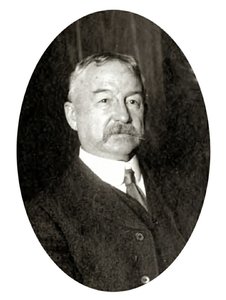
Francis Davis Millet
1846 - 1912