切换至版画销售渠道
 展开全文
展开全文







































 对于任何边长超过 105 厘米(约 41 英寸)的艺术品或复制品,画框将以拆解后的组件形式发货。此方法可确保安全送达并防止运输过程中的损坏。


A Celestial Encounter in Stone and Light
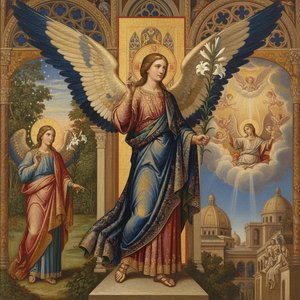
In the quietude of a tiled Renaissance courtyard, a profound moment of divine intersection unfolds within Fra Carnevale’s The Annunciation. This masterpiece, dating to approximately 1450, captures the precise second where the earthly and the heavenly collide. The scene is set amidst an architectural marvel of arches and columns, where the meticulous use of perspective draws the eye through a series of receding portals toward a distant, misty forest. At the heart of this sacred geometry, the Angel Gabriel kneels in reverence, his wings a breathtaking tapestry of aquamarine blue and fawn brown, accented by delicate gold filigree. Opposite him stands Mary, her presence marked by a serene dignity, draped in a lapis-blue robe that anchors the composition with its deep, regal hue. The atmosphere is one of breathless stillness, as if the very air is suspended in anticipation of the divine word.
The technical brilliance of Carnevale is most evident in his command over light and texture. Every element, from the marble-patterned floor tiles in shades of rust, charcoal, and sky blue to the soft, fog-gray walls of the surrounding structures, contributes to a sense of tangible reality. The artist employs a sophisticated palette that balances the vibrant scarlet of the angel’s cloak with the delicate pinks and whites of the roses held in a stone-white urn. This interplay of color is not merely decorative; it serves to guide the viewer's gaze through the complex spatial arrangement. The descent of a white dove, accompanied by golden beams of light piercing through scattered clouds, acts as a visual crescendo, symbolizing the Holy Spirit and illuminating the face of Mary with a celestial glow.
Symbolism and the Renaissance Soul
Beyond its breathtaking aesthetic, The Annunciation is a profound meditation on purity and destiny. The white lily held by the angel, with its budding blooms, serves as an enduring emblem of Mary’s virginity and the unfolding promise of salvation. Even the surrounding flora—the pink and white roses nestled in the central urn—whisper of grace and the beauty of the divine presence within the natural world. Carnevale, an artist deeply influenced by the architectural precision of his era, uses the structured courtyard to represent the order of the cosmos, while the wilder, hilly forest visible through the distant archway hints at the mysteries of the unknown. This juxtaposition between the controlled, man-made space and the untamed landscape mirrors the theological tension between the known scripture and the unfolding miracle.
For the discerning collector or interior designer, this painting offers more than just a window into the Quattrocento; it provides a focal point of profound emotional resonance. The work’s ability to evoke peace, contemplation, and awe makes it an extraordinary addition to any curated space. Whether placed in a sunlit gallery or a sophisticated study, a high-quality reproduction of this piece brings with it the weight of history and the luminous beauty of the Italian Renaissance. It is a painting that does not merely decorate a room but transforms its very atmosphere, inviting all who behold it to pause and reflect on the quiet miracles that exist within the folds of time.
常见问题与解答
弗拉·卡尔内瓦莱 的《The Annunciation》 的实际尺寸是多少?
弗拉·卡尔内瓦莱 的《The Annunciation》 的记录尺寸为 120 x 92 cm。您也可以按比例定制其他尺寸的复制品。
弗拉·卡尔内瓦莱 还有哪些别名?
弗拉·卡尔内瓦莱 也以 巴托洛梅奥·迪·乔瓦尼·科拉迪尼 等其他名称为人所知。
弗拉·卡尔内瓦莱 的《The Annunciation》 中呈现了哪些主题?
弗拉·卡尔内瓦莱 的《The Annunciation》 描绘了:annunciation, renaissance, religious art, angel, virgin mary, architecture, sacred scene。
 实景预览
实景预览
 分享
分享 分享
分享
 详情
详情 指南
指南

 下载作品
下载作品
 相似作品
相似作品 X射线
X射线 幻灯片播放
幻灯片播放 Q&A
Q&A 统计数据
统计数据