

 效果预览
效果预览
 分享
分享 分享
分享
 详情
详情

 下载
下载
 相似作品
相似作品 X射线
X射线 幻灯片播放
幻灯片播放 统计数据
统计数据Castine, Maine


 展开详情
展开详情
艺术微喷/版画
博物馆级艺术微喷或帆布版画,制作高效,并提供多种饰面选择。 ( 购买手绘画作 切换至数字图像销售渠道)




P118B $10

P118H $10

P118W $10

P438Z $10

P508JH $12

P508YH $12

P805H $10

P805Z $10

P919BZ $10

P919G $10

P919XJ $10

P959ZH $10

P968JZ $12

W106C $8

W218G $10

W218JH $8

W218Y $10

W307PJ $10

W316G $10

W316PJ $8

W316Y $10

W398PJ $8

W4111J $10

W500HY $15

W500JH $15

W692G $12

W849H $8

W940BG $15

W953PJ $8




从与原作比例一致的预设尺寸中进行选择。

您可以输入自定义尺寸,以适配特定的画框或空间。如果您选择的尺寸与原图比例不符,我们将对作品进行裁剪,或通过镜像填充/纯色填充边缘的方式来扩展图像。在开始制作之前,我们会向您发送一份数字效果图供您确认。
请注意,屏幕上的预览并不能反映实际的裁剪或扩展效果。只有效果图才能准确展示最终的构图。
虽然我们提供定制尺寸,但为了保持原图比例,我们建议您从预设列表中选择尺寸。


 玻璃选项仅适用于110厘米以下的尺寸。

Castine, Maine
艺术微喷/版画
复制品尺寸
-


最终总价
$ 80
Fitz Henry Lane’s Castine, Maine: A Luminist Vision of Coastal Tranquility
Fitz Henry Lane’s “Castine, Maine” (1850) stands as a quintessential example of Luminism—a movement that championed serene landscapes bathed in diffused light and imbued with contemplative emotion. More than just a depiction of a picturesque harbor town nestled on Penobscot Bay, this oil painting embodies the spirit of its era and offers a profound meditation on beauty and solitude. Explore this evocative artwork and delve into its artistic merits.Subject Matter & Composition
The scene captures Castine, Maine—a charming fishing village known for its historic waterfront—against a backdrop of overcast skies. Dominating the canvas is horizontal lines: the horizon itself, stretching across the upper third of the painting; the gently undulating shoreline; and the rooftops of buildings clustered along the harbor edge. This deliberate compositional choice emphasizes stability and grandeur while simultaneously conveying a sense of quiet contemplation. Scattered trees punctuate the grassy foreground, providing visual interest without disrupting the overall harmony. A dirt path winds towards the town, populated by figures—a small group of people engaged in daily life—adding to the feeling of realism and capturing a snapshot of rural New England.Style & Technique: Luminist Impressionism
Lane’s masterful execution aligns perfectly with Luminist principles. Unlike Impressionists who sought to capture fleeting moments of light, Lane prioritized conveying mood and atmosphere above precise detail. His brushwork is loose and expressive, prioritizing tonal gradations and subtle color harmonies over meticulous rendering. The artist skillfully employs atmospheric perspective—a technique borrowed from Hudson River School painters—to create depth and luminosity. Distant buildings appear paler and less defined, simulating the hazy quality of air seen on overcast days. Light filters through the clouds, casting soft shadows across the landscape and illuminating the harbor scene with a gentle glow. Lane’s use of oil paint allows for rich textures and tonal variations that contribute to the painting's immersive experience.Historical Context & Symbolism
Painted in 1850 during the American Romantic Period, “Castine, Maine” reflects the burgeoning interest in landscape painting as a vehicle for spiritual contemplation. Luminism emerged as a reaction against the increasingly frenetic pace of industrialization and urbanization, offering viewers an escape into unspoiled natural beauty. The scene evokes themes of pastoral life—the tranquility of rural existence—and connection to nature—a core value of the Romantic movement. The muted color palette reinforces this mood of serenity, mirroring the melancholic beauty often associated with overcast days. Lane’s depiction of Castine serves as a celebration of Maine's coastal heritage and embodies the Luminist ideal of capturing sublime grandeur in understated elegance.Emotional Impact & Legacy
“Castine, Maine” possesses an enduring emotional resonance—a quiet stillness that invites viewers to pause and appreciate the beauty of the natural world. Lane’s ability to convey mood through tonal harmony and atmospheric perspective elevates this landscape painting beyond mere visual representation. It speaks to a deeper yearning for peace and contemplation, reflecting the Luminist preoccupation with capturing the sublime. Today, reproductions of “Castine, Maine” continue to inspire artists and collectors alike—a testament to Lane's enduring artistic vision and his contribution to American art history.艺术家简介
早年生活与境遇
- 出生:1804年12月19日,马萨诸塞州格洛斯特
- 逝世:1865年8月14日,马萨诸塞州格洛斯特
- 全名:Nathaniel Rogers Lane(1832年依法更名为 Fitz Henry Lane)
- 艺术流派:光影主义 (Luminism)
艺术发展与训练
- 石版画经验:1832 年至 1847 年间,在波士顿的 Pendleton 石版画店担任石版画家。
- 早期作品:水彩画《“波士顿”号邮船起火》(Burning of the Packet Ship 'Boston')展现了其不断进步的技巧,但风格较后期作品略显稚嫩。
艺术风格与代表作:光影主义大师
Lane 被公认为光影主义运动的领军人物,这一流派的核心在于捕捉大气效应,尤其是光线在水面上反射出的粼粼波光。他的画作以清晰、精准以及对海岸景观宁静氛围的描绘而闻名于世。- Lane 艺术风格的核心特征:
- 大气透视法:精妙地运用空气透视效果,营造出深邃的空间感与远近层次。
- 细腻的观察力:对船只、建筑及自然景观的刻画都展现出极其严谨的细节追求。
- 明亮的光影效果:以惊人的准确度捕捉光线的细微变化及其在水面上的倒影。
- 代表作品:
- 《西南港望向索姆斯峡湾的入口》(1852) —— 完美诠释了他捕捉海岸景观宁静之美的能力。
- 《马萨诸塞州格洛斯特的堡垒与十磅岛》(1847) —— 展示了对当地地标建筑的详尽描绘。
- 《彭布罗斯卡湾傍晚的木材帆船》(1860) —— 展现了他表现戏剧性光影条件的卓越技艺。
- 《从港口南入口望向卡姆登山脉》(1859) —— 以惊人的清晰度捕捉了一幅如画般的海岸美景。
- 《收起顶帆的商用双桅船》(1863)
- 《缅因州卡姆登灯塔》(1851)
- 《带有“诺曼之殇”的西岸》(1862)
传承与历史意义
Fitz Henry Lane 的作品在其生前便已获得认可,而其艺术声望在 20 世纪和 21 世纪更是得到了显著提升。如今,他被视为美国最重要的光影主义画家之一,因其捕捉新英格兰海岸景观之美与宁静的独特天赋而备受赞誉。Lane 的画作不仅是艺术珍品,更提供了 19 世纪格洛斯特及其他沿海社区航海生活的宝贵历史记录。他那细致入微的观察力与对光影的大师级运用,至今仍持续启发着艺术家并吸引着观众,确立了他在美国艺术史上举足轻重的地位。
菲茨·亨利·莱恩
1804 - 1865 , 美国
艺术家简介
- Artistic Movement Or Style: 光影主义
- Date Of Birth: 1804年12月19日
- Date Of Death: 1865年8月14日
- Full Name: 纳撒尼尔·罗杰斯·莱恩 (Fitz Henry Lane)
- Nationality: 美国
- Notable Artworks:
- 索姆斯湾入口
- 堡垒与十磅岛
- 傍晚的木材帆船
- 从南面看卡姆登山
- 收起顶帆的商船纵帆船
- 缅因州卡姆登灯塔
- 带有诺曼之殇的西岸
- Place Of Birth: 美国格洛斯特
相关文章
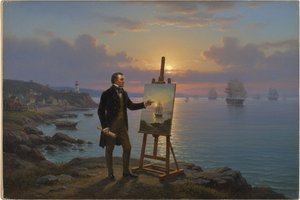
Fitz Henry Lane: Luminosity, Landscape & the American Maritime Tradition – A Collector’s Insight
Explore the luminous world of Fitz Henry Lane, a master of American maritime painting & Luminism. Discover his legacy, techniques, and investment potential for discerning art collectors. Expert insights at OriginalUniqueArt.

Robert Spencer: Luminism, Narrative & the American Landscape Tradition
Explore the captivating world of Luminism & the Hudson River School with our expert analysis. Discover the history, artists, and enduring beauty of 19th-century American landscape painting. Find museum-quality reproductions at OriginalUniqueArt.
马蒂斯大师25幅杰作:色彩与光影的艺术传奇 | OriginalUniqueArt
探索亨利·马蒂斯25幅杰作,感受野兽派色彩的魅力!从《舞蹈》到《红色和谐》,揭秘大师背后的故事与艺术灵感。OriginalUniqueArt.com提供博物馆级高质量油画复制品,为您的家居增添奢华艺术气息。立即在线探索完整系列!

Grant Wood & American Regionalism: Identity, Myth & the Rural Landscape
Explore the world of Grant Wood & American Regionalism with OriginalUniqueArt. Discover the symbolism behind 'American Gothic', recurring themes, and the movement's lasting impact on art history. High-quality reproductions available.

Evocations of Place: A Historical Journey Through Landscape Art
Explore the rich history of landscape art with OriginalUniqueArt. Discover renowned artists, movements like Impressionism & Romanticism, and expert guidance for collecting timeless pieces. Find your perfect serene escape today!