

 实景预览
实景预览
 发送
发送 分享
分享
 详情
详情 指南
指南

 下载图片
下载图片
 相似作品
相似作品 X射线
X射线 幻灯片播放
幻灯片播放 统计数据
统计数据Still Life


 阅读全文
阅读全文
艺术微喷/版画
博物馆级艺术微喷或帆布版画,制作高效,并提供多种饰面选择。 ( 订购此收藏品的纯手工复刻画作 切换至数字图像销售渠道)




P118B ¥10

P118H ¥10

P118W ¥10

P438Z ¥10

P508JH ¥12

P508YH ¥12

P805H ¥10

P805Z ¥10

P919BZ ¥10

P919G ¥10

P919XJ ¥10

P959ZH ¥10

P968JZ ¥12

W106C ¥8

W218G ¥10

W218JH ¥8

W218Y ¥10

W307PJ ¥10

W316G ¥10

W316PJ ¥8

W316Y ¥10

W398PJ ¥8

W4111J ¥10

W500HY ¥15

W500JH ¥15

W692G ¥12

W849H ¥8

W940BG ¥15

W953PJ ¥8




您可以从与原作比例一致的预设尺寸中进行选择。

请输入您所需的宽度和高度,以适配您的画框或墙面。由于印刷品只能进行裁剪,无法超出原图尺寸,因此若比例不一致,画面的一部分将会被裁切。在正式印刷之前,我们会为您发送一份数字效果图供您确认。本页面显示的图片并非最终裁剪后的效果——只有效果图才能展示真实的裁剪情况。


 玻璃选项仅适用于110厘米以下的尺寸。

Still Life
艺术微喷/版画
复刻品尺寸说明
-


总计金额
¥ 538
A Moment Frozen in Time: Ferdinand Guillaimin’s “Still Life”
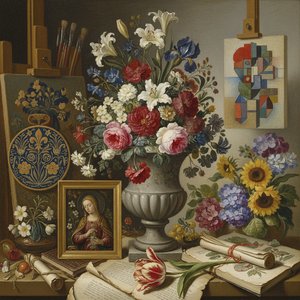
Ferdinand Guillaimin's "Still Life," painted in 1872, isn’t merely a depiction of objects arranged on a table; it’s a carefully constructed tableau brimming with quiet observation and subtle symbolism. This work, rendered in the heart of the Impressionist movement, captures a fleeting moment of domestic tranquility – a scene both familiar and imbued with an understated elegance. The painting immediately draws the eye to the central arrangement: a vase overflowing with vibrant red and yellow flowers, their petals seemingly caught mid-bloom, radiating warmth against the cooler tones that dominate the rest of the composition. Beside them rests a worn book, its pages hinting at untold stories and intellectual pursuits, while a simple bowl holds what appears to be fruit – perhaps apples or pears – adding another layer of earthly abundance.
Guillaimin’s technique is distinctly Impressionistic, prioritizing capturing the *impression* of light and color rather than precise detail. Loose brushstrokes dance across the canvas, creating an atmospheric haze that softens the edges of each object. He masterfully employs broken color – applying small dabs of paint side-by-side to build up hues and create a shimmering effect, particularly noticeable in the reflections on the table’s surface. The dark background serves not as mere backdrop but as a crucial element, intensifying the luminosity of the floral arrangement and lending the scene a sense of intimacy and depth. The artist's focus is less on photographic realism and more on conveying the *feeling* of being present within this quiet space.
The Context of Parisian Impressionism
To fully appreciate “Still Life,” it’s essential to understand the artistic climate in which Guillaimin was working. The 1870s were a period of profound change and experimentation for French art, marked by the rise of Impressionism. Artists like Monet, Renoir, and Pissarro sought to break free from the rigid conventions of academic painting, embracing plein air (outdoor) painting and capturing the ephemeral qualities of light and atmosphere. Guillaimin’s work reflects this spirit of innovation, moving away from traditional subject matter and exploring new ways of representing the world around him.
Guillaimin's connection to Pissarro is particularly noteworthy. The artist spent a significant period painting alongside Pissarro in Pontoise, a suburb of Paris, where he found inspiration in the everyday life of the region. This proximity fostered a collaborative environment, allowing Guillaimin to refine his style and develop his unique approach to capturing light and color. The Impressionists were not simply interested in depicting what they *saw*; they were driven by a desire to express their subjective experience of the world.
Symbolism and the Language of Objects
Beyond its aesthetic qualities, “Still Life” is rich with symbolic meaning. The flowers themselves represent beauty, fragility, and the fleeting nature of life – themes frequently explored in Impressionist art. The book suggests knowledge, contemplation, and a connection to the past. The bowl of fruit symbolizes abundance, nourishment, and the pleasures of earthly existence. Even the dark background can be interpreted as representing mortality or the unknown.
Guillaimin’s use of these objects is deliberate and carefully considered, inviting the viewer to engage in a process of interpretation. He doesn't offer explicit explanations; instead, he presents a series of interconnected symbols that resonate with universal themes of beauty, life, and death. The arrangement feels deliberately balanced, creating a harmonious composition that evokes a sense of peace and serenity.
A Legacy of Delicate Beauty
Ferdinand Guillaimin’s “Still Life” stands as a testament to the power of observation and the enduring appeal of simple subjects rendered with exquisite sensitivity. It's a painting that rewards close attention, revealing layers of meaning and emotional depth with each viewing. Reproductions capture much of the original atmosphere, but nothing quite replicates the subtle nuances of light and color that define Guillaimin’s masterful technique.
Today, this work is celebrated for its evocative beauty and its contribution to the development of Impressionism. It remains a poignant reminder of the quiet moments of everyday life – a timeless meditation on beauty, mortality, and the enduring power of art.
问答详情
"Still Life" 使用了怎样的色调?
费迪南·纪尧姆 的《Still Life》 采用了 Earthy 色调。这一色调概括了作品整体的色彩特征。
是否有与“Still Life”风格相似的作品?
费迪南·纪尧姆 的《Still Life》 的 相似作品 页面展示了相关艺术作品。
“Still Life”的创作者是谁,创作于何时?
"Still Life" 的作者是 费迪南·纪尧姆,创作于 1872 年。
艺术家简介
早年生活与艺术启蒙
费迪南·吉约曼,这位伟大的法国印象派画家和版画家,于1841年2月16日诞生于巴黎。他的人生轨迹始于19世纪中期,正值印象主义运动在法国蓬勃发展的时期。吉约曼的父亲是一位海关官员,起初并不支持儿子的艺术追求,希望他能从事更稳定的职业。然而,年轻的吉约曼对色彩和光线的敏锐感知以及对绘画的热情无法抑制。他最初靠担任壁画工人和售票员维持生计,同时坚持自学绘画,并积极参加各种艺术沙龙展览,渴望得到认可与发展。这段艰苦卓绝的岁月,反而磨砺了他的意志,也为他日后的艺术创作奠定了坚实的基础。印象主义贡献与风格形成
吉约曼的作品对印象主义的发展做出了卓越贡献。印象主义运动旨在捕捉自然界光线和色彩的瞬息变化,而吉约曼正是这一理念的忠实实践者。他积极参与印象派画家的集体展览,向世人展示了他独特的艺术风格。他的绘画作品常常描绘着梦幻般的柔美风景,与印象主义的精神内核高度契合。吉约曼擅长运用鲜艳的色彩和流畅的笔触,营造出一种充满活力和诗意的氛围。他并非简单地再现客观现实,而是通过主观感受来表达对自然的热爱和对光影的独特理解。他的作品中,色彩不再是描绘物体的工具,而成为了艺术家情感的载体。重要的艺术关联与影响
吉约曼与许多印象派画家建立了深厚的友谊,其中最值得一提的是克劳德·莫奈。他们经常一起写生、交流技法,互相鼓励,共同推动了印象主义运动的发展。马内、雷诺阿等艺术家也对吉约曼的创作产生了积极影响。此外,吉约曼的作品还受到象征主义的影响,这体现在他对梦幻世界和神秘主题的探索上。他大胆运用色彩和情感来表达内心深处的感受,使作品更具表现力和感染力。 美国马赛诸塞州霍利奥克学院艺术博物馆收藏了吉约曼的大量作品,为后人研究他的艺术生涯提供了宝贵的资料。艺术遗产与历史意义
费迪南·吉约曼于1927年6月26日逝世,但他对印象主义的贡献却历久弥新。他的作品被广泛收藏于世界各地的博物馆和美术馆,包括马赛诸塞州霍利奥克学院艺术博物馆(美国)等知名机构。吉约曼的作品不仅具有极高的艺术价值,也反映了19世纪法国社会的生活风貌和文化思潮。他大胆的色彩运用、流畅的笔触以及对光影的独特理解,为后世艺术家提供了重要的借鉴。探索更多吉约曼的作品和印象主义运动,请访问OriginalUniqueArt:费迪南·吉约曼 | 3幅作品 印象主义艺术运动
费迪南·纪尧姆
1841 - 1927 , 法国
快速概览
- 代表作品:
- 六月的尚维尔花园
- 河景
- 皮伊多姆山景色
- 全名: 让-巴蒂斯特·阿芒·吉约曼
- 出生地: 法国巴黎
- 出生日期: 1841年2月16日
- 受吉约曼影响的艺术家或运动: ['克劳德·莫奈']
- 国籍: 法国
- 影响吉约曼的艺术家:
- 文森特·梵高
- 保罗·塞尚
- 卡米耶·毕沙罗
- 艺术运动或风格: 印象派
- 逝世日期: 1927年6月26日
相关文章

Blossoms of Time: A Historical Journey Through Flower Painting
Explore the captivating history of flower painting! Discover Dutch masters, symbolic meanings, & botanical art. Expert insights & high-quality reproductions at OriginalUniqueArt.
Blossoming Symbolism: A Historical Journey Through Flowers in Western Painting
Explore the rich history of flower symbolism in Western painting! Discover how artists from the Renaissance to Modernism used blossoms to convey meaning, emotion & beauty. Learn about iconic artworks and movements.

Impressionism's Masterpieces: 10 Paintings That Defined a Movement | OriginalUniqueArt
Journey through Impressionism's heart with 10 iconic paintings by Monet, Renoir & Degas. Explore light, color & the stories behind these masterpieces. Find museum-quality art reproductions and elevate your home decor on OriginalUniqueArt.com.

Silent Narratives: Exploring the Enduring Appeal of Still Life Painting Across Centuries
Explore the rich history of still life painting with OriginalUniqueArt. Discover Dutch Masters, decode vanitas symbolism & learn about collecting timeless art. Expert insights and museum-quality reproductions.

保罗·塞尚:25幅大师杰作,重塑现代艺术与家居美学 | OriginalUniqueArt
探索保罗·塞尚25幅经典杰作!深入了解后印象派大师的艺术生涯、独特技法与色彩运用。OriginalUniqueArt提供高清油画复制品,为您的家居带来博物馆级艺术体验。立即发现更多名画,点亮生活空间!