切换至版画销售渠道
 展开全文
展开全文







































 对于任何边长超过 105 厘米(约 41 英寸)的艺术品或复制品,画框将以拆解后的组件形式发货。此方法可确保安全送达并防止运输过程中的损坏。


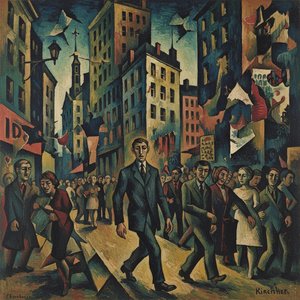
Untitled (2504) by Ernst Ludwig Kirchner: A Dive into Expressionist Urban Life
“Untitled (2504)” by Ernst Ludwig Kirchner is a quintessential example of the Expressionist style that defined the German art movement Die Brücke. This large-scale representation of a bridge with people walking on it showcases Kirchner's unique approach to form and color. The overall atmosphere of the painting appears to be somewhat dark or moody, with the arches and people creating a sense of depth in the image.
Expressionist Elements & Technique
The use of bold brushstrokes and vibrant colors is characteristic of Expressionist art. In “Untitled (2504)”, Kirchner employs a predominantly blue color palette, which adds to the somber tone of the scene. The woman wearing a red dress walking across the bridge creates a striking contrast against the cool tones of the background. This juxtaposition of colors is a hallmark of Expressionist art, where artists sought to evoke emotions and inner experiences rather than represent reality.
Kirchner’s technique involves layering paint in visible strokes, creating texture and movement within the composition. The distortion of perspective and elongated figures contribute to the unsettling yet captivating nature of the scene. This isn't about photographic realism; it's about conveying a feeling – the anxiety and alienation often associated with modern urban life.
Historical Context: Die Brücke & Early 20th Century Germany
To understand “Untitled (2504),” one must consider its historical context. Kirchner was a founding member of Die Brücke (The Bridge), formed in Dresden in 1905. This group sought to break away from traditional artistic conventions and create a new form of art that reflected the rapidly changing social and political landscape of early 20th-century Germany.
Germany during this period was experiencing rapid industrialization, urbanization, and societal upheaval. Kirchner’s work often reflects these anxieties, portraying crowded streets, alienated individuals, and a sense of unease. The painting can be seen as a commentary on the dehumanizing effects of modern life.
Symbolism & Emotional Impact
The bridge itself is a potent symbol in Kirchner's work. It represents transition, connection, and perhaps even isolation – people are physically connected by the structure but emotionally distant from one another. The figures walking across the bridge appear anonymous and lost within the urban sprawl.
The woman in red stands out as a focal point, her vibrant color offering a glimmer of hope or individuality amidst the prevailing gloom. However, even she seems detached, contributing to the overall sense of alienation. “Untitled (2504)” evokes feelings of melancholy, anxiety, and a profound sense of urban isolation – emotions that resonate with viewers even today.
Further Exploration
- Other notable works by Ernst Ludwig Kirchner include Fränzi in front of Carved Chair and Davis im Schnee, which can be found on https://OriginalUniqueArt.com.
- The Kunstmuseum Basel in Switzerland houses an impressive collection of Expressionist art, including works by Ernst Ludwig Kirchner and other prominent artists of the movement.
Handmade oil painting reproductions of “Untitled (2504)” and other Expressionist masterpieces can be found on https://OriginalUniqueArt.com, allowing art enthusiasts to own a piece of history. For more information on the artist and his works, visit Ernst Ludwig Kirchner.
常见问题与解答
恩斯特·路德维希·基尔希纳 的《untitled (2504)》 的亮度是多少?
恩斯特·路德维希·基尔希纳 的《untitled (2504)》 的亮度为 Gentle Luminance。亮度描述了色彩呈现出的反射光量。
《untitled (2504)》这一Expressionism风格的作品传达了怎样的情感基调?
"untitled (2504)" 在 Expressionism 运动中蕴含着 Melancholic 的情感基调。
恩斯特·路德维希·基尔希纳 的作品《untitled (2504)》知名度如何?
“untitled (2504)”的受欢迎程度被归类为Recognized。
 实景预览
实景预览
 分享
分享 分享
分享
 详情
详情 指南
指南

 下载作品
下载作品
 相似作品
相似作品 X射线
X射线 幻灯片播放
幻灯片播放 Q&A
Q&A 统计数据
统计数据