

 实景预览
实景预览
 发送
发送 分享
分享
 详情
详情 指南
指南

 下载图片
下载图片
 相似作品
相似作品 X射线
X射线 幻灯片播放
幻灯片播放 统计数据
统计数据Forest Path with Sheeps (also known as Waldweg mit Schafen)


 阅读全文
阅读全文
艺术微喷/版画
博物馆级艺术微喷或帆布版画,制作高效,并提供多种饰面选择。 ( 订购此收藏品的纯手工复刻画作 切换至数字图像销售渠道)




P118B $10

P118H $10

P118W $10

P438Z $10

P508JH $12

P508YH $12

P805H $10

P805Z $10

P919BZ $10

P919G $10

P919XJ $10

P959ZH $10

P968JZ $12

W106C $8

W218G $10

W218JH $8

W218Y $10

W307PJ $10

W316G $10

W316PJ $8

W316Y $10

W398PJ $8

W4111J $10

W500HY $15

W500JH $15

W692G $12

W849H $8

W940BG $15

W953PJ $8




您可以从与原作比例一致的预设尺寸中进行选择。

您可以输入自定义尺寸,以适配特定的画框或空间。如果您选择的尺寸与原图比例不符,我们将对作品进行裁剪,或通过镜像填充/纯色填充边缘的方式来扩展图像。在开始制作之前,我们会向您发送一份数字效果图供您确认。
请注意,屏幕上的预览并不能反映实际的裁剪或扩展效果。只有效果图才能准确展示最终的构图。
虽然我们提供定制尺寸,但为了保持原图比例,我们建议您从预设列表中选择尺寸。


 玻璃选项仅适用于110厘米以下的尺寸。

Forest Path with Sheeps (also known as Waldweg mit Schafen)
艺术微喷/版画
复刻品尺寸说明
-


总计金额
$ 80
Forest Path with Sheeps (Waldweg mit Schafen): A Window Into Austrian Romantic Landscape Painting
The painting “Forest Path with Sheeps,” attributed to Emil Jakob Schindler, stands as a quintessential example of Austrian Romantic landscape art from 1875. More than just a depiction of scenery, it’s an exploration of emotion and memory—a testament to Schindler's masterful command of technique and his profound engagement with the artistic currents of his time. Examining its visual elements reveals layers of meaning that continue to resonate with viewers today.Composition and Technique: Capturing Atmosphere Through Detail
Schindler’s approach was rooted in the Dutch Masters, specifically Meindert Hobbema and Jacob Izaaksoon van Ruisdael, whose atmospheric realism profoundly influenced his artistic vision. He meticulously rendered a forest path winding through dense foliage, populated by sheep grazing peacefully. The vertical orientation of the canvas emphasizes the towering trees—a deliberate choice to convey grandeur and majesty. Lines dominate the composition; thick charcoal strokes delineate tree trunks and branches, creating a palpable sense of solidity and permanence. However, Schindler skillfully juxtaposes these strong lines with softer shading techniques to capture the diffused light characteristic of overcast days – a hallmark of Romantic landscape painting. The artist’s painstaking attention to detail—the texture of bark, the woolly coats of the sheep—demonstrates his commitment to conveying an illusion of reality.Historical Context: Schindler and the Romantic Spirit
Schindler's work emerged during a period marked by intellectual ferment and artistic experimentation. The Romantic movement championed emotion, imagination, and individualism, reacting against the Enlightenment’s emphasis on reason and scientific observation. Artists sought inspiration in folklore, mythology, and sublime landscapes—places where humanity confronted the overwhelming power of nature. Schindler’s depiction aligns perfectly with this ethos; it's not merely a record of a place but an attempt to evoke feelings of tranquility and contemplation – mirroring the broader Romantic preoccupation with spiritual experience. The painting reflects the anxieties of its time regarding industrialization and urbanization, presenting a nostalgic vision of rural life untouched by progress.Symbolism: Harmony Between Man and Nature
Beyond its aesthetic qualities, “Forest Path with Sheeps” carries symbolic weight. The shepherd guiding his flock represents humanity’s relationship with the natural world—a harmonious coexistence underpinned by respect for its rhythms and beauty. The sheep themselves symbolize innocence and pastoral virtue, embodying values cherished during the Romantic era. The winding path symbolizes life's journey, suggesting a contemplative pace and an awareness of the passage of time. Schindler skillfully uses light and shadow to heighten these symbolic resonances, creating a visual metaphor for inner peace and spiritual contemplation.Emotional Impact: A Timeless Expression of Beauty
The painting’s enduring appeal lies in its ability to transport viewers back to a bygone era—a moment when art served as a conduit for emotional expression and spiritual reflection. The grayscale palette contributes to the artwork's solemn mood, fostering a sense of stillness and contemplation. Schindler’s masterful rendering captures not just what the eye sees but what the soul feels – conveying a profound appreciation for the sublime grandeur of nature and its capacity to inspire awe and wonder. It remains a powerful reminder that art can transcend time, communicating universal themes of beauty, tranquility, and connection with the natural world.艺术家简介
Emil Jakob Schindler: Life and Legacy
Early Life and Education
- Born: 1842 in Fischamend, Austria.
- Schindler’s early life was marked by family tragedy; his father died when he was four years old. His mother remarried, leading to a complex family dynamic.
- He initially pursued a military career, joining the army in 1857 and potentially participating in the Battle of Solferino.
- In 1860, he abandoned his military aspirations and enrolled at the Academy of Fine Arts, Vienna, studying under Albert Zimmermann.
Artistic Influences and Development
- Influenced by Dutch Masters: Schindler drew significant inspiration from 17th-century Dutch landscape painters like Meindert Hobbema and Jacob Izaaksoon van Ruisdael, adopting their atmospheric realism.
- His early works focused on detailed depictions of nature, gradually evolving towards a more impressionistic style with looser brushwork and an emphasis on light and atmosphere.
- Travels to Venice, Dalmatia, France, and Holland broadened his artistic horizons and provided new subject matter.
Career and Major Works
- Schindler achieved early success with “Eine Waldschmiede” (A Forest Blacksmith), sold in 1864 shortly after his first public exhibition.
- He established himself as a landscape painter, capturing the beauty of the Vienna Woods, the Dalmatian coast, and other scenic locations.
- Notable Works Include: “Kaisermühlen on the Danube,” “Mountain Stream in the Ramau,” “February Atmosphere Early Spring in the Vienna Woods”, "Gosau Mill near Ischl", and “Flower Garden in Weissenkirchen”.
- In 1885, he began renting Castle Plankenberg, establishing an artists' colony where he taught several students.
- He received a commission from Crown Prince Rudolf of Austria to sketch coastal scenery in Dalmatia and Corfu as part of a larger project documenting the Austro-Hungarian monarchy.
Personal Life and Family
- Schindler’s personal life was complex, marked by marital challenges and suspected infidelity.
- He married Anna Sofie Bergen in 1879, and they had two daughters: Alma Mahler (a renowned composer and author) and Margaretha Julie (Grete).
- Rumors circulated regarding the paternity of his daughters, adding a layer of intrigue to his biography.
Achievements and Historical Significance
- Awards & Recognition: Schindler was awarded the Reichel-Preis in 1881, boosting his career and financial stability.
- He became an honorary member of both the Vienna Academy (1887) and the Munich Academy (1888).
- Legacy: Schindler’s work represents a bridge between traditional landscape painting and the emerging Impressionist movement. His atmospheric depictions of Austrian landscapes continue to be admired for their beauty and sensitivity.
- As the father of Alma Mahler, he is also remembered as part of a prominent artistic family.

emil jacob schindler
1842 - 1892
快速概览
- Birth_Date: 1842
- Death_Date: 1892
- Influenced By: Dutch Masters (Hobbema, Ruisdael)
- Movement: Poetic Realism, Impressionism
- Name: Emil Jakob Schindler
- Nationality: Austrian
- Notable Works:
- Eine Waldschmiede
- Kaisermühlen on the Danube
- Flower Garden in Weissenkirchen
相关文章

Masterpieces of Light: A Definitive Guide to the Landscapes of the Dutch Golden Age
Discover the luminous mastery of Dutch Golden Age landscapes. Our expert guide explores the atmospheric realism of masters like Van Goyen and Cuyp. Elevate your space with museum-quality, hand-painted oil reproductions from OriginalUniqueArt.com. Art history, beautifully realized.

Mastering Charcoal: The History, Technique, and Chiaroscuro Power of Black and White Art
Explore the profound history and technical mastery of charcoal art. From prehistoric origins to Renaissance chiaroscuro, learn the essential additive and subtractive techniques used by masters to capture light, shadow, and raw emotional depth in monochrome fine art.

Jan van Goyen: Master of Dutch Landscape & Atmospheric Perspective
Discover Jan van Goyen, the master of Dutch landscape painting. Explore his subtle technique, atmospheric realism & lasting influence on art history. Learn about this 17th-century pioneer at OriginalUniqueArt.
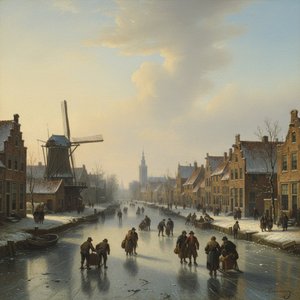
Charles Leickert: Capturing the Dutch Golden Age Light – A Comprehensive Study of Technique, Context, and Legacy
Explore the captivating winter landscapes of Charles Leickert, a master of Dutch Golden Age light & atmosphere. Discover his techniques, symbolism, and lasting legacy – a comprehensive study for art enthusiasts and collectors.

Golden Light & Dutch Skies: The Timeless Magic of Dutch Golden Age Landscapes
Discover the breathtaking beauty of Dutch Golden Age landscapes. Explore the mastery of light, chiaroscuro, and 17th-century realism through an expert art history lens, celebrating the enduring legacy of the Dutch Masters for discerning collectors and art lovers.