
 实景预览
实景预览
 分享
分享 分享
分享
 详情
详情 指南
指南

 下载作品
下载作品
 相似作品
相似作品 X射线
X射线 幻灯片播放
幻灯片播放 问答
问答 统计数据
统计数据Interior with a Lady Playing the Virginal


 展开全文
展开全文
艺术微喷/版画
博物馆级艺术微喷或帆布版画,制作高效,并提供多种饰面选择。 ( 订购纯手工绘制画作 切换至数字图像销售渠道)




P118B ¥10

P118H ¥10

P118W ¥10

P438Z ¥10

P508JH ¥12

P508YH ¥12

P805H ¥10

P805Z ¥10

P919BZ ¥10

P919G ¥10

P919XJ ¥10

P959ZH ¥10

P968JZ ¥12

W106C ¥8

W218G ¥10

W218JH ¥8

W218Y ¥10

W307PJ ¥10

W316G ¥10

W316PJ ¥8

W316Y ¥10

W398PJ ¥8

W4111J ¥10

W500HY ¥15

W500JH ¥15

W692G ¥12

W849H ¥8

W940BG ¥15

W953PJ ¥8




您可以从与原作比例一致的预设尺寸中进行选择。

请输入您所需的宽度和高度,以适配您的画框或墙面。由于印刷品只能进行裁剪,无法超出原图尺寸,因此若比例不一致,画面的一部分将会被裁切。在正式印刷之前,我们会为您发送一份数字效果图供您确认。本页面显示的图片并非最终裁剪后的效果——只有效果图才能展示真实的裁剪情况。


 玻璃选项仅适用于110厘米以下的尺寸。

Interior with a Lady Playing the Virginal
艺术微喷/版画
复刻品尺寸
-


最终结算价
¥ 543
A Glimpse into Dutch Golden Age Intimacy
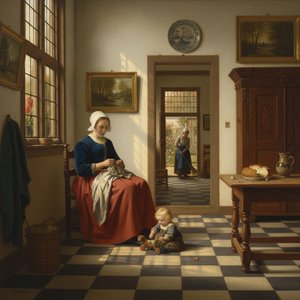
Emanuel de Witte’s “Interior with a Lady Playing the Virginal” isn't merely a painting; it’s a carefully constructed invitation. Completed around 1665, this oil on canvas transports us to a private chamber within a grand Dutch house, radiating an atmosphere of quiet contemplation and subtle drama. De Witte, a master of capturing the essence of space and light, eschews the meticulous architectural documentation favored by his contemporary, Pieter Saenredam, instead focusing on the *feeling* of being present within this intimate scene. The painting whispers stories of domestic life, musical performance, and perhaps even a touch of melancholy – all rendered with an exquisite sensitivity to color, texture, and the play of light.
The composition is immediately arresting. A woman, elegantly dressed and absorbed in her music, dominates the central space. She plays a virginal, a keyboard instrument popular during the period, its intricate workings hinted at by the surrounding instruments – a violin resting against a wall and a harpsichord subtly visible in the background. The room itself is richly detailed: a checkered floor suggesting a sense of order, a chandelier casting a warm glow, and two figures observing the performance from doorways—one standing, one seated. De Witte’s skill lies not just in depicting these objects but in creating an illusion of depth and perspective that draws us into the scene.
The Language of Light and Shadow
De Witte's mastery of chiaroscuro – the dramatic contrast between light and shadow – is central to the painting’s power. He doesn’t simply illuminate the room; he sculpts it with light, creating a sense of intimacy and drawing our attention to key elements. The light source, unseen but implied, casts long shadows that define the forms of the furniture and figures, adding a layer of mystery and sophistication. Notice how the light catches the woman's face, highlighting her expression of concentration, while leaving other areas in soft shadow. This technique isn’t just aesthetic; it contributes to the painting’s overall mood – a blend of serenity and quiet introspection.
The use of color is equally deliberate. De Witte employs a restrained palette of browns, golds, and reds, creating a harmonious and refined atmosphere. The rich hues of the fabrics and furniture are subtly contrasted with the cooler tones of the walls and floor, further enhancing the sense of depth and perspective. He avoids bright, flashy colors, opting instead for muted shades that evoke the warmth and comfort of a domestic setting.
Symbolism and Context
“Interior with a Lady Playing the Virginal” is more than just a snapshot of 17th-century life; it’s laden with symbolism. The virginal itself represents refinement, education, and musical skill – qualities highly valued in aristocratic society. The presence of multiple instruments suggests a gathering or performance, hinting at social interaction and cultural pursuits. Some art historians interpret the scene as a meditation on love and erotic melancholy, perhaps referencing the fleeting nature of beauty and pleasure. The figure observing from the doorway could represent an unspoken longing or a detached contemplation of domestic life.
Created during the Dutch Golden Age, a period of unprecedented prosperity and artistic flourishing, the painting reflects the values and sensibilities of the time. De Witte’s work aligns with the broader trends of the era – a fascination with interior spaces, an interest in capturing fleeting moments of everyday life, and a commitment to realism and naturalism. The painting is currently housed at the Museum Boijmans Van Beuningen in Rotterdam, offering visitors a chance to experience this remarkable masterpiece firsthand.
A Timeless Masterpiece
Emanuel de Witte’s “Interior with a Lady Playing the Virginal” remains a captivating work of art, demonstrating his exceptional skill and artistic vision. Its evocative atmosphere, masterful use of light and shadow, and subtle symbolism continue to resonate with viewers today. Whether you're an art enthusiast, a collector seeking a piece of Dutch history, or simply someone looking for a beautiful addition to your home, this painting offers a glimpse into a bygone era – a world of refined elegance, quiet contemplation, and enduring artistic beauty.
常见问题与解答
埃马努埃尔·德维特 的《Interior with a Lady Playing the Virginal》 的对比度表现如何?
埃马努埃尔·德维特 的《Interior with a Lady Playing the Virginal》 的色彩对比度为 Serene。
如何将 埃马努埃尔·德维特 的《Interior with a Lady Playing the Virginal》 应用于家居装饰中?
建议将“Interior with a Lady Playing the Virginal”用于Statement,推荐摆放空间为Living Room。
哪里可以买到 埃马努埃尔·德维特 的《Interior with a Lady Playing the Virginal》 的版画?
若想订购 埃马努埃尔·德维特 的《Interior with a Lady Playing the Virginal》 的版画,只需前往其 艺术版画 页面进行订购即可:采用棉质帆布或档案级画布纸制作的艺术版画。
艺术家简介
透视中的生命:埃马努埃尔·德维特的世界
埃马努埃尔·德维特,这个名字或许不如一些荷兰黄金时代同时代的艺术家那样耳熟能详,但他在十七世纪大师的殿堂中占据着一个重要而迷人的位置。他于1617年出生于阿尔克马尔,德维特的艺术生涯充满了非凡的天赋和巨大的个人动荡——这种二元性似乎微妙地渗透到了他画作的每一个氛围之中。他并非像彼得·萨恩雷达姆那样沉迷于一丝不苟的建筑记录;相反,他渴望捕捉的是空间的感觉、光线的质感,以及在神圣室内上演的微妙戏剧。他的画布不仅仅是教堂的描绘;它们是身临其境的体验,邀请观者进入一个宁静沉思和精神共鸣的世界。从代尔夫特学养到阿姆斯特丹的怀抱
德维特的早年生活为他的艺术追求奠定了坚实的基础。他的父亲是一名学校教师,在他心中播下了对学习和求知欲的欣赏——这些品质后来体现在他对透视和光线的细致观察之中。他于1636年在阿尔克马尔加入了圣卢克行会,正式步入艺术界,但真正塑造他的是他在代尔夫特跟随埃弗特·范阿尔斯特(Evert van Aelst)的学徒经历。范阿尔斯特是一位著名的静物画家,将敏锐的细节观察力和对光影的大师级掌控力传授给了德维特——这些技能后来成为了他成熟风格的标志。起初,德维特涉猎了各种题材——肖像画、神话场景、宗教叙事——但直到1651年搬到阿姆斯特丹,他才真正找到了自己的使命。这座城市众多宏伟的教堂提供了取之不尽的灵感源泉,使他开始专注于描绘这些令人敬畏的内部空间。氛围与想象空间的大师
阿姆斯特丹对德维特的艺术发展起到了决定性的作用。他并非简单地复制已有的教堂空间;相反,他巧妙地综合了不同建筑的元素,创造出既熟悉又略带超凡脱俗的理想化室内场景。阿姆斯特丹的老教堂成了他的常客题材,从不同的视角反复出现在他的画作上。但这些绝非简单的描摹。德维特操纵透视,玩味光影,并用精心布置的人物填充空间,以唤起特定的情绪或氛围。正如沃尔特·利德克(Walter Liedtke)所观察到的,他的主要兴趣点不在于建筑本身,而在于“空间本身——它的光线、色彩、广阔程度和情绪”。这种对氛围效果的强调使他区别于那个时代那些更注重描绘地貌细节的画家。他不关心精确的准确性;他热衷于营造一种宏伟、敬畏和精神深邃的“感觉”。一段被阴影笼罩的生命
尽管在艺术上取得了成功,德维特的个人生活却饱受艰辛的折磨。第一任妻子的去世带来了巨大的悲痛,随后涉及第二任妻子和女儿的法律纠纷在他晚年投下了长长的阴影。经济上的困境使他陷入了为艺术商人约里斯·德维斯(Joris de Wijs)做契约奴役的屈辱境地,最终他违背了这份协议,导致了更进一步的麻烦。同时代的记载描绘了一个情绪不稳定的形象——一个容易对客户大喊大叫并卷入争执的人。这种内心的挣扎或许促成了他后期作品的不稳定,但也为我们理解这位艺术家及其创作增添了另一层复杂性。悲剧的是,德维特的一生最终在1692年画上了休止符,据传他在运河的桥上企图自缢;绳索断裂,他溺水身亡。这对一个毕生致力于捕捉神圣空间之美与宁静的人来说,是一个凄凉的结局。遗产与不朽的影响
埃马努埃尔·德维特是荷兰建筑画最后阶段一位重要的代表人物,他在一丝不苟的记录和氛围化的诠释之间架起了一座桥梁。他对光线和透视的创新运用影响了后世一代又一代的艺术家,他的画作至今仍为我们提供了了解十七世纪荷兰宗教生活和社会习俗的宝贵见解。如今,德维特的作品被收藏在全球著名的博物馆中——包括大都会艺术博物馆、国家美术馆和国立博物馆等——证明了他作为透视大师、氛围营造者和情感共鸣者的不朽遗产。他提醒着我们,艺术不仅仅关乎我们所“看见”的,更关乎当我们凝视时所“感受”到的。
埃马努埃尔·德维特
1617 - 1692 , 荷兰
艺术家简介
- Artistic Movement Or Style: 巴洛克艺术
- Artists Or Movements Influenced By This Artist: ['后来的艺术家']
- Artists Who Influenced This Artist: ['埃弗特·范·阿尔斯特']
- Date Of Birth: 1617年
- Date Of Death: 1692年
- Full Name: 埃马纽尔·德维特
- Nationality: 荷兰
- Notable Artworks:
- 阿姆斯特丹旧教堂...
- 旧教堂内部
- 新教哥特式教堂
- Place Of Birth: 阿尔克马尔,荷兰
相关文章

荷兰黄金时代:十幅定义艺术史的巨作 | OriginalUniqueArt
探索荷兰黄金时代的艺术巅峰! 伦勃朗、维米尔等大师名作,带您领略巴洛克艺术的辉煌。高清画作、博物馆级品质,点亮您的家居空间。OriginalUniqueArt.com 提供精选艺术复制品和定制装饰方案。立即在线探索全系列!

Mastering Light & Shadow: A Journey Through the Dutch Golden Age's Luminous Legacy
Embark on a cultural journey through the Dutch Golden Age. Explore the masterful interplay of light and shadow in 17th-century masterpieces, from Rembrandt to Vermeer, and discover how this era of profound realism continues to inspire fine art collectors today.

Golden Light & Dutch Skies: The Timeless Magic of Dutch Golden Age Landscapes
Discover the breathtaking beauty of Dutch Golden Age landscapes. Explore the mastery of light, chiaroscuro, and 17th-century realism through an expert art history lens, celebrating the enduring legacy of the Dutch Masters for discerning collectors and art lovers.

荷兰黄金时代绘画:文化创新中的现实主义反思
深入探索荷兰黄金时代绘画的文化创新与现实主义反思。本文解读伦勃朗、维米尔等大师的作品,并结合玛莉特·韦斯特曼的图像学研究,揭示艺术史背后的社会语境与现代性意识觉醒。
Pieter de Hooch: Illuminating Dutch Domestic Life & Golden Age Charm
Explore the captivating world of Pieter de Hooch, a master of Dutch Golden Age painting. Discover his innovative use of light, intimate domestic scenes, and lasting influence on art history. Learn more at OriginalUniqueArt.