
 效果预览
效果预览
 切换至印刷版
 分享
分享 分享
分享
 详情
详情

 下载
下载
 相似作品
相似作品 X射线
X射线 幻灯片播放
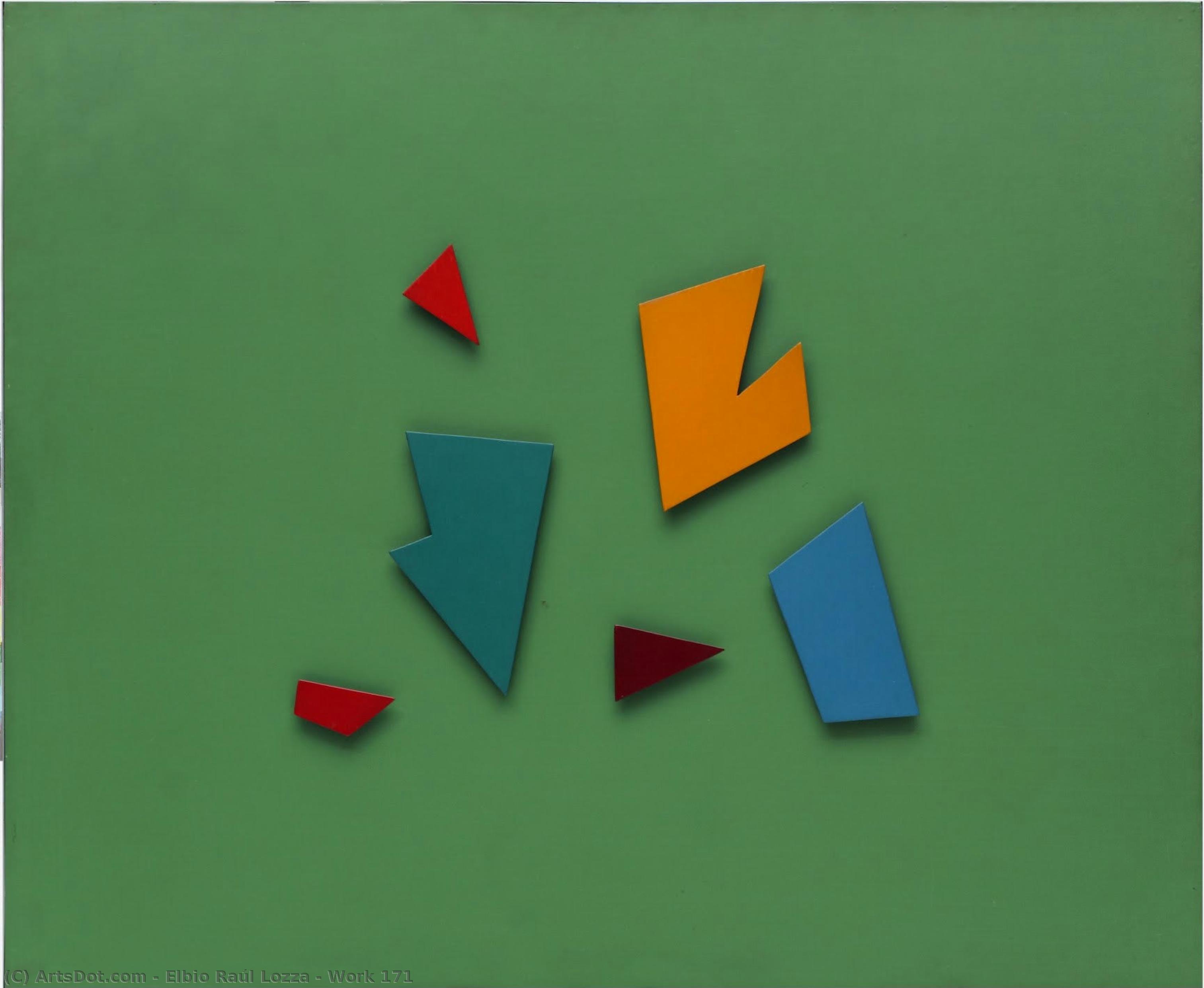
幻灯片播放Work 171
 Painting
- Concrete Art
 1948
1948- Modern
 99.0 x 119.0 cm
 布宜诺斯艾利斯现代艺术博物馆
 展开详情
展开详情
购买高分辨率增强版数字图像,其品质远超在线预览。
每一份文件都由我们的内部专家使用先进工具与专业的后期润色技术精心打造。我们确保每一张图像都具备卓越的清晰度、精准的色彩还原度以及细腻的细节表现。
最终文件将在 72 小时内通过电子邮件交付,并针对专业、编辑及印刷用途进行了优化。其品质与顶级设计工作室、出版社和画廊所信赖的标准完全一致。
每份数字图像订单均包含
专业数字图像交付,品质保障
选择 OriginalUniqueArt.com,您获得的不仅仅是一张图像——您收到的是经过专业级增强、精雕细琢的数字艺术作品,并享有满意保证。以下是您的订单中自动包含的所有内容:

邮件快速送达
您的高分辨率数字图像文件将在下单后 72 小时内通过电子邮件发送给您 —— 即可立即使用。

AI 增强型数字文件
您的艺术品经过专业优化,结合先进的 AI 技术与人工修饰,确保呈现极致的细节、清晰度与色彩准确度。

终身免费重发服务
不小心删除了文件或找不到了?没关系——我们将随时为您免费重发。

无需进口费用,始终如一
即刻拥有您的艺术作品,无需支付任何关税、税费或运费——数字下载始终免税。

色彩精准保证
我们通过专业工具与色彩管理技术,确保您的数字图像尽可能真实地还原原作色彩。

60天满意保证
如果您对所购买的数字图像不满意,我们将在60天内为您进行修改或退还100%的款项——无需任何解释。

100% 退款保证
如果不满意?在收到数字文件后的60天内,我们为您提供全额退款——无需任何理由。

批量订单优惠
购买 3 张图片可享 10% 折扣 - 购买 5 张可享 15% 折扣 - 购买 10+ 张可享 20% 折扣。非常适合创意项目、画廊和机构使用。
藏品详情
A Symphony of Geometry: Discovering Elbio Raúl Lozza’s Work 171
In the vast landscape of mid-century abstraction, few works capture the rhythmic precision and vibrant energy of Argentine Concrete Art quite like Work 171. Created in 1948 by the visionary Elbio Raúl Lozza, this masterpiece serves as a window into a period of profound geometric experimentation. The canvas is an orchestrated dance of color and form, where a deep, verdant green background provides a lush stage for a constellation of sharp, intersecting triangles. Each shape—rendered in striking hues of crimson, azure, sun-drenched yellow, and royal purple—seems to vibrate against its neighbor, creating a sense of perpetual motion that draws the viewer into a hypnotic, optical experience.
The technique employed by Lozza in this piece reflects his mastery over the principles of Madí and Concrete art movements. Rather than relying on representational imagery, the artist utilizes the inherent tension between geometric shapes to build a structural narrative. The way the triangles overlap and orient themselves suggests a complex architectural blueprint, yet it remains fluid and organic. This interplay of sharp angles and bold pigments creates an illusion of depth, making the flat surface of the wood-based medium feel as though it possesses its own internal dimension. For the discerning collector, this work represents a pinnacle of mathematical beauty married to painterly intuition.
Beyond its formal qualities, Work 171 carries a significant historical weight. Emerging from the intellectual ferment of post-war Argentina, Lozza’s work was part of a larger movement seeking to strip art of its decorative illusions and return it to its fundamental, structural truths. The painting does not merely depict shapes; it celebrates the autonomy of color and line. There is an inherent optimism in this 1948 composition—a belief that through order, clarity, and balance, one can find a universal language that transcends borders and eras.
For interior designers and lovers of modernism, this artwork offers unparalleled versatility and emotional resonance. Its commanding presence, measuring 99 x 119 cm, makes it an ideal focal point for a sophisticated contemporary space. Whether placed in a minimalist gallery setting or used to add a burst of structured color to a curated residential collection, the piece evokes a sense of intellectual rigor and aesthetic joy. Owning a high-quality reproduction of this Lozza masterpiece allows one to bring the legacy of Argentine abstraction into the modern home, providing a timeless conversation piece that inspires contemplation and admiration.
艺术家简介
Louise Bourgeois: A Life Sculpted by Memory and Trauma
Louise Bourgeois, a name synonymous with visceral emotion and unsettling beauty, was an artist whose entire life seemed to inform her profoundly evocative work. Born in Paris on December 25th, 1911, into a family deeply entrenched in the world of fine art – her parents ran a tapestry restoration workshop – Bourgeois’s early experiences shaped not only her artistic inclinations but also the very fabric of her being. Her childhood was marked by profound loss and instability; abandoned by her father shortly after birth, she spent much of her youth moving between various foster homes and farms in Alsace, France. These formative years, steeped in loneliness and a sense of displacement, became recurring themes in her art – explorations of the family, the body, and the unconscious mind. The trauma of this early life wasn’t simply a backdrop; it was a driving force, an insistent whisper shaping every brushstroke, every sculpted form, every unsettling installation.Early Artistic Development & Influences
Bourgeois's artistic journey began formally in Paris, where she studied at the École des Beaux-Arts, though she found the academic environment stifling. She quickly gravitated towards a more intuitive approach, absorbing influences from a remarkably diverse range of sources. The meticulous detail and rich textures of her family’s tapestry business provided an early foundation, instilling a deep appreciation for craftsmanship and material. However, it was the burgeoning avant-garde movements of the early 20th century that truly ignited her imagination. She encountered the work of artists like Giorgio de Chirico, whose dreamlike landscapes hinted at hidden anxieties, and later, the abstract expressionists – particularly Jackson Pollock – who embraced spontaneity and raw emotion. Crucially, she was deeply impacted by her father’s passion for Sonia Delaunay's geometric abstraction and her pioneering use of color, a style that would subtly inform her own explorations of form and space. The influence of Surrealism is also undeniable, though Bourgeois resisted being neatly categorized within the movement, preferring to forge her own unique path rooted in personal experience.The Rise of the Spider and the Cell
Bourgeois’s artistic language evolved dramatically over a career spanning nearly eight decades. Early works often featured meticulously rendered portraits and still lifes, reflecting a meticulous attention to detail inherited from her family's tapestry work. However, it was in the 1950s that she began to develop the series that would ultimately define her legacy: the “Cell” sculptures and the iconic "Spider" series. These works, often constructed from bronze, fabric, and thread, are imbued with a potent symbolism – the cell representing the claustrophobic confines of childhood trauma, while the spider embodies both protection and predation, reflecting the complex dynamics within the family structure. The spiders, particularly large-scale versions, became recurring motifs, appearing in countless sculptures, paintings, and installations, each one seemingly possessing a distinct personality and narrative. The “Cell” series, with its fragmented forms and unsettling imagery, powerfully conveyed the feeling of being trapped within painful memories.Exploring Themes of Family & The Unconscious
Bourgeois’s work consistently grappled with universal themes – love, loss, sexuality, death, and the enduring power of memory. She frequently revisited her childhood experiences, not in a literal or sentimental way, but through carefully constructed symbols and metaphors. Her installations, particularly those created later in life, became immersive environments that invited viewers to confront their own anxieties and vulnerabilities. The “Accumulations” series, consisting of towering stacks of clothing, hair, and other personal objects, served as a poignant meditation on the accumulation of memories and the weight of the past. Bourgeois’s work is deeply psychological; she sought to excavate the hidden recesses of the unconscious mind, revealing the often-uncomfortable truths that lie beneath the surface of everyday experience.Legacy & Recognition
Louise Bourgeois died on May 31st, 2010, leaving behind a vast and profoundly influential body of work. Initially met with relative obscurity, her art gained increasing recognition in the late 1990s and early 2000s, culminating in a major retrospective at the Guggenheim Museum in New York City in 2008. This exhibition brought Bourgeois’s work to a wider audience, cementing her status as one of the most important artists of the 20th century. Her influence extends far beyond the art world, impacting fields such as psychology and therapy, where her work has been used to explore trauma and emotional healing. Bourgeois's willingness to confront difficult subjects with honesty and vulnerability continues to resonate deeply with viewers today, reminding us of the enduring power of art to illuminate the complexities of human experience. Her legacy is not just one of artistic innovation but also a testament to the transformative potential of confronting one’s past.
elbio raúl lozza
1911 - 2008 , Argentina
基本信息
- Artistic Movement Or Style: Sculpture, Installation Art
- Artists Who Influenced This Artist: ['Fernand Léger, Sonia Delaunay, Robert Delaunay],\n "Artists or movements influenced by this artist": ["Feminist Art", "Surrealism"]\n}']
- Date Of Birth: December 25, 1911
- Date Of Death: May 31, 2010
- Full Name: Louise Bourgeois
- Nationality: French-American
- Notable Artworks:
- Cells
- Maman
- Cumul I
- The Destruction of the Father
- Place Of Birth: Paris, France

