效果预览
效果预览
 购买印刷品
购买印刷品 分享
分享 分享
分享
 详情
详情

 下载
下载
 相似作品
相似作品 X射线
X射线 幻灯片播放
幻灯片播放Self Portrait with Raised Arms, Back View


 展开详情
展开详情




P118B $10

P118H $10

P118W $10

P438Z $10

P508JH $12

P508YH $12

P805H $10

P805Z $10

P919BZ $10

P919G $10

P919XJ $10

P959ZH $10

P968JZ $12

W106C $8

W218G $10

W218JH $8

W218Y $10

W307PJ $10

W316G $10

W316PJ $8

W316Y $10

W398PJ $8

W4111J $10

W500HY $15

W500JH $15

W692G $12

W849H $8

W940BG $15

W953PJ $8




从与原作比例一致的预设尺寸中进行选择。

您可以输入自定义尺寸,以适配特定的画框或空间。如果所选尺寸与原图比例不符,我们将通过裁剪作品或添加手绘元素来扩展画面。数字样稿将在制作开始前发送给您确认。
请注意,屏幕预览无法准确反映实际的裁剪或扩展效果,只有样稿才能真实呈现最终的构图。
虽然我们提供定制尺寸服务,但为了保留原作比例,建议您从预设列表中选择尺寸。
下单后,OriginalUniqueArt.com 团队将通过电子邮件联系客户获取具体要求,并提供效果预览图。


 玻璃选项仅适用于110厘米以下的尺寸。

Self Portrait with Raised Arms, Back View
复制材质
复制品尺寸
-


最终总价
$ 300
作品详情
A Study in Vulnerability and Movement: Egon Schiele’s ‘Self Portrait with Raised Arms, Back View’
Egon Schiele's “Self Portrait with Raised Arms, Back View,” painted in 1912, stands as a haunting testament to the artist’s preoccupation with themes of mortality and psychological intensity—characteristics that define his entire oeuvre. This striking image transcends mere representation; it delves into the very core of human experience, capturing a moment of profound introspection amidst an unsettling physicality. The painting's power resides not in idealized beauty but rather in its unflinching gaze upon the artist’s own body, rendered with meticulous detail and imbued with palpable emotion.The Expressionist Style: Distortion as Revelation
Schiele firmly established himself within the Expressionist movement, a stylistic rebellion against Impressionism’s pursuit of optical accuracy. Rather than striving for realistic depiction, Expressionists sought to convey inner feelings and anxieties through distortion—a technique Schiele employed masterfully here. The figure's torso is subtly warped, conveying a sense of unease and instability. Lines radiate outwards from the central point of focus – the raised right elbow – creating a dynamic visual rhythm that mirrors the artist’s internal turmoil. This deliberate deformation isn’t merely stylistic; it serves as a conduit for communicating psychological states inaccessible to conventional observation.Technical Precision Amidst Emotional Turbulence
Despite its expressive qualities, “Self Portrait with Raised Arms” demonstrates remarkable technical skill. Schiele utilized oil paints on canvas with a textured surface—a hallmark of Expressionist practice—allowing for rich color saturation and capturing subtle nuances of light and shadow. The artist’s meticulous attention to anatomical detail is juxtaposed against the distortion of form, highlighting the tension between observation and subjective experience. Notice the careful rendering of musculature, particularly around the elbow and shoulder, conveying a sense of physical exertion despite the apparent stillness of the pose. This precision underscores Schiele's commitment to portraying not just what he saw but also how he *felt*.Historical Context: Vienna’s Artistic Avant-Garde
Vienna in 1912 was at the epicenter of European artistic innovation, fostering a vibrant intellectual and cultural landscape where artists challenged established conventions. Schiele’s work emerged from this milieu, reflecting anxieties surrounding societal change and personal vulnerability—themes prevalent throughout Expressionist art. The influence of Nietzschean philosophy – particularly his concept of ‘eternal recurrence’ – is palpable in Schiele's exploration of death and decay. Furthermore, the painting speaks to broader concerns about gender roles and psychological repression within Viennese society at the time.Symbolism: Gesture and Vulnerability
The raised arms are arguably the most significant symbolic element of this portrait. They represent not merely physical posture but also a gesture of defiance—a refusal to succumb to despair or accept defeat. Simultaneously, they convey vulnerability; the exposed flesh underscores the fragility of human existence and confronts viewers with uncomfortable truths about mortality. The handbag positioned at the bottom left corner adds another layer of complexity, hinting at anxieties surrounding domesticity and societal expectations for women during Schiele’s era. It serves as a visual counterpoint to the artist's physical presence, suggesting an internal struggle between desire and constraint.Emotional Resonance: A Portrait of Inner Struggle
Ultimately, “Self Portrait with Raised Arms, Back View” succeeds in capturing the profound emotional impact of Schiele’s artistic vision. The painting compels contemplation on themes of isolation, anxiety, and confronting one's own mortality—subjects that continue to resonate powerfully with audiences today. It is a portrait not of outward appearance but of inner turmoil—a testament to Schiele’s ability to translate psychological experience into visual form. Reproductions of this artwork offer an opportunity to engage with the legacy of Expressionism and appreciate the enduring power of art to provoke introspection and illuminate the complexities of human emotion.艺术家简介
埃贡·席勒:维也纳心理现实主义的先驱
埃贡·席勒(Egon Schiele,1890-1918)是奥地利表现主义绘画的杰出代表,他的作品以其深刻的心理洞察力、大胆的笔触和对人性的直白探索而闻名。他短暂却辉煌的一生,如同流星般划过20世纪初的维也纳艺术天空,留下了令人难以忘怀的印记。席勒并非仅仅是一位画家,更是一位深刻的思想者和情感的表达者,他的作品是对当时社会道德观念的挑战,也是对人类存在本质的探寻。
童年阴影与艺术萌芽
1890年6月12日,席勒出生于下奥地利图尔恩的一个小镇。父亲是一位铁路局长,家庭环境相对稳定,但命运却并未眷顾这位年轻的艺术家。幼年的席勒经历了许多不幸:父亲因梅毒去世,姐姐也早逝,这些悲剧性的事件在他心中留下了深刻的阴影,并深深影响了他的艺术创作。尽管如此,席勒从小就表现出对绘画的浓厚兴趣,他用稚嫩的笔触描绘着火车、车站和周围的景物,这些早期的作品中已经蕴含着他对线条和构图的敏锐感知。在克雷姆斯中学期间,一位名叫路德维希·卡尔·施特劳赫的艺术老师发现了席勒的天赋,并给予了他鼓励和指导,这对于他未来的艺术道路至关重要。
维也纳:艺术觉醒与风格探索
1906年,席勒前往维也纳求学,进入美术学院学习。然而,学院的保守教学方法很快让他感到窒息。他渴望自由、创新和更深刻的表达方式。在维也纳,席勒结识了古斯塔夫·克林姆(Gustav Klimt),这位前辈艺术家对席勒产生了深远的影响。克林姆的装饰风格和象征主义探索为席勒提供了灵感,但席勒并未完全跟随克林姆的脚步,而是逐渐形成了自己独特的艺术语言。他与几位志同道合的艺术家共同创立了“新艺术团体”,挑战着当时的主流审美观念。席勒的作品开始呈现出一种强烈的个人风格:扭曲的人体、尖锐的线条和充满焦虑的情绪,这些都成为了他作品的标志性特征。
人性的剖析与心理现实主义
席勒最引人注目的特点在于他对人性的深刻剖析。他的作品常常描绘裸体人物,但并非以传统的美学标准来衡量,而是着重表现人物内心的挣扎、孤独和焦虑。他毫不掩饰地展现了人体的缺陷和脆弱,这在当时的社会环境中是极具争议的。席勒的自画像系列更是对自我探索的一次深刻尝试,他用画笔记录下自己不同心境下的形象,坦诚地面对自己的内心世界。他的作品并非简单的肖像画,而是对人物心理状态的细致刻画,展现了一种独特的“心理现实主义”。席勒还经常使用象征性的元素来表达更深层次的主题,例如他笔下反复出现的黄瓜植物,常常被解读为死亡和短暂生命的象征。
短暂而辉煌的艺术生涯
尽管席勒的艺术才华得到了认可,但他的一生却充满了挑战。他的作品经常受到批评家的质疑,甚至遭到法律的制裁。然而,他从未放弃自己的艺术追求,始终坚持用画笔表达内心的真实感受。1918年,正值西班牙流感大流行时期,席勒不幸感染了流感,于同年10月31日去世,享年仅28岁。他的离世是艺术界的一大损失,但他也留下了宝贵的艺术遗产。如今,席勒的作品在世界各地的博物馆和画廊中展出,吸引着无数观众的目光。他被誉为奥地利表现主义的先驱,对后世的艺术家产生了深远的影响。席勒的作品不仅仅是视觉上的享受,更是一种深刻的精神体验,它引导我们去思考人生的意义、死亡的必然性和人类存在的脆弱性。
席勒艺术风格的几个关键要素
- 扭曲的人体: 席勒的人物形象常常呈现出一种扭曲和变形的状态,这并非为了追求美感,而是为了表达人物内心的不安和焦虑。
- 尖锐的线条: 他善于运用尖锐、粗犷的线条来勾勒人物轮廓,增强作品的视觉冲击力。
- 象征性的元素: 席勒的作品中经常出现一些具有象征意义的物体或植物,例如黄瓜,这些元素为作品增添了更深层次的含义。
- 对人性的直白探索: 他毫不掩饰地展现了人体的缺陷和脆弱,以及人物内心的挣扎和孤独。

埃贡·席勒
1890 - 1918 , 奥地利
艺术家简介
- 全名: 埃贡·席勒
- 出生地点: 多恩(奥地利)
- 出生日期: 1890年6月12日
- 去世日期: 1918年10月31日
- 受影响的艺术家或运动: ['表现主义']
- 国籍: 奥地利
- 影响艺术家: ['古斯塔夫·克林姆特']
- 艺术运动或风格: 表现主义
- 著名作品:
- 《带岩梅的自画像》
- 《拥抱的恋人组合》
- 《克鲁马乌附近的麦田风景》
相关文章
埃贡·席勒:25幅震撼人心的杰作,艺术与灵魂的深度探索 | OriginalUniqueArt
探索埃贡·席勒25幅震撼人心的杰作!深入了解这位表现主义大师的绘画技巧、情感表达与生命哲思。OriginalUniqueArt.com提供高品质艺术复制品,为您的室内设计带来经典之美。立即在线探索完整系列!
Egon Schiele: Expressionism, Anxiety & the Modern Condition – A Comprehensive Exploration
Explore the emotionally charged world of Egon Schiele (1890-1918). Discover his Expressionist masterpieces, psychological themes, and lasting impact on modern art. A comprehensive guide for collectors & enthusiasts.
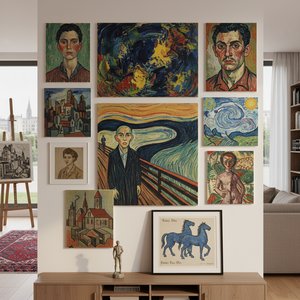
波瀾壯闊:表現主義十大名作,定義時代與靈魂
探索表现主义的灵魂!本文精选十幅名作,从莫迪里亚尼到夏加尔,揭秘大师背后的故事与艺术魅力。感受色彩的力量,重塑您的家居空间。OriginalUniqueArt.com 提供博物馆品质的艺术复制品和个性化装饰方案。立即在线探索全系列!

Crimson Threads of Narrative: Exploring Symbolism & Representation in Artworks Featuring the Red Dress
Explore the rich symbolism of the red dress in art history! From ancient power displays to iconic portraits like Cézanne’s 'Madame Cezanne', discover the cultural and artistic significance behind this captivating color. Expert analysis & insights.

The Inner Landscape: Exploring Themes of Introspection in Visual Art Across Movements & Eras
Explore the captivating world of introspective art! Discover how artists across eras – from Rembrandt to Kahlo – used self-portraiture to reveal their inner worlds and emotional depths. A journey through art history & psychology.