切换至版画销售渠道
 展开全文
展开全文







































 对于任何边长超过 105 厘米(约 41 英寸)的艺术品或复制品,画框将以拆解后的组件形式发货。此方法可确保安全送达并防止运输过程中的损坏。


A Portrait of Quiet Intensity – Decoding ‘Female Torso, Squatting’
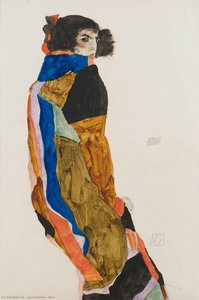
Egon Schiele’s “Female Torso, Squatting,” painted in 1912, stands as a cornerstone of Expressionist art—a testament to the artist's ability to distill profound psychological states into strikingly simple visual forms. Measuring just 32 x 47 cm, this deceptively modest canvas belies the turbulent emotions simmering beneath its surface. It’s more than merely a depiction of the human body; it’s an unflinching confrontation with themes of fragility, isolation, and unspoken desire.
- Artist Background: Egon Schiele (1890-1918) emerged from Vienna's artistic milieu as a rebellious figure determined to break free from academic conventions. Influenced by Nietzsche’s philosophy of will and suffering, Schiele relentlessly pursued an uncompromising vision—one characterized by distorted perspectives, exaggerated musculature, and a palpable sense of unease.
- Style & Technique: Schiele's Expressionist style is instantly recognizable through its bold black lines against stark white backgrounds. He eschewed meticulous detail, prioritizing instead the conveyance of emotion over realistic representation. The painting utilizes a technique that emphasizes texture—a deliberate roughness achieved through thick impasto—further amplifying the artwork’s visceral impact.
Historical Context – Vienna at the Dawn of Modernity
Vienna in 1912 was undergoing seismic shifts, grappling with anxieties surrounding societal change and intellectual upheaval. The burgeoning avant-garde movement challenged established artistic norms, pushing artists to explore uncharted territories of psychological introspection. Schiele’s work reflects this zeitgeist—a reaction against the idealized beauty championed by Impressionism and Neoclassicism.
- Symbolism: The woman's squatting posture is laden with symbolic significance. Traditionally, the nude figure has represented purity and vulnerability; however, Schiele subverts these expectations. Her knees pressed together convey a palpable sense of defensiveness—a yearning for solace amidst an overwhelming awareness of mortality.
- Emotional Resonance: The painting’s unsettling stillness speaks volumes about inner turmoil. It captures a moment of profound contemplation, hinting at unspoken anxieties and confronting the viewer with uncomfortable truths about human existence. Schiele's masterful use of color – primarily muted browns and whites – contributes to this atmosphere of melancholy.
Beyond Representation – Exploring Inner Landscape
Schiele wasn’t interested in portraying beauty; he sought to expose the raw nerve of human emotion. “Female Torso, Squatting” isn't simply a visual record of a nude figure; it’s an invitation to delve into the subconscious—to confront anxieties about vulnerability and decay. Consider its connection to Schiele’s broader oeuvre, particularly ‘Agony,’ which similarly explores themes of suffering and psychological distress.
- Comparative Analysis: Like ‘Agony,’ this piece exemplifies Schiele's preoccupation with the human condition—a relentless investigation into the darker recesses of consciousness.
- Interior Designer’s Perspective: Its muted palette and textural surface lend themselves beautifully to contemporary interior design schemes, creating a space that evokes contemplation and understated elegance.
A reproduction of “Female Torso, Squatting” offers an unparalleled opportunity to experience the enduring power of Expressionist art—a captivating glimpse into Schiele’s visionary mind and his unflinching portrayal of human emotion. Explore more stunning artworks by Egon Schiele at WikiArt.
常见问题与解答
"Female Torso, Squatting" 的色彩表现如何?
埃贡·席勒 的《Female Torso, Squatting》 的色彩饱和度为 Balanced Soft,色彩强度为 Vivid。
"Female Torso, Squatting" 的作者是谁?属于哪种艺术流派?
"Female Torso, Squatting" 的背后是 埃贡·席勒 及其所属的 Expressionism 流派。
埃贡·席勒 的《Female Torso, Squatting》 的版权情况是如何界定的?
埃贡·席勒 的《Female Torso, Squatting》 已进入 属于公有领域 —— 其版权已过期。版权保护期自艺术家逝世之日起计算,该艺术家于 1918 年逝世。
 实景预览
实景预览
 分享
分享 分享
分享
 详情
详情 指南
指南

 下载作品
下载作品
 相似作品
相似作品 X射线
X射线 幻灯片播放
幻灯片播放 Q&A
Q&A 统计数据
统计数据