切换至版画销售渠道
 展开全文
展开全文







































 对于任何边长超过 105 厘米(约 41 英寸)的艺术品或复制品,画框将以拆解后的组件形式发货。此方法可确保安全送达并防止运输过程中的损坏。


A Symphony of Tension: The Raw Emotion of Egon Schiele
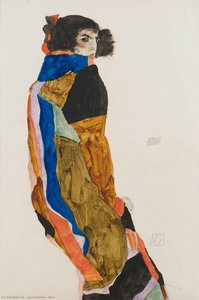
In the quiet, trembling lines of “Couple Embracing,” we encounter more than just a depiction of human intimacy; we witness a profound psychological excavation. Created in 1911, this masterpiece by the Austrian virtuoso Egon Schiele serves as a haunting testament to the core tenets of Expressionism—a movement that sought not merely to mirror reality, but to expose the raw, unshielded nerves of the human soul. The drawing captures a moment frozen in time, yet it vibrates with an unsettling energy that suggests a struggle far deeper than the physical embrace of the two figures. For the discerning collector or lover of modern art, this piece offers a window into the turbulent psyche of early 20th-century Vienna, where the boundaries between desire and anxiety were perpetually blurred.
The composition is a masterclass in the use of distorted form to convey internal truth. Schiele deliberately eschews the polished anatomical precision of academic realism, opting instead for elongated limbs and contorted poses that emphasize the weight of emotion over the accuracy of bone and muscle. The figures are centrally positioned, their bodies intertwined in a way that feels simultaneously passionate and claustrophobic. Through his signature use of jagged, angular lines, Schiele creates a sense of palpable tension; there is no softness here, only the sharp, restless energy of two beings caught in a moment of profound vulnerability. This technique transforms the simple act of an embrace into a complex dialogue of human connection and existential dread.
The Artistry of Shadow and Line
Technically, “Couple Embracing” is a triumph of monochromatic expression. Utilizing graphite on paper, Schiele employs a sophisticated array of hatching and cross-hatching to build depth and tonal variation without the need for color. These dense clusters of lines create a textured, almost tactile surface that mimics the unevenness of human emotion. The absence of an explicit light source allows the contrast between the dark, heavy strokes and the pale, untouched paper to dictate the rhythm of the piece. This interplay of light and shadow highlights the contours of the figures, pulling them out of the void and into a space that feels both intimate and hauntingly isolated.
For those looking to integrate such a powerful work into a curated interior, the piece offers an unparalleled aesthetic depth. Its monochromatic palette allows it to serve as a sophisticated focal point in contemporary or minimalist settings, providing a "soulful" anchor to a room. The organic shapes and expressive linework invite long periods of contemplation, making it an ideal selection for spaces designed for reflection. Whether viewed as a study in the history of Expressionism or as a stunning example of graphic mastery, this reproduction brings the visceral intensity of Schiele’s vision into the modern home, offering a permanent connection to one of art history's most evocative voices.
常见问题与解答
埃贡·席勒 的《Couple Embracing》 的色彩是鲜艳还是柔和?
埃贡·席勒 的《Couple Embracing》 的色彩呈现出 Muted 的饱和度与 Balanced 的强度。
"Couple Embracing" 是如何平衡明暗对比的?
埃贡·席勒 的《Couple Embracing》 的记录数值为:亮度 brilliant,亮度感 Bright Balance。
“Couple Embracing”是如何体现 埃贡·席勒 的创作主题与艺术风格的?
"Couple Embracing" 是 埃贡·席勒 Expressionist Movement 时期的代表作,其创作主题涵盖了 psychological expressionism, human relationships tension, austrian modern art style, mortality anxiety symbolism, schiele’s distinctive vision。
 实景预览
实景预览
 分享
分享 分享
分享
 详情
详情 指南
指南

 下载作品
下载作品
 相似作品
相似作品 X射线
X射线 幻灯片播放
幻灯片播放 问答
问答 统计数据
统计数据