
 实景预览
实景预览
 分享
分享 分享
分享
 详情
详情 指南
指南

 下载作品
下载作品
 相似作品
相似作品 X射线
X射线 幻灯片播放
幻灯片播放 问答
问答 统计数据
统计数据Tree Landscape

- 51.0 x 76.0 cm


 展开全文
展开全文
艺术微喷/版画
博物馆级艺术微喷或帆布版画,制作高效,并提供多种饰面选择。 ( 订购纯手工绘制画作 切换至数字图像销售渠道)




P118B ¥10

P118H ¥10

P118W ¥10

P438Z ¥10

P508JH ¥12

P508YH ¥12

P805H ¥10

P805Z ¥10

P919BZ ¥10

P919G ¥10

P919XJ ¥10

P959ZH ¥10

P968JZ ¥12

W106C ¥8

W218G ¥10

W218JH ¥8

W218Y ¥10

W307PJ ¥10

W316G ¥10

W316PJ ¥8

W316Y ¥10

W398PJ ¥8

W4111J ¥10

W500HY ¥15

W500JH ¥15

W692G ¥12

W849H ¥8

W940BG ¥15

W953PJ ¥8




您可以从与原作比例一致的预设尺寸中进行选择。

请输入您所需的宽度和高度,以适配您的画框或墙面。由于印刷品只能进行裁剪,无法超出原图尺寸,因此若比例不一致,画面的一部分将会被裁切。在正式印刷之前,我们会为您发送一份数字效果图供您确认。本页面显示的图片并非最终裁剪后的效果——只有效果图才能展示真实的裁剪情况。


 玻璃选项仅适用于110厘米以下的尺寸。

Tree Landscape
艺术微喷/版画
复刻品尺寸
-


最终结算价
¥ 543
A Woodland Reverie: Exploring Edward Mitchell Bannister's "Tree Landscape"
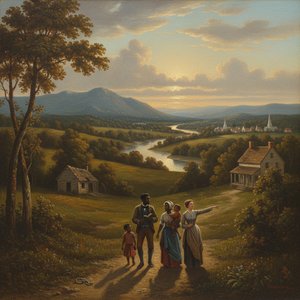
Edward Mitchell Bannister’s “Tree Landscape,” painted in 1877, isn’t merely a depiction of a forest; it’s an immersion into a carefully constructed mood – a profound meditation on nature’s tranquility and the subtle power of light. This oil-on-canvas work, currently residing within the Smithsonian American Art Museum's collection, offers a glimpse into the tonalist movement, a style that prioritized atmospheric effects over sharp detail, mirroring the quiet introspection of the artist himself. Bannister, born in Canada and deeply rooted in both African American and European heritage, sought to capture not just what he saw, but how it *felt* – a sentiment powerfully conveyed through his masterful manipulation of color and texture.
The scene unfolds within a dense thicket of trees, predominantly dark browns and greens that immediately establish a sense of depth. These aren’t the vibrant hues of a summer forest; instead, Bannister employs a muted palette, leaning heavily on umber, sienna, and charcoal tones to create an atmosphere of subdued light and shadow. The foreground is dominated by these imposing trees, their forms rendered with broad brushstrokes that suggest both solidity and a gentle yielding to the elements. Notice how he doesn’t meticulously define each branch or leaf; rather, he uses overlapping layers of color to build volume and create a hazy, almost dreamlike quality. This deliberate ambiguity invites the viewer to step into the painting, becoming part of the woodland experience.
The Language of Tonalism: Light, Shadow, and Atmosphere
Bannister’s signature style – tonalism – is exquisitely demonstrated in “Tree Landscape.” He eschewed bright highlights and sharp contrasts, favoring instead a gradual shift between light and dark. The sunlight, filtering through the canopy above, isn't presented as a direct beam but rather as a diffused glow that casts dappled shadows across the forest floor. This subtle interplay of illumination and obscurity is crucial to the painting’s emotional impact. It evokes a sense of peace and contemplation, suggesting a timelessness and connection to something larger than oneself. The artist’s skill lies not in replicating reality with photographic accuracy but in conveying its essence – the feeling of being enveloped by nature's embrace.
The composition itself is carefully balanced, drawing the eye towards a distant clearing. This strategic use of perspective creates a sense of depth and invites the viewer to imagine what lies beyond the trees. The placement of the largest tree on the left side anchors the scene while simultaneously directing our gaze forward. Bannister’s choice of a slightly elevated vantage point further enhances this effect, offering a panoramic view of the woodland expanse.
A Legacy Rooted in Resilience and Representation
Understanding Edward Mitchell Bannister requires acknowledging the significant obstacles he faced as an African American artist in 19th-century America. Despite enduring racial prejudice and limited opportunities, he persevered, establishing himself as a respected figure within Boston’s artistic community and contributing significantly to the development of American landscape painting. “Tree Landscape” stands as a testament to his dedication and talent – a poignant reminder of his ability to capture beauty even amidst adversity. The painting's quiet dignity reflects Bannister’s own resilience, offering a powerful message about the enduring spirit of creativity in the face of societal constraints.
Furthermore, research reveals that Bannister’s work was often commissioned by members of the African American community, highlighting his role as a cultural figure and advocate for representation. The Smithsonian's collection provides valuable context to this history, ensuring that Bannister’s contributions are recognized and celebrated. The painting’s current location within the museum underscores its importance as a significant piece of American art history.
常见问题与解答
关于“Tree Landscape”的建议打印规格——尺寸与方向为何?
对于“Tree Landscape”,建议的打印设置尺寸为 Medium,方向为 Landscape。
"Tree Landscape" 的材质是什么,采用了哪种风格?
在“Tree Landscape”中,Oil On Canvas技法与Tonalist Landscape运动交相辉映。
“Tree Landscape”的作者是谁?
《Tree Landscape》被归为爱德华·米切尔·班尼斯特 (Ài Dé Huá · Mǐ Chē Lǐ · Bān Ní Sī Tǔ)的作品。
艺术家简介
生于逆境:爱德华·米切尔·班尼斯特的传奇人生
爱德华·米切尔·班尼斯特的故事,是一曲静谧而坚定的乐章,一首在社会重重束缚下绽放的艺术赞歌,最终谱写出被重新发现的辉煌篇章。大约于1828年出生于加拿大新不伦瑞克省圣安德鲁斯镇,他的童年时代笼罩着十九世纪非洲裔人民普遍面临的困苦阴影。幼年丧亲的他,在充满挑战的世界中砥砺前行,从事各种工作——甚至曾在商船上担任厨师——最终于1940年代末抵达波士顿。这段旅程并非简单的地理迁徙,而是一场追寻艺术表达的征途,一场即使面对难以逾越的障碍也从未动摇的使命。他的血统本身就充满复杂性,父亲拥有巴巴多斯血脉,母亲则来自欧洲,这种独特的背景塑造了他敏锐而坚韧的视角,并最终融入了他的画布之中。风景与调性画派的拥抱
班尼斯特主要依靠自学成才,他对精进技艺的执着令人钦佩。他曾在波士顿短暂地师从威廉·里默医生学习雕塑和解剖学,这段经历无疑为他奠定了对形态和构图的理解。然而,真正激发他的艺术灵感的是风景画,特别是法国巴比松画派所倡导的原则。像让-弗朗索瓦·米勒这样的艺术家,他们专注于乡村生活和自然主义的表现手法,深深地触动了班尼斯特的内心。他汲取了他们对捕捉氛围和意境的强调,这一特点最终成为他标志性风格——调性画派的核心特征。班尼斯特的绘画并非追求精细的细节或鲜艳的色彩,而是致力于唤起一种情感,通过微妙的色调变化和柔和、沉静的色泽营造出宁静与深思的感觉。他并不试图精确地复制自然,而是提炼自然的本质,呈现出充满诗意优雅的风景画作。打破壁垒:认可与重要作品
班尼斯特的天赋并未被忽视,尽管当时的社会偏见常常阻碍着他的发展。一个关键时刻发生在1876年的费城百年博览会上。他的画作《橡树下》获得了铜牌奖,对于任何一位艺术家来说都是一项重要的成就,但对于一位非裔美国画家而言,则具有开创性的意义。这一奖项最初引发了争议,一些人质疑其有效性仅仅因为他的种族,但最终其他艺术家维护了这项决定,肯定了班尼斯特的才华和艺术价值。这场胜利不仅仅是个人荣誉的象征,更是打破艺术界种族歧视壁垒的一次尝试。除了《橡树下》之外,《波士顿街景(波士顿公园)》,现藏于沃尔特斯艺术博物馆,展示了他以尊严和静谧观察捕捉日常生活的才华。《报童》,由史密森尼美国艺术博物馆收藏,为我们提供了19世纪城市生活的一瞥,而《树林风景》、《日落》、《无题(牵牛的女子)》和《无题(牵着两头公牛的男子)》等作品则始终展现了他对田园主题的热爱。重获认可:从默默无闻到备受赞誉
尽管在生前获得了认可,班尼斯特的作品在他1901年去世后却逐渐淡出了公众视野。数十年间,他一直是一位被遗忘的人物,淹没于主流艺术史的叙事之中。然而,民权运动以及人们对非裔美国人在各个领域贡献日益增长的关注,在20世纪70年代重新燃起了人们对他作品的兴趣。1978年,罗德岛学院以他的名字命名了其美术馆,并举办了一场名为“来自普罗维登斯的四位艺术家~阿尔斯顿、班尼斯特、詹宁斯和先知”的展览,标志着他重返美国艺术史的重要一步。今天,班尼斯特的画作被各大博物馆和收藏机构所珍藏,包括史密森尼美国艺术博物馆和沃尔特斯艺术博物馆。他越来越受到赞誉,不仅是一位技艺精湛的风景画家,更是一位勇于挑战种族壁垒、为后世非裔美国艺术家铺平道路的先驱人物。他的故事有力地提醒我们,即使在逆境中,艺术才华也能蓬勃发展,真正的天赋最终会得到应有的认可。持久的影响
- 巴比松画派:深受法国巴比松画派的影响,特别是让-弗朗索瓦·米勒等艺术家。
- 调性画派:他的风格与调性画派相符,强调氛围、意境和微妙的色调变化。
- 先锋精神:班尼斯特打破了艺术界的种族壁垒,在歧视严重的时代获得了认可。
- 重获发现:他的作品在民权运动期间被重新发现,从而受到越来越多的关注和博物馆收藏。

爱德华·米切尔·班尼斯特 (Ài Dé Huá · Mǐ Chē Lǐ · Bān Ní Sī Tǔ)
1828 - 1901 , 加拿大
艺术家简介
- Artistic Movement Or Style: 调性主义、巴比松画派
- Artists Who Influenced This Artist: ['让-弗朗索瓦·米勒']
- Date Of Birth: 约1828年
- Date Of Death: 1901年1月9日
- Full Name: 爱德华·米切尔·班尼斯特
- Nationality: 加拿大裔美国人
- Notable Artworks (List Of Titles):
- 《橡树下》
- 《波士顿街景》
- 《报童》
- 《日落》
- Place Of Birth (City And Country): 加拿大新不伦瑞克省圣安德鲁斯
相关文章
Robert Seldon Duncanson: Landscape, Abolitionism & Shaping American Identity
Discover Robert Seldon Duncanson, the first internationally acclaimed African American landscape artist. Explore his connection to the Hudson River School, abolitionism, and enduring legacy through serene vistas & powerful symbolism.

The Art of Suggestion: Mastering Atmosphere and Mood in Tonalist Landscapes
Master the moody essence of Tonalist landscapes through expert analysis of light and texture. Explore these breathtaking masterpieces now.

Tonalism Explained: Mastering Atmosphere, Mood, and the Art of Muted Light in Landscape Painting
Discover the profound beauty of Tonalism. Explore how masters like Whistler and Weir used muted palettes and atmospheric light to evoke mood. Learn about this influential movement and find museum-quality, hand-painted oil reproductions for your professional or private collection.

Edward Mitchell Bannister: A Pioneer of American Landscape Painting & Artistic Recognition
Discover the remarkable life & art of Edward Mitchell Bannister, a pioneering African American landscape painter. Explore his journey overcoming barriers to achieve recognition and lasting impact on 19th-century American art.

Atmospheric Precision: The Nuanced Light and Shadow of Tonalist Landscapes
Explore the technical mastery of American Tonalism and its atmospheric light. Discover the secrets of this evocative art movement now.