 实景预览
实景预览
 分享
分享 分享
分享
 详情
详情 指南
指南

 下载作品
下载作品
 相似作品
相似作品 X射线
X射线 幻灯片播放
幻灯片播放 问答
问答 统计数据
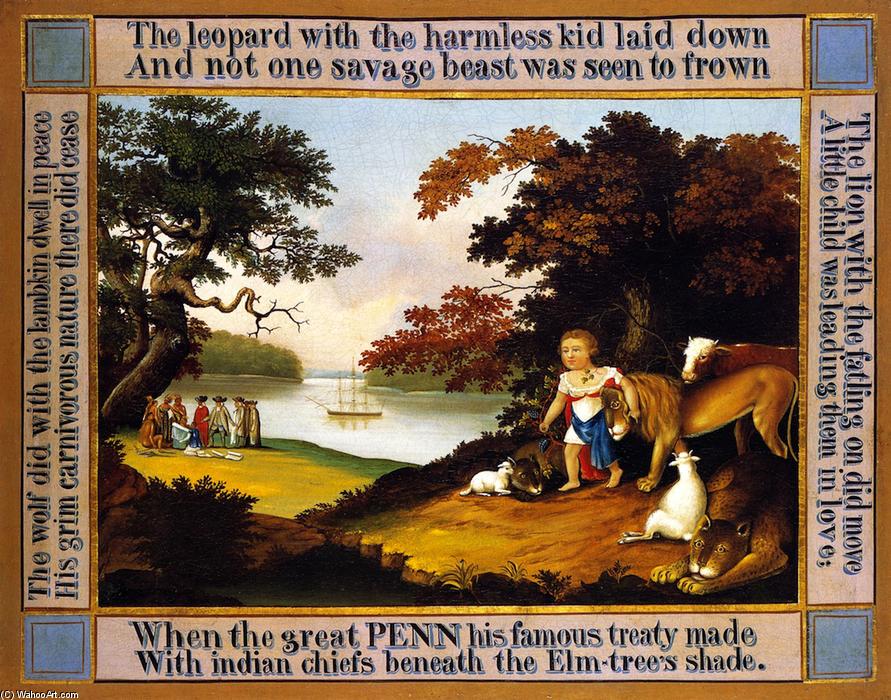
统计数据Peaceable Kingdom (22)


 展开全文
展开全文
艺术微喷/版画
博物馆级艺术微喷或帆布版画,制作高效,并提供多种饰面选择。 ( 订购纯手工绘制画作 切换至数字图像销售渠道)




P118B ¥10

P118H ¥10

P118W ¥10

P438Z ¥10

P508JH ¥12

P508YH ¥12

P805H ¥10

P805Z ¥10

P919BZ ¥10

P919G ¥10

P919XJ ¥10

P959ZH ¥10

P968JZ ¥12

W106C ¥8

W218G ¥10

W218JH ¥8

W218Y ¥10

W307PJ ¥10

W316G ¥10

W316PJ ¥8

W316Y ¥10

W398PJ ¥8

W4111J ¥10

W500HY ¥15

W500JH ¥15

W692G ¥12

W849H ¥8

W940BG ¥15

W953PJ ¥8




您可以从与原作比例一致的预设尺寸中进行选择。

请输入您所需的宽度和高度,以适配您的画框或墙面。由于印刷品只能进行裁剪,无法超出原图尺寸,因此若比例不一致,画面的一部分将会被裁切。在正式印刷之前,我们会为您发送一份数字效果图供您确认。本页面显示的图片并非最终裁剪后的效果——只有效果图才能展示真实的裁剪情况。


 玻璃选项仅适用于110厘米以下的尺寸。

Peaceable Kingdom (22)
艺术微喷/版画
复刻品尺寸
-


最终结算价
¥ 543
Peaceable Kingdom (22): A Quaker Vision of Harmony
Edward Hicks’ “Peaceable Kingdom (22)” transcends mere visual beauty; it embodies a profound philosophical statement rooted in the Quaker faith and meticulously executed with masterful artistic technique. Created in 1826, this monumental oil painting resides at the Philadelphia Museum of Art, serving as an enduring emblem of American folk art and its contribution to shaping national identity.The Artist and His Vision
Edward Hicks (1780-1849), born in Attleboro, Pennsylvania, was a self-taught Quaker minister whose unwavering belief in “the inner light” profoundly influenced his artistic endeavors. Initially apprenticed as a coach maker, Hicks honed his decorative painting skills—a craft considered somewhat unconventional for the time—allowing him to express his spiritual convictions through captivating imagery. His Quaker faith instilled within him a deep appreciation for simplicity and peace, values that permeate every brushstroke of his celebrated “Peaceable Kingdom” series. This particular canvas captures Hicks’s distinctive style: a blend of realism infused with symbolic representation intended to convey moral lessons about coexistence.A Detailed Examination of Composition and Technique
The painting depicts a serene tableau featuring a young boy standing before two lions and a tiger, accompanied by numerous figures engaged in various activities—a meeting place for Native Americans and settlers—and culminating in a sailboat gliding across the horizon beneath a dominant elm tree. Hicks’s meticulous attention to detail is evident throughout; the artist skillfully employs oil paint on canvas, layering glazes to achieve rich textures that bring forth an astonishing level of realism. Lighting is soft and diffused, guiding the viewer's eye through the complex spatial relationships established within the scene. Perspective leans toward a flattened style characteristic of the Dutch Golden Age, prioritizing clarity and conveying a sense of grandeur. The color palette—dominated by warm earth tones—accentuates blues and greens in the landscape, creating an atmosphere of tranquility and unity. Precise lines delineate forms, fostering order amidst the multitude of elements depicted. Organic shapes reflect the natural world at the heart of Hicks’s artistic vision.Symbolism: Lions, Tigers, and Quaker Beliefs
“Peaceable Kingdom (22)” is laden with symbolism reflecting Hicks's core Quaker convictions. The lions and tigers—typically symbols of predatory aggression—are portrayed as gentle creatures coexisting peacefully with humans, mirroring Isaiah 11:6’s prophetic vision of harmony between animals and humankind. This deliberate juxtaposition underscores the artist’s desire for universal reconciliation and embodies the Quaker belief in divine compassion. Furthermore, the inclusion of Native Americans negotiating treaties symbolizes a commitment to justice and understanding across cultures—a crucial element within Hicks's broader philosophical framework. The elm tree represents steadfastness and spiritual resilience, anchoring the scene in a landscape imbued with symbolic significance.Legacy and Enduring Inspiration
“Peaceable Kingdom (22)” continues to inspire audiences worldwide with its timeless message of peace and unity. As a handmade oil painting reproduction, it offers an opportunity to experience this iconic artwork firsthand—a testament to Edward Hicks’s artistic genius and his enduring contribution to American art history. Its serene beauty and profound symbolism resonate deeply within the viewer, prompting contemplation on themes of compassion, harmony, and the importance of fostering dialogue between diverse perspectives.常见问题与解答
"Peaceable Kingdom (22)" 是 Folk Art 运动中著名的艺术作品吗?
在Folk Art运动中,"Peaceable Kingdom (22)"具有Iconic的知名度。
针对 爱德华·希克斯 (Ài Dé Huá · Xī Kè Sī) 的《Peaceable Kingdom (22)》,建议采用怎样的打印尺寸与方向?
建议打印尺寸为 Large,构图采用 Landscape:这是为 爱德华·希克斯 (Ài Dé Huá · Xī Kè Sī) 的《Peaceable Kingdom (22)》 推荐的打印设置。
在 爱德华·希克斯 (Ài Dé Huá · Xī Kè Sī) 的《Peaceable Kingdom (22)》 中,艺术流派与时代背景是如何交汇的?
爱德华·希克斯 (Ài Dé Huá · Xī Kè Sī) 的《Peaceable Kingdom (22)》 属于 Folk Art 流派,创作于其作者的 19世纪 时期。
艺术家简介
一位根植于信仰与愿景的艺术家:爱德华·希克斯
爱德华·希克斯,1780年4月4日出生于宾夕法尼亚州安静的阿特尔伯勒(今兰霍恩)风景中,是一位独特的人物,他的身影巧妙地置身于宗教信仰与艺术表达的交汇点。他的故事不仅仅是一个自学成才画家的故事,更是一位虔诚的贵格会牧师的故事,其精神之旅深刻塑造了他独特的视觉语言。虽然出生于圣公会家庭,但年轻的爱德华的生活在受到伊丽莎白·特威宁夫人的照顾时发生了根本性的转变,这位虔诚的贵格会教徒向他灌输了这种信仰的核心原则——简朴、和平以及对“内在之光”坚定不移的信念。早期的接触将成为构建他的艺术愿景的基础。从十三岁起,希克斯师从马车制造商威廉和亨利·汤姆林森,掌握了装饰绘画技巧,这些技巧最初是他赖以生存的方式。然而,即使他磨练了在马车上描绘华丽图案的技能,内心深处也产生了一种更深刻的呼唤,这种呼唤最终将他引向一条不寻常的道路——一条信仰与艺术融合的道路。到1803年,希克斯完全拥抱了友会(贵格会),与莎拉·沃斯塔尔结婚,并开始在费城各地进行游牧布道,同时继续通过他的绘画技能来支持他不断壮大的家庭。画布的演变:从马车装饰到精神风景
希克斯的艺术发展并非传统模式。他没有接受当时学术传统的正式训练;相反,他培养了一种独特的美国民间艺术风格,这种风格源于观察、必要性和根深蒂固的信仰。最初,他的绘画服务于实际目的——房屋粉刷、马车装饰、酒馆招牌,甚至家具和农具上的装饰工作。这些早期的委托提供了经济保障,但常常与贵格会强调简朴和摒弃世俗虚荣的理念相冲突。1815年的一段艰难时期使希克斯短暂地放弃了装饰绘画而转向务农,但这次冒险证明是失败的。在朋友们的鼓励下,他于1816年重拾画笔,这是一个转折点,使他能够调和他的艺术才能与精神使命。这次回归不仅仅是对先前工作的恢复;它标志着对宗教主题和寓言风景独特探索的开始。他开始在他的绘画中注入象征意义,反映了他的贵格会世界观和对经文的个人理解。他的画布成为传达和平、和谐以及神圣秩序承诺信息的载体。和平王国:和谐的愿景
爱德华·希克斯今天最受赞誉的是他一系列被称为《和平王国》的绘画作品。这些作品贯穿了他的一生,由六十多个变体组成,可以说是美国民间艺术中最具代表性的例子之一。灵感来自以赛亚书11:6-9——一段预言自然捕食者将和平共处的经文——希克斯描绘了野生动物和儿童在田园诗般的和谐中生活的场景。这些绘画作品通常以殖民时期宾夕法尼亚历史人物为特色,例如威廉·佩恩与美洲原住民谈判条约,进一步将圣经愿景置于美国背景下。《和平王国》不仅仅是对动物生活迷人的描绘;它更是希克斯坚信宾夕法尼亚代表着这种先知理想的实现——一个和平与正义可以盛行的场所。每个版本的《和平王国》在构图、调色板和细节上都略有变化,反映了希克斯不断发展的艺术敏感度和更深刻的精神理解。值得注意的例子包括藏于耶鲁大学美术馆的《和平王国 (31)》,以及描绘诺亚方舟置身于宁静风景中的《和平王国 (34)》。超越王国:更广阔的艺术范围
虽然《和平王国》仍然是他最伟大的成就,但爱德华·希克斯的艺术创作范围超出了这个著名的系列。他画了风景、肖像和历史场景,每一幅都蕴含着他独特的民间艺术风格和贵格会气质。他的《尼亚加拉瀑布》,现藏于艾比·奥尔德里奇·洛克菲勒民间艺术中心,展示了他捕捉自然壮丽的能力,同时保持一种简朴和敬畏感。同样,他在艾比·奥尔德里奇·洛克菲勒民间艺术中心收藏的《乔治·华盛顿率军横渡特拉华河》——也藏于该中心,为这个标志性的美国时刻提供了独特的民间视角。即使是看似平凡的主题,例如《威廉·佩恩在约旦的墓地》,也揭示了希克斯与贵格会遗产的深厚联系以及他在日常场景中发现精神意义的能力。这些作品合在一起,展示了希克斯艺术愿景的广度和他对使用艺术作为表达信仰和价值观手段的承诺。持久的遗产:民间艺术偶像
爱德华·希克斯于1849年8月23日去世于宾夕法尼亚州纽敦,留下了一部至今仍能引起观众共鸣的作品集。他现在被公认为美国民间艺术中的重要人物,以其独特的风格、反复出现的主题和深刻的精神深度而闻名。他的绘画作品为了解19世纪友会(贵格会)的信仰和价值观提供了宝贵的见解,为他们对和平、简朴和社会正义的承诺提供了视觉记录。希克斯将宗教信仰与艺术表达相结合的独特能力创造了一部既具有视觉吸引力又具有精神意义的作品集。他的遗产超越了博物馆和收藏馆藏;它体现在对他艺术作品的持续欣赏以及他愿景——一个人类、自然与神和谐共存的“和平王国”——持久的力量中。他仍然证明了自学成才的艺术力量以及信仰对创造性表达的深刻影响。
爱德华·希克斯 (Ài Dé Huá · Xī Kè Sī)
1780 - 1849 , 美国
艺术家简介
- Artistic Movement Or Style: 美国民俗艺术
- Date Of Birth: 1780年4月4日
- Date Of Death: 1849年8月23日
- Full Name: 爱德华·希克斯
- Nationality: 美国
- Notable Artworks:
- 和平王国(31)
- 尼亚加拉瀑布
- 华盛顿过特拉华河
- 和平王国(34)
- Place Of Birth (City And Country): 宾夕法尼亚州兰格霍恩
相关文章
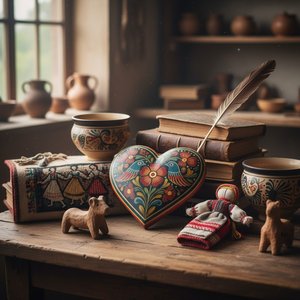
The Heart of Folk Art: Discover the Beauty of Tradition and Storytelling
Explore the profound beauty of folk art through its rich history and storytelling traditions. Discover how Naive Art and cultural heritage preserve ancestral narratives through vibrant color and symbolism for the modern collector.

爱德华·霍珀25幅杰作:光影中的美国孤寂与艺术传奇 (Edward Hopper's 25 Masterpieces: American Solitude and Artistic Legacy in Light and Shadow)
探索爱德华·霍珀25幅经典作品,感受美国现实主义的光影魅力与寂静之美。深入了解每件画作背后的故事、艺术技巧及文化意义。OriginalUniqueArt.com提供高清油画复制和精选家居装饰灵感。立即探索完整系列!
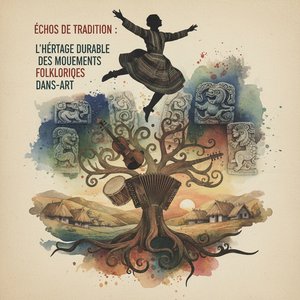
民艺的回声:探寻民间艺术运动的持久遗产与文化意义
探索中国民间艺术的深厚文化底蕴!OriginalUniqueArt带您溯源传统工艺,了解玉雕、竹编等精湛技艺。专业艺术咨询,定制油画服务,让珍贵文化遗产焕发新生。

Edward Hicks’ ‘Peaceable Kingdom’: American Folk Art & the Shaping of a National Identity
Explore the profound symbolism & historical context of Edward Hicks’ ‘Peaceable Kingdom.’ Discover how this iconic American folk art masterpiece reflects Quaker values and shaped a nation's identity. Learn more at OriginalUniqueArt.
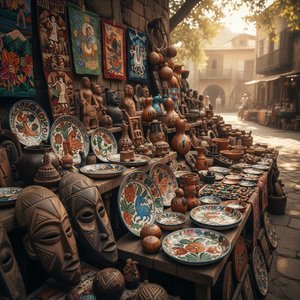
The Soul of Tradition: Exploring the Vibrant Heritage and Naive Mastery of Global Folk Art
Discover the profound beauty of folk art through a cultural lens. Explore how naive masterpieces and vibrant global traditions preserve heritage, offering timeless inspiration for collectors and art enthusiasts seeking authenticity and soul in every brushstroke.