

 效果预览
效果预览
 分享
分享 分享
分享
 详情
详情

 下载
下载
 相似作品
相似作品 X射线
X射线 幻灯片播放
幻灯片播放 统计数据
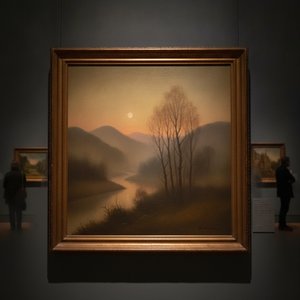
统计数据Evening in the Meads
 Oil On Canvas
- WallArt
- Pre-Raphaelite Landscape Painting
 1900
1900 23.0 x 30.0 cm
 展开详情
展开详情
艺术微喷/版画
博物馆级艺术微喷或帆布版画,制作高效,并提供多种饰面选择。 ( 购买手绘画作 切换至数字图像销售渠道)




P118B $10

P118H $10

P118W $10

P438Z $10

P508JH $12

P508YH $12

P805H $10

P805Z $10

P919BZ $10

P919G $10

P919XJ $10

P959ZH $10

P968JZ $12

W106C $8

W218G $10

W218JH $8

W218Y $10

W307PJ $10

W316G $10

W316PJ $8

W316Y $10

W398PJ $8

W4111J $10

W500HY $15

W500JH $15

W692G $12

W849H $8

W940BG $15

W953PJ $8




从与原作比例一致的预设尺寸中进行选择。

您可以输入自定义尺寸,以适配特定的画框或空间。如果您选择的尺寸与原图比例不符,我们将对作品进行裁剪,或通过镜像填充/纯色填充边缘的方式来扩展图像。在开始制作之前,我们会向您发送一份数字效果图供您确认。
请注意,屏幕上的预览并不能反映实际的裁剪或扩展效果。只有效果图才能准确展示最终的构图。
虽然我们提供定制尺寸,但为了保持原图比例,我们建议您从预设列表中选择尺寸。


 玻璃选项仅适用于110厘米以下的尺寸。

Evening in the Meads
艺术微喷/版画
复制品尺寸
-


最终总价
$ 80
Edward Archibald Brown: Weaver of Light and Shadow
Edward Archibald Brown, a name perhaps less instantly recognizable than some of his Pre-Raphaelite contemporaries, nevertheless possessed a singular vision – one deeply rooted in the evocative landscapes of England and imbued with a profound understanding of light and color. Born in 1866 in London, Brown’s artistic journey was shaped by a meticulous apprenticeship under the renowned photographer Francis Hadow, an experience that fundamentally altered his approach to seeing and representing the world. This early exposure to photographic techniques – particularly the careful manipulation of tones and textures – instilled in him a remarkable sensitivity to detail and a desire to capture fleeting moments of atmospheric effect. Brown’s artistic development unfolded gradually, initially exploring watercolor landscapes before gravitating towards oil painting. His formative years were spent absorbing the influence of the Pre-Raphaelite Brotherhood, though he never fully embraced their overtly romantic or mythological themes. Instead, he found his strength in depicting the quiet beauty of the English countryside – the rolling hills of Cornwall, the misty moors of Yorkshire, and the serene shores of Dorset. He was particularly drawn to scenes of rural life, capturing the rhythms of daily existence with a remarkable degree of realism and emotional resonance. What distinguishes Brown’s work is his masterful manipulation of light. He wasn't simply aiming for accurate representation; he sought to convey the *feeling* of light – its warmth, its coolness, its ability to transform a scene with subtle shifts in hue and tone. This is most evident in paintings like “Stormy Evening” (1903) and “Lock Keeper Cottage” (1907), both iconic works that exemplify his unique style. He employed a broken color technique, layering thin washes of paint to build up complex gradations of light and shadow. His brushstrokes were often loose and expressive, creating a sense of movement and atmosphere. He studied the effects of weather with an almost scientific precision, meticulously observing how sunlight filtered through clouds or reflected off water surfaces. Brown’s technical skill was further enhanced by his understanding of color theory. He wasn't afraid to use unexpected combinations – vibrant blues against muted greens, fiery oranges against somber browns – to create a sense of tranquility and drama simultaneously. His palette favored earthy tones—ochres, siennas, umbers—which he blended seamlessly to achieve remarkable depth and luminosity. The resulting canvases possess an unparalleled quality of luminescence, capturing the ethereal glow of twilight or the dappled sunlight filtering through foliage with breathtaking accuracy. “Evening in the Meads,” completed in 1902, exemplifies this dedication to atmospheric observation. Brown meticulously documented the subtle nuances of light as it interacted with the reeds and grasses lining the riverbank. The painting’s muted palette—dominated by shades of grey-green and amber—creates a mood of contemplative serenity. It invites viewers to linger on the scene, absorbing its quiet beauty and contemplating the passage of time. This artwork is considered one of Brown's masterpieces due to his exceptional ability to translate visual experience into emotive resonance.- Style: Impressionistic Landscape
- Technique: Broken Color Method; Impasto Brushstrokes
- Historical Context: Late Victorian Era; Reaction Against Romantic Idealism
艺术家简介
Edward Archibald Brown: Weaver of Light and Shadow
Edward Archibald Brown, a name perhaps less instantly recognizable than some of his Pre-Raphaelite contemporaries, nevertheless possessed a singular vision – one deeply rooted in the evocative landscapes of England and imbued with a profound understanding of light and color. Born in 1866 in London, Brown’s artistic journey was shaped by a meticulous apprenticeship under the renowned photographer Francis Hadow, an experience that fundamentally altered his approach to seeing and representing the world. This early exposure to photographic techniques – particularly the careful manipulation of tones and textures – instilled in him a remarkable sensitivity to detail and a desire to capture fleeting moments of atmospheric effect.
Brown’s artistic development unfolded gradually, initially exploring watercolor landscapes before gravitating towards oil painting. His formative years were spent absorbing the influence of the Pre-Raphaelite Brotherhood, though he never fully embraced their overtly romantic or mythological themes. Instead, he found his strength in depicting the quiet beauty of the English countryside – the rolling hills of Cornwall, the misty moors of Yorkshire, and the serene shores of Dorset. He was particularly drawn to scenes of rural life, capturing the rhythms of daily existence with a remarkable degree of realism and emotional resonance.
The Language of Light
What distinguishes Brown’s work is his masterful manipulation of light. He wasn't simply aiming for accurate representation; he sought to convey the *feeling* of light – its warmth, its coolness, its ability to transform a scene with subtle shifts in hue and tone. This is most evident in paintings like “Stormy Evening” (1903) and “Lock Keeper Cottage” (1907), both iconic works that exemplify his unique style. He employed a broken color technique, layering thin washes of paint to build up complex gradations of light and shadow. His brushstrokes were often loose and expressive, creating a sense of movement and atmosphere. He studied the effects of weather with an almost scientific precision, meticulously observing how sunlight filtered through clouds or reflected off water surfaces.
Brown’s technical skill was further enhanced by his understanding of color theory. He wasn't afraid to use unexpected combinations – vibrant blues against muted greens, fiery oranges against somber browns – to create a sense of visual drama and emotional intensity. His palette was often restrained, favoring subtle harmonies rather than bold contrasts, yet within this restraint lay a remarkable power to evoke mood and atmosphere.
Influences and Artistic Connections
While Brown’s work is firmly rooted in the Pre-Raphaelite tradition, he also drew inspiration from other sources. The landscapes of J.M.W. Turner, with their atmospheric effects and emphasis on light, were undoubtedly a significant influence. He was also fascinated by the works of Constable, particularly his depictions of rural England. Furthermore, Brown’s time spent working as a photographer informed his approach to painting, encouraging him to see the world in terms of shapes, tones, and textures.
He maintained close friendships with several prominent artists of his era, including William Denselow and Frank Bramley. These artistic connections provided opportunities for mutual inspiration and critique, contributing to the vibrant cultural landscape of late Victorian England. His work was exhibited regularly at the Royal Academy and other prestigious galleries, gaining him a modest but loyal following.
Major Achievements and Legacy
Brown’s most celebrated works include “Stormy Evening,” “Lock Keeper Cottage,” and his series of paintings depicting the Cornish coast. These landscapes are characterized by their atmospheric depth, their subtle color harmonies, and their evocative portrayal of rural life. While he never achieved widespread fame during his lifetime, Brown's work is now recognized as a significant contribution to British landscape painting. His meticulous observation, his masterful manipulation of light, and his quiet sensitivity have secured him a place among the most accomplished artists of the Pre-Raphaelite era.
His legacy lies not in grand pronouncements or revolutionary innovations, but rather in the enduring beauty and emotional resonance of his paintings – works that invite viewers to pause, reflect, and connect with the quiet wonders of the English countryside. Edward Archibald Brown’s art is a testament to the power of observation, the importance of light, and the timeless appeal of simple beauty.

edward archibald brown
1866 - 1935
艺术家简介
- Artistic Movement Or Style: Pre-Raphaelite
- Artists Or Movements Influenced By This Artist: ['Pre-Raphaelites']
- Artists Who Influenced This Artist: ['Burne-Jones']
- Date Of Birth: 1866
- Date Of Death: 1935
- Full Name: Edward Archibald Brown
- Nationality: British
- Notable Artworks:
- Stormy Evening
- Lock Keeper Cottage
- Place Of Birth: London, England
相关文章

Evocations of Place: A Historical Journey Through Landscape Art
Explore the rich history of landscape art with OriginalUniqueArt. Discover renowned artists, movements like Impressionism & Romanticism, and expert guidance for collecting timeless pieces. Find your perfect serene escape today!

康斯塔布尔大师之作:25幅传世风景画赏析 | OriginalUniqueArt
探索康斯塔布尔的25幅传世杰作!沉浸于英国田园风光,感受浪漫主义绘画大师的光影与色彩。高清油画复制、艺术品购买尽在OriginalUniqueArt.com,为您的家居增添经典之美。立即在线探索完整系列!

浪漫主义画派的十部巨作:定义风景画的艺术传奇
探索浪漫主义风景画的巅峰!本文精选十部经典名作,带您领略莫奈、库尔贝等大师的艺术魅力。感受色彩与光影的诗意,重温自然风光的震撼。OriginalUniqueArt.com为您提供博物馆级别的艺术复制品和个性化家居装饰方案。尽在OriginalUniqueArt.com!
Tonalism Explained: The Art of Mood, Mist, and Masterful Color in Landscape Painting
Discover the evocative world of Tonalism. Explore how masters like Whistler and Tryon used mist, shadow, and subtle color to capture profound mood and atmosphere in landscape art. An expert guide for fine art enthusiasts and collectors.

The Magic of Tonalism: Capturing Mood, Mist, and Atmospheric Emotion in Landscape Art
Discover the ethereal beauty of Tonalism. Explore how master artists use mist, soft light, and muted palettes to capture profound emotion and atmospheric mood in landscape painting. A deep dive into this quiet, introspective art movement for true connoisseurs.