切换至版画销售渠道
 展开全文
展开全文







































 对于任何边长超过 105 厘米(约 41 英寸)的艺术品或复制品,画框将以拆解后的组件形式发货。此方法可确保安全送达并防止运输过程中的损坏。


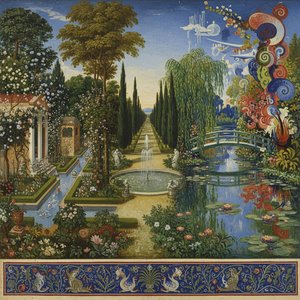
Garden with Red House
Edvard Munch, a Norwegian artist celebrated for his iconic “The Scream,” possessed an equally profound artistic vision in “Garden with Red House.” Created in 1882, this painting exemplifies Munch’s early foray into Symbolism—a movement that would solidify his reputation as one of the foremost innovators of modern art. More than just a depiction of a tranquil landscape, it's a carefully constructed meditation on themes of solitude, memory, and the unsettling beauty of nature.Symbolic Elements: A Landscape Steeped in Emotion
Munch’s genius lay not merely in capturing visual reality but in imbuing it with psychological resonance. The red house dominates the background, encircled by lush greenery—a deliberate choice that speaks volumes about Munch's preoccupation with warmth and comfort amidst a pervasive sense of melancholy. Surrounding the house is a wooden bench resting on a fence, adding a touch of rustic simplicity to the scene. Scattered figures within the garden represent fleeting moments of human connection, yet they simultaneously underscore the painting’s overarching theme of isolation. The vibrant reds and greens aren't merely colors; they are conduits for emotion—representing passion alongside tranquility. Munch’s use of color is masterful, mirroring his inner turmoil while simultaneously conveying a sense of serene contemplation.Artistic Influences: Bridging Impressionism and Realism
“Garden with Red House” reflects the artistic currents of its time, drawing inspiration from both Impressionism and Realism. However, unlike many artists of the era focused on objective observation, Munch prioritized subjective experience—a hallmark of Symbolism’s core tenets. He skillfully blended realistic details—the textures of foliage and wood—with expressive brushstrokes that convey a palpable emotional atmosphere. This technique distinguishes him from his contemporaries, establishing him as a pioneer in exploring the complexities of human psychology through visual art.Historical Context: The Dawn of Modern Anxiety
The late 19th century witnessed significant transformations within the artistic landscape, fueled by intellectual debates surrounding Darwinian evolution and Nietzsche’s proclamation that “God is dead.” Artists responded to these seismic shifts with a renewed interest in delving into the subconscious mind—a preoccupation evident in Symbolism's exploration of dreams, myths, and folklore. Munch’s “Garden with Red House” captures this zeitgeist perfectly, reflecting anxieties about mortality and the fragility of human existence—themes that would become central to his oeuvre and resonate powerfully with audiences today. It stands as a poignant reminder that art can illuminate not only what we see but also what lies beneath the surface of our emotions.Relevance Today: An Enduring Image of Beauty and Sorrow
“Garden with Red House” continues to captivate viewers worldwide, serving as an enduring testament to Munch’s artistic brilliance. Its melancholic beauty—the juxtaposition of vibrant color against a backdrop of quiet solitude—invites contemplation on themes of memory, loss, and the inescapable presence of emotion. Reproductions offer a chance to experience this masterpiece firsthand, allowing its evocative imagery and profound psychological depth to inspire and move those who encounter it.- Edvard Munch's "Garden with Red House" is available for reproduction at /art/list/?Filter=8XXDN6-Edvard-Munch-Garden-with-Red-House
- Learn more about the history of painting at https://en.wikipedia.org/wiki/History_of_painting
- Discover the significance of light in painting at https://en.wikipedia.org/wiki/Light_in_painting
常见问题与解答
爱德华·蒙克 的作品《Garden with Red House》知名度如何?
爱德华·蒙克 的《Garden with Red House》 的知名度处于 Iconic 水平。这一分类反映了该作品被广泛认可的程度。
对于 爱德华·蒙克 的《Garden with Red House》,有哪些推荐的用途和陈列空间?
建议将“Garden with Red House”用于Accent,推荐摆放空间为Living Room。
"Garden with Red House" 创作于哪个时代?
爱德华·蒙克 的《Garden with Red House》 创作于 Modern 时期,这一时期为作品提供了深厚的历史背景。
 实景预览
实景预览
 分享
分享 分享
分享
 详情
详情 指南
指南

 下载作品
下载作品
 相似作品
相似作品 X射线
X射线 幻灯片播放
幻灯片播放 问答
问答 统计数据
统计数据