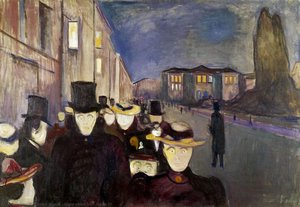
油画原件
 关于 Comfort 的一切







































 对于任何边长超过 105 厘米(约 41 英寸)的艺术品或复制品,画框将以拆解后的组件形式发货。此方法可确保安全送达并防止运输过程中的损坏。


Comfort: A Portrait of Vulnerability and Shared Sorrow
Edvard Munch’s *Comfort* stands as a poignant emblem of Symbolism, capturing the profound depths of human emotion with remarkable precision. Painted in 1907 during Munch's formative years as an Expressionist artist, this oil on canvas masterpiece transcends mere representation; it delves into the realm of psychological introspection and communicates a palpable sense of intimacy—a characteristic found also in his celebrated works like *The Scream* and *The Sick Child*. Munch’s distinctive style, honed through relentless experimentation with color and brushstroke, continues to resonate powerfully with audiences globally.
- Subject Matter: The painting depicts two figures seated close together—a woman on the left and a man on the right—engaged in an act of solace. Their postures convey tenderness and concern, reflecting a desire for mutual support amidst unspoken anxieties.
- Style & Technique: Munch’s approach aligns squarely with Symbolism's core tenets: prioritizing emotional truth over literal depiction. Bold colors – predominantly muted reds and yellows – dominate the palette, creating an atmosphere of subdued intensity. Loose, expressive brushstrokes contribute to a textural surface that embodies movement and conveys the palpable weight of emotion.
- Historical Context: Created during a period marked by significant artistic upheaval—the burgeoning Expressionist movement—*Comfort* reflects the broader preoccupation with psychological realism prevalent in European art at the time. Munch’s work responded directly to anxieties surrounding illness, mortality, and the fragility of human relationships – themes that mirrored the societal concerns of his era.
Symbolism's Language: Beyond Surface Appearance
Munch’s Symbolist vision eschews conventional realism in favor of conveying universal truths through symbolic imagery. The woman’s gaze directs towards the man, symbolizing a yearning for reassurance and connection—a visual representation of vulnerability and shared sorrow. The muted color scheme isn't merely decorative; it underscores the subdued emotional landscape depicted, mirroring the internal struggles experienced by both figures.
Consider Munch’s broader artistic influences: Expressionism championed subjective experience as paramount, prioritizing emotion over objective observation. Artists like Ernst Ludwig Kirchner and Emil Nolde similarly explored psychological states through distorted forms and jarring color combinations—a stylistic lineage that cemented Munch's legacy as a pioneer of emotional art.
A Legacy Enduring Inspiration
*Comfort*’s enduring appeal stems from its ability to tap into fundamental human emotions – compassion, empathy, and the desire for connection. It resides within the Thielska Galleriet in Sweden, showcasing Munch's artistic evolution and cementing his place as one of Norway’s most influential artists. His exploration of psychological themes continues to inspire contemporary creatives, demonstrating the timeless relevance of Symbolism’s expressive power.
For exquisite handmade oil painting reproductions of Edvard Munch’s *Comfort*, please visit OriginalUniqueArt.com.
常见问题与解答
Comfort是手绘的还是印刷的?
手工绘制:由受过专业训练的画家在亚麻画布上,以油画形式临摹 Comfort。
Comfort 我该选择什么尺寸?
尺寸范围从 28.4 x 35.3 cm (¥1337) 到 197.1 x 245.2 cm (¥11848);本页表格列出了主要步骤及其价格。
物流需要多长时间?
送货时间为 4 至 5 周,并提供全球免费快递服务;本页面还提供加急制作选项。您可以在 100 天内无条件退货并获得全额退款。
《Comfort》的原作在哪里?
原作收藏于奥斯陆的蒙克博物馆。
爱德华·蒙克 在创作《Comfort》时使用了什么媒介?
Acrylic On Canvas
 实景预览

 分享
 分享
 详情
 详情页


 下载作品
 相似作品
 X射线
 幻灯片播放
 问答

 统计数据