

 发送
发送 分享
分享
 详情
详情 指南
指南

 下载图片
下载图片
 相似作品
相似作品 幻灯片播放
幻灯片播放 统计数据
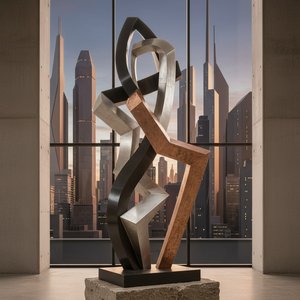
统计数据Embrace XI
 Metalwork
- Sculpture
- Abstract Sculpture
 1996
1996- Contemporary
 260.0 x 88.0 cm
 古根海姆博物馆毕尔巴鄂
 阅读全文
阅读全文
艺术微喷/版画
博物馆级艺术微喷或帆布版画,制作高效,并提供多种饰面选择。 ( 订购此收藏品的纯手工复刻画作 切换至数字图像销售渠道)




































您可以从与原作比例一致的预设尺寸中进行选择。

请输入您所需的宽度和高度,以适配您的画框或墙面。由于印刷品只能进行裁剪,无法超出原图尺寸,因此若比例不一致,画面的一部分将会被裁切。在正式印刷之前,我们会为您发送一份数字效果图供您确认。本页面显示的图片并非最终裁剪后的效果——只有效果图才能展示真实的裁剪情况。


 玻璃选项仅适用于110厘米以下的尺寸。

Embrace XI
艺术微喷/版画
复刻品尺寸说明
-


总计金额
¥ 537
The Poetry of Forged Steel: A Dance of Form and Fire
In the realm of modern sculpture, few works command the space with as much visceral intensity as Eduardo Chillida’s Embrace XI. Created in 1996, this monumental steel structure is far more than a mere arrangement of metal; it is a captured moment of elemental struggle. The piece exists in a state of beautiful paradox, presenting itself as both vertical and curved, simultaneously rigid and fluid. To witness Embrace XI is to observe a silent dialogue between the artist’s will and the stubborn resistance of his medium. Unlike the more ethereal explorations found in his other works, this particular sculpture was born from a direct confrontation with fire and force, where sections of forged steel were manipulated through heat and strength to achieve their final, intertwining destiny.
The aesthetic language of the work is deeply rooted in the concept of organic growth. As the eye travels along the dark, heavy ribbons of metal, one does not see industrial coldness, but rather a biological rhythm. The steel sections curve and overlap with the grace of climbing vines or roots that emerge from the earth only to collapse back upon themselves in a tight, protective hold. This sense of "embracing" is central to the piece's identity, suggesting a profound intimacy between separate entities. For the collector or designer, this work offers a sophisticated interplay of shadow and silhouette, making it an extraordinary focal point for spaces that value structural depth and the evocative power of abstract form.
A Legacy of Materiality and Space
The mastery behind Embrace XI lies in Chillida’s unique ability to make heavy, industrial materials appear weightless and alive. His technique involved a deep, almost spiritual connection to the blacksmith's craft. By working alongside local artisans, Chillida mastered the art of coaxing life from iron, treating each curve as a way to "sculpt" the surrounding air. In this piece, the negative space—the gaps between the intertwining steel—is just as vital as the metal itself. The sculpture does not merely occupy space; it defines and contains it, creating a rhythmic tension that draws the viewer into its internal architecture.
Historically, Chillida’s work serves as a bridge between the rugged landscape of his native Basque Country and the universal language of abstraction. While he often rejected the label of "abstract artist," preferring to see himself as a realist capturing the essence of form, Embrace XI embodies this truth perfectly. It is a realistic depiction of tension, gravity, and connection. For those looking to integrate high-quality reproductions into a curated interior, this work provides an unparalleled sense of permanence and intellectual depth. It brings with it the monumental spirit of a master who found the soul within the stone and the heartbeat within the steel.
问答详情
在哪里可以找到关于Eduardo Chillida 的《Embrace XI》的数据统计?
Eduardo Chillida 的《Embrace XI》 的 统计数据 页面展示了公开访问统计数据:该作品的每月访问量、与艺术家最受关注作品的对比,以及访客的来源地。
将 "Embrace XI" 作为礼物送出,会带来怎样的心意?
Eduardo Chillida 的《Embrace XI》 所传达的 Powerful 氛围,与推荐的送礼场合完美契合:Corporate Gift。
Eduardo Chillida 的《Embrace XI》 的色彩和谐度如何?
Eduardo Chillida 的《Embrace XI》 展示了一种 Strong Color Unity 的色彩和谐感。
艺术家简介
The Monumental Spirit of Eduardo Chillida
To speak of Eduardo Chillida is to speak of the very landscape of modern sculpture—a force of nature rendered in metal, stone, and wood. Born in San Sebastián on January 10, 1924, this Spanish Basque master was destined for a life marked by profound physical struggle and equally profound artistic triumph. Though his early path saw him pursuing architecture at the University of Madrid, it was the raw, undeniable call of art that ultimately redirected his destiny. His formative years were steeped in the cultural atmosphere of the Basque Country, an environment that would forever inform the deep resonance of his work.
His initial forays into sculpture began in Paris, a period where he wrestled with plaster and clay, absorbing influences from the great traditions housed within institutions like the Louvre. Yet, it was upon returning to the nurturing embrace of the Basque Country that Chillida’s artistic voice found its definitive timbre. The physical setbacks of his promising football career served perhaps as an unexpected crucible, channeling a restless energy into his creative pursuits.
Forging Form: Materials and Technique
Chillida's technical evolution is as compelling as the forms he created. Initially drawn to the delicate possibilities of plaster, he soon found his true medium in forged iron. Working alongside local blacksmiths, he mastered the art of transforming raw metal into structures that seemed both impossibly heavy and ethereally light. This mastery was not merely about joining materials; it was about coaxing them into a dialogue with space itself. His exploration expanded to include wood, notably when he began his seminal series, Anvil of Dreams, where wooden bases served as launching pads for metal forms that seemed to erupt in rhythmic, explosive curves.
The material choices were never arbitrary. Whether it was the cold strength of iron or the subtle luminescence of alabaster, Chillida treated each substance with a deep respect, allowing its inherent qualities—its weight, its patina, its resistance—to become integral parts of the sculpture's narrative. He sought not just to depict the human form, often focusing on torsos and busts, but to capture the very essence of existence struggling against constraint.
The Dialogue with Space: Abstract Realism
Despite his monumental scale and highly abstract compositions, Chillida himself resisted easy categorization. He preferred to be known as a "realist sculptor," suggesting that his abstraction was not an escape from reality, but rather a deeper excavation of it. His work is fundamentally concerned with the relationship between matter and void—the space around the sculpture is as vital, if not more so, than the material itself. This preoccupation led him to create public works that did not merely occupy space, but actively engaged with it, forcing the viewer into a physical conversation with the artwork.
His pieces often evoke primal energies and deep human introspection. They feel monumental because they are; they speak of endurance, of history, and of the enduring spirit of humanity rooted deeply in its cultural soil. The very act of viewing a Chillida piece becomes an immersive experience, one where the viewer must navigate the interplay between solid mass and infinite emptiness.
A Legacy Etched in Iron
Eduardo Chillida’s career stands as a towering achievement in 20th-century art. His body of work is a testament to relentless inquiry—an investigation into what it means to be human, contained within the boundaries of physical form and boundless spirit. From his early explorations to his later, massive public installations, he left behind a legacy that continues to challenge perceptions of weight, grace, and permanence. He did not just create sculptures; he forged dialogues between man, material, and the eternal space surrounding us.

Eduardo Chillida
1924 - 2002
快速概览
- Full Name: Eduardo Chillida Juantegui
- Nationality: Spanish
- Date Of Birth: 1924
- Date Of Death: 2002
- Place Of Birth: San Sebastián, Spain
- Notable Artworks: ['Anvil of Dreams']
- Artistic Movement Or Style: Abstract/Figurative Sculpture
相关文章
Forged in Fire: The Timeless Strength and Ethereal Beauty of Metal Art
Discover the enduring allure of metal art. Explore how masterfully forged sculptures blend industrial strength with organic elegance to create timeless investment pieces for sophisticated collectors and luxury interiors.

Forging Elegance: The Ultimate Guide to Metal Art as a Modern Masterpiece
Discover the profound elegance of metal art. Our expert guide explores how handcrafted metallic sculptures and industrial-grade ironwork serve as modern masterpieces for discerning collectors seeking to elevate their luxury interiors with strength and grace.

The Enduring Form: Exploring Themes & Techniques in Sculpture Across Historical Periods
Explore the rich history of sculpture from ancient masterpieces to contemporary innovations. Discover key techniques, influential artists & investment potential for discerning art collectors.

Bronze Sculptures That Defined Art History | OriginalUniqueArt
Journey through art history with our Top 10 bronze sculptures! Explore masterpieces by Rodin, Michelangelo & more. Discover stories behind iconic statues and find museum-quality reproductions for your home decor at OriginalUniqueArt.com.

Metal Art for Commercial Spaces: A Procurement Guide to Durable & Modern Large-Scale Decor Solutions
Expert procurement guide for hotel designers and managers. Discover durable, large-scale metal art solutions for commercial spaces. Learn about material selection, maintenance, and efficient bulk ordering for high-traffic hospitality and corporate interiors.