切换至版画销售渠道
 展开全文
展开全文







































 对于任何边长超过 105 厘米(约 41 英寸)的艺术品或复制品,画框将以拆解后的组件形式发货。此方法可确保安全送达并防止运输过程中的损坏。


The Boy with the Sword: A Study in Victorian Anxiety
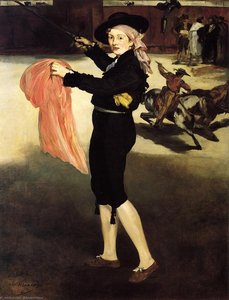
Édouard Manet’s “Boy with the Sword,” painted in 1862, is far more than a charming depiction of a young boy playing with a weapon. It's a potent distillation of anxieties simmering beneath the surface of Victorian society – anxieties surrounding masculinity, violence, and the unsettling shift towards modernity. The painting, now housed within the Metropolitan Museum of Art, immediately confronts the viewer with a startling image: a small boy, dressed in a meticulously rendered page outfit, stands rigidly on one leg, holding a full-sized sword aloft. His expression is impassive, almost unnervingly so, and his posture suggests both power and vulnerability.
Manet’s choice of subject matter – a young boy armed with a weapon – was deliberately provocative for its time. While seemingly innocent, the image resonated with broader societal concerns about the militarization of youth and the increasing prevalence of violence in European culture. The sword itself is not merely a toy; it represents authority, protection, and ultimately, destruction. The meticulous detail with which Manet renders the boy’s costume – the intricate embroidery, the polished leather boots – underscores the idealized image of boyhood that Victorian society sought to cultivate, even as anxieties about its potential for aggression grew.
Realism and the Influence of Spanish Masters
“Boy with the Sword” exemplifies Manet's embrace of Realism, a movement that rejected the romanticized depictions favored by the established Salon. Unlike traditional portraiture which often idealized subjects, Manet presents a raw, unvarnished portrayal of childhood. He achieves this through his masterful use of light and shadow, reminiscent of Caravaggio and Velázquez – artists he deeply admired. Notice how the strong directional lighting emphasizes the boy’s form, creating a sense of solidity and presence. The loose brushstrokes contribute to an immediacy that feels remarkably contemporary.
The painting's composition is heavily influenced by Spanish masters, particularly Diego Velázquez, whose works Manet studied extensively. The pose of the boy, with his direct gaze and slightly awkward stance, echoes Velázquez’s depictions of young men engaged in everyday activities. The inclusion of a bird perched nearby – a detail often overlooked – further reinforces this connection to Spanish artistic traditions, adding an element of naturalism and observation.
Symbolism and Emotional Resonance
Beyond its technical brilliance, “Boy with the Sword” is rich in symbolic meaning. The sword itself can be interpreted as representing both protection and danger, innocence and corruption. The boy’s impassive expression suggests a detachment from emotion, perhaps reflecting a growing sense of alienation within modern society. The presence of the bird – often associated with freedom and spirituality – introduces an element of ambiguity, hinting at the potential for transcendence amidst the anxieties depicted.
Manet's deliberate choice to depict a young boy wielding such a powerful weapon forces us to confront uncomfortable questions about power, responsibility, and the potential for violence. “Boy with the Sword” remains a compelling and unsettling work of art – a testament to Manet’s genius and his ability to capture the complexities of the human condition. It is a painting that continues to provoke discussion and debate over 150 years after its creation.
常见问题与解答
是否有关于 马奈 的《Boy with the Sword》 的导览页?
针对 马奈 的《Boy with the Sword》,我们提供了一个 指南 页面:这是一份可打印的艺术品资料页,专为学生及课堂教学使用而设计。
“Boy with the Sword”采用了什么技法制作?
马奈 的《Boy with the Sword》 的媒介为 布面油画。复制品旨在呈现该技法的视觉效果。
《Boy with the Sword》的创作者 马奈 是否还有其他艺名?
马奈 也被称为 埃杜瓦·马奈, 爱德华·马奈。
 实景预览
实景预览
 分享
分享 分享
分享
 详情
详情 指南
指南

 下载作品
下载作品
 相似作品
相似作品 X射线
X射线 幻灯片播放
幻灯片播放 Q&A
Q&A 统计数据
统计数据