

 效果预览
效果预览
 分享
分享 分享
分享
 详情
详情

 下载
下载
 相似作品
相似作品 X射线
X射线 幻灯片播放
幻灯片播放 统计数据
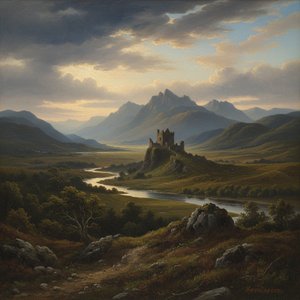
统计数据Linlithgow Palace
 Romantic Landscape
 1855
1855 46.0 x 65.0 cm
 展开详情
展开详情
手工油画复制品
由我们的艺术家按需定制,为您提供您所选尺寸及画框的布面手工油画。 ( 切换至版画销售渠道 切换至数字图像销售渠道)




































从与原作比例一致的预设尺寸中进行选择。

您可以输入自定义尺寸,以适配特定的画框或空间。如果所选尺寸与原图比例不符,我们将通过裁剪作品或添加手绘元素来扩展画面。数字样稿将在制作开始前发送给您确认。
请注意,屏幕预览无法准确反映实际的裁剪或扩展效果,只有样稿才能真实呈现最终的构图。
虽然我们提供定制尺寸服务,但为了保留原作比例,建议您从预设列表中选择尺寸。
下单后,OriginalUniqueArt.com 团队将通过电子邮件联系客户获取具体要求,并提供效果预览图。


 玻璃选项仅适用于110厘米以下的尺寸。

Linlithgow Palace
复制材质
复制品尺寸
-


最终总价
$ 300
艺术家简介
Early Life and Artistic Beginnings
Edmund Thornton Crawford, born in 1806 at Cowden near Dalkeith, Scotland, embarked on a path that would establish him as one of the most celebrated landscape and marine painters of his era. His initial foray into the world of art wasn’t through formal training but rather an apprenticeship to a house-painter in Edinburgh. However, it quickly became apparent that Crawford possessed a natural aptitude and burgeoning passion for painting—a talent too significant to be confined to domestic decoration. This led to his enrollment at the Trustees' Academy under the tutelage of Andrew Wilson, where he found himself amongst a cohort of future artistic luminaries including David Octavius Hill and Robert Scott Lauder.
It was within the walls of the academy that Crawford forged a particularly close bond with William Simson, an older student who became his mentor and guiding force. Their shared sketching expeditions proved invaluable, instilling in Crawford a deep appreciation for observation and a refined understanding of artistic technique. His early works began to surface at the Royal Institution, marking the nascent stages of a career that would soon captivate audiences with its evocative depictions of the Scottish countryside.
Formative Influences and Dutch Masters
While initially exhibiting scenes of the Lowland Scottish landscape, Crawford’s artistic trajectory took a pivotal turn with his travels to the Netherlands. These journeys weren't merely geographical shifts but profound immersions into the world of 17th-century Dutch painting. He meticulously studied the works of masters like Van de Velde and Hobbema, absorbing their techniques for capturing light, atmosphere, and the subtle nuances of nature. This influence became a defining characteristic of his style—a picturesque quality that blended realism with an impressionistic sensibility.
The Dutch Masters’ emphasis on detailed observation and atmospheric perspective resonated deeply with Crawford, shaping his approach to both landscape and marine subjects. He wasn't simply replicating scenes; he was striving to convey the *feeling* of a place—the crispness of the air, the play of light on water, the weight of clouds in the sky. This dedication to capturing the essence of nature would become a hallmark of his work.
A Rising Star and Academic Recognition
Crawford’s contributions to the annual exhibitions of the Royal Scottish Academy steadily gained recognition throughout the 1830s. Although not among the academy's founding members, he was elected an associate in 1839, solidifying his position within the Scottish art establishment. This period saw him continue to explore Scottish landscapes and coastal scenes, building a repertoire of subjects that showcased his growing mastery.
However, it wasn’t until 1848, with his election as an academician, that he unveiled what many consider his breakthrough work: ‘Eyemouth Harbour.’ This painting—a dynamic depiction of maritime life and the rugged beauty of the Scottish coast—immediately established him as a leading landscape painter. It was followed by a series of equally compelling works, including ‘A View on the Meuse,’ ‘A Fresh Breeze,’ and ‘River Scene and Shipping, Holland,’ each demonstrating his unique ability to blend detailed realism with atmospheric depth.
Legacy and Historical Significance
Edmund Thornton Crawford’s art stands as a testament to the power of observation, the influence of artistic tradition, and the enduring appeal of the Scottish landscape. He wasn't merely documenting scenes; he was interpreting them through a lens informed by Dutch Masters yet distinctly his own.
His paintings offer a glimpse into 19th-century Scotland—a world of bustling harbors, serene riverscapes, and dramatic coastal views. His ability to capture the essence of nature, combined with his technical skill and picturesque style, earned him a devoted following and cemented his place in art history.
- Key Characteristics: Picturesque style influenced by Dutch Masters; detailed realism blended with atmospheric depth; evocative depictions of Scottish landscapes and marine scenes.
- Major Works: ‘Eyemouth Harbour,’ ‘A View on the Meuse,’ ‘A Fresh Breeze,’ ‘River Scene and Shipping, Holland.’
- Historical Significance: Crawford’s work represents a significant contribution to 19th-century Scottish landscape painting, bridging the gap between traditional realism and impressionistic sensibilities.
Crawford's later years saw him settle in Lasswade, continuing to contribute regularly to the RSA exhibitions until 1877. He passed away in 1885, leaving behind a legacy of paintings that continue to captivate and inspire—a testament to his enduring artistic vision.

edmund thornton crawford
1806 - 1885
艺术家简介
- Artistic Movement Or Style: Landscape & Marine Painting
- Artists Who Influenced This Artist:
- Andrew Wilson
- William Simson
- Dutch Masters
- Date Of Birth: 1806
- Date Of Death: 1885
- Full Name: Edmund Thornton Crawford
- Nationality: Scottish
- Notable Artworks:
- Eyemouth Harbour
- View on the Meuse
- A Fresh Breeze
- Portsmouth Harbour
- Place Of Birth: Cowden, Scotland
相关文章
Alexander Nasmyth: Picturing Scotland's Romantic Landscape – Innovation & Identity
Explore the life & art of Alexander Nasmyth, a pivotal figure in Scottish Romantic landscape painting. Discover his iconic works, including portraits of Robert Burns, and learn about his lasting influence on national identity. Fine art reproductions available.

浪漫主义风景画:情感、自然与宇宙的探索
探索浪漫主义风景画的深刻内涵,深入了解卡斯帕·大卫·弗里德里希等大师的作品。OriginalUniqueArt提供精美复制品、定制服务及专业艺术咨询,助您收藏经典,打造专属艺术空间。

浪漫主义画派的十部巨作:定义风景画的艺术传奇
探索浪漫主义风景画的巅峰!本文精选十部经典名作,带您领略莫奈、库尔贝等大师的艺术魅力。感受色彩与光影的诗意,重温自然风光的震撼。OriginalUniqueArt.com为您提供博物馆级别的艺术复制品和个性化家居装饰方案。尽在OriginalUniqueArt.com!

康斯塔布尔大师之作:25幅传世风景画赏析 | OriginalUniqueArt
探索康斯塔布尔的25幅传世杰作!沉浸于英国田园风光,感受浪漫主义绘画大师的光影与色彩。高清油画复制、艺术品购买尽在OriginalUniqueArt.com,为您的家居增添经典之美。立即在线探索完整系列!

Evocations of Place: A Historical Journey Through Landscape Art
Explore the rich history of landscape art with OriginalUniqueArt. Discover renowned artists, movements like Impressionism & Romanticism, and expert guidance for collecting timeless pieces. Find your perfect serene escape today!