 切换至版画销售渠道
 展开全文
展开全文







































 对于任何边长超过 105 厘米(约 41 英寸)的艺术品或复制品,画框将以拆解后的组件形式发货。此方法可确保安全送达并防止运输过程中的损坏。


Eanger Irving Couse: A Pioneer of Southwestern Impressionism
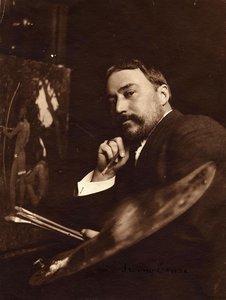
Eanger Irving Couse (1866-1936) stands as a cornerstone in the annals of American art, particularly within the burgeoning movement known as Southwestern Impressionism. Born amidst the industrial fervor of Saginaw, Michigan, his artistic trajectory wasn’t merely driven by personal ambition; it was fundamentally shaped by an unwavering fascination with Native American culture and the breathtaking landscapes of the Southwest – a passion that would propel him to forge a unique path between European academic tradition and the burgeoning spirit of modern art. Rejecting formal schooling at sixteen, Couse embarked on a self-directed artistic education, immersing himself in studies at the Art Institute of Chicago before venturing westward to embrace the transformative influence of Taos Pueblo. This pivotal relocation ignited his creative vision and cemented his dedication to portraying Native American life with profound respect and sensitivity—a commitment that distinguishes him from many of his contemporaries.The Painting: Pottery Vendor – A Portrait of Resilience
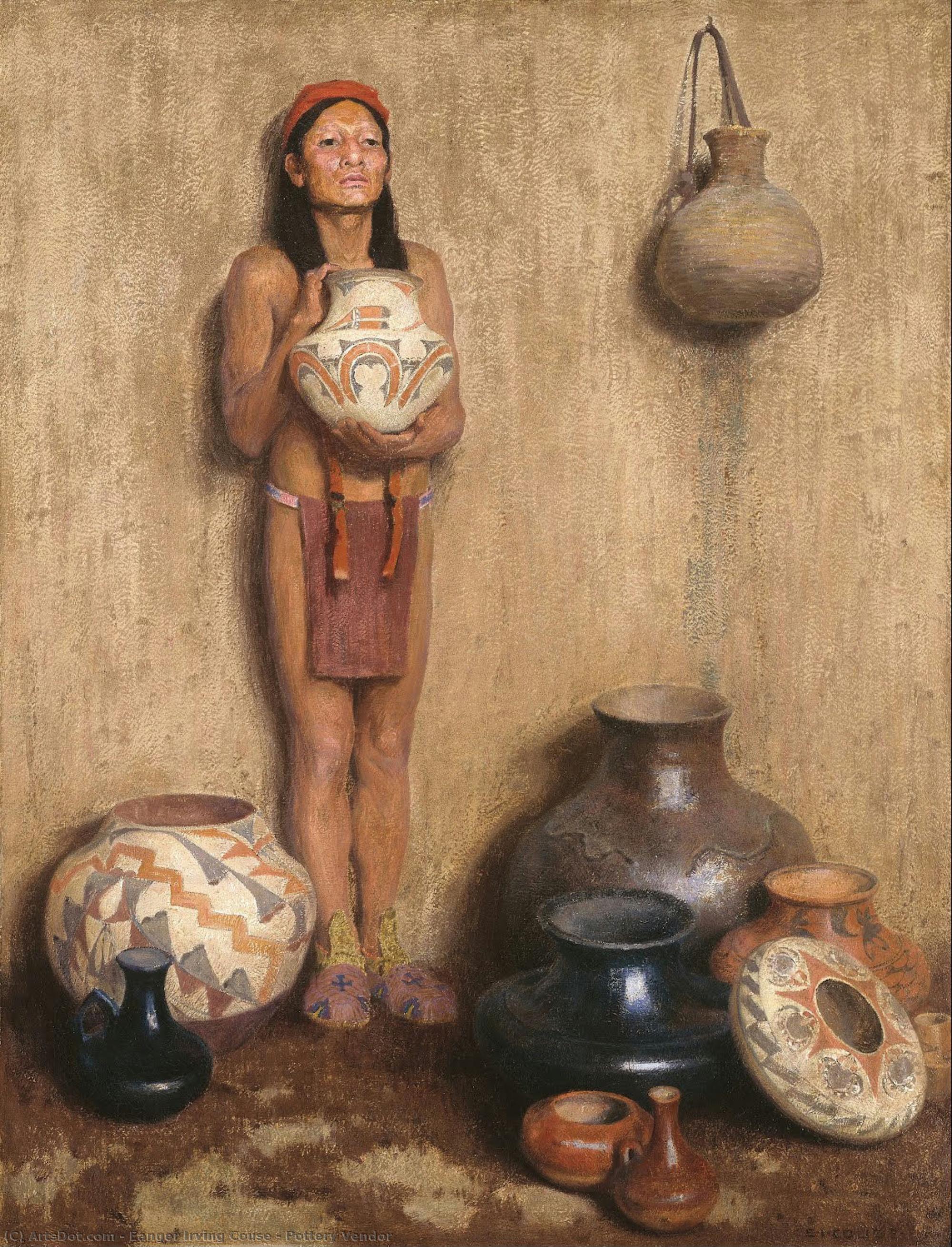
“Pottery Vendor,” executed in 1916, exemplifies Couse’s distinctive style—characterized by luminous color palettes and loose brushstrokes that capture the immediacy of observation. The painting depicts a woman gracefully holding two vases, her posture conveying both strength and serenity. This isn't simply a depiction of commerce; it’s an encapsulation of daily life within the Taos Pueblo community, meticulously rendered with meticulous attention to detail. Scattered throughout the canvas are additional vases—a deliberate compositional element that underscores the importance of craftmanship and artistic expression within Native American culture. The artist skillfully utilizes dappled sunlight to illuminate the scene, creating a sense of warmth and inviting viewers into the intimate atmosphere of the Pueblo village.Technique & Impressionistic Vision
Couse’s technique leans heavily on Impressionist principles—specifically capturing fleeting moments of light and color rather than striving for photographic realism. He achieves this through layering thin washes of pigment onto the canvas, allowing colors to blend organically and creating a shimmering effect that mimics the natural radiance of Southwestern skies. The artist's brushstrokes are visible yet blended seamlessly, conveying movement and texture without sacrificing clarity. This approach reflects Couse’s belief in portraying the world as perceived by the senses—a cornerstone of Impressionism’s philosophical underpinning. He meticulously studied the effects of light on surfaces, striving to convey not just what he saw but how it felt.Symbolic Resonance & Cultural Respect
Beyond its aesthetic qualities, “Pottery Vendor” carries significant symbolic resonance. The vases themselves represent artistry and tradition—symbols deeply ingrained in Native American culture where craftsmanship is revered as a vital component of identity and heritage. Furthermore, the woman’s dignified posture embodies resilience and perseverance – qualities admired within Pueblo communities who have endured centuries of hardship while maintaining their cultural traditions. Couse's portrayal avoids stereotypical representations, instead presenting a nuanced portrait that honors the dignity and complexity of Native American life. He sought to elevate his subjects beyond mere depictions of circumstance, conveying an understanding of their inner spirit.Emotional Impact & Legacy
“Pottery Vendor” transcends its formal elements to evoke a palpable sense of tranquility and connection with nature—a hallmark of Southwestern Impressionism’s emotional core. The painting invites contemplation on themes of beauty, simplicity, and cultural preservation. Couse's work continues to inspire artists and collectors alike, serving as a testament to his unwavering commitment to artistic integrity and cultural sensitivity. He remains an influential figure in the history of American art, demonstrating how observation combined with empathy can yield profoundly beautiful and meaningful results. His legacy resides not only in his stunning canvases but also in his pioneering role in fostering cross-cultural understanding—a contribution that resonates powerfully within today’s artistic landscape.常见问题与解答
英格·欧文·考斯 是否还有其他别名或曾用名?
英格·欧文·考斯 也以 Eanger Irving Couse 等其他名称为人所知。
英格·欧文·考斯 的《Pottery Vendor》 的色彩和谐度如何?
英格·欧文·考斯 的《Pottery Vendor》 呈现出一种 Unified Palette 的色彩和谐感。
如何描述 英格·欧文·考斯 的《Pottery Vendor》 的配色方案?
英格·欧文·考斯 的《Pottery Vendor》 采用了 Earthy 色调,这一色调概括了作品整体的色彩特征。
 实景预览
实景预览
 分享
分享 分享
分享
 详情
详情 指南
指南

 下载作品
下载作品
 相似作品
相似作品 X射线
X射线 幻灯片播放
幻灯片播放 问答
问答 统计数据
统计数据